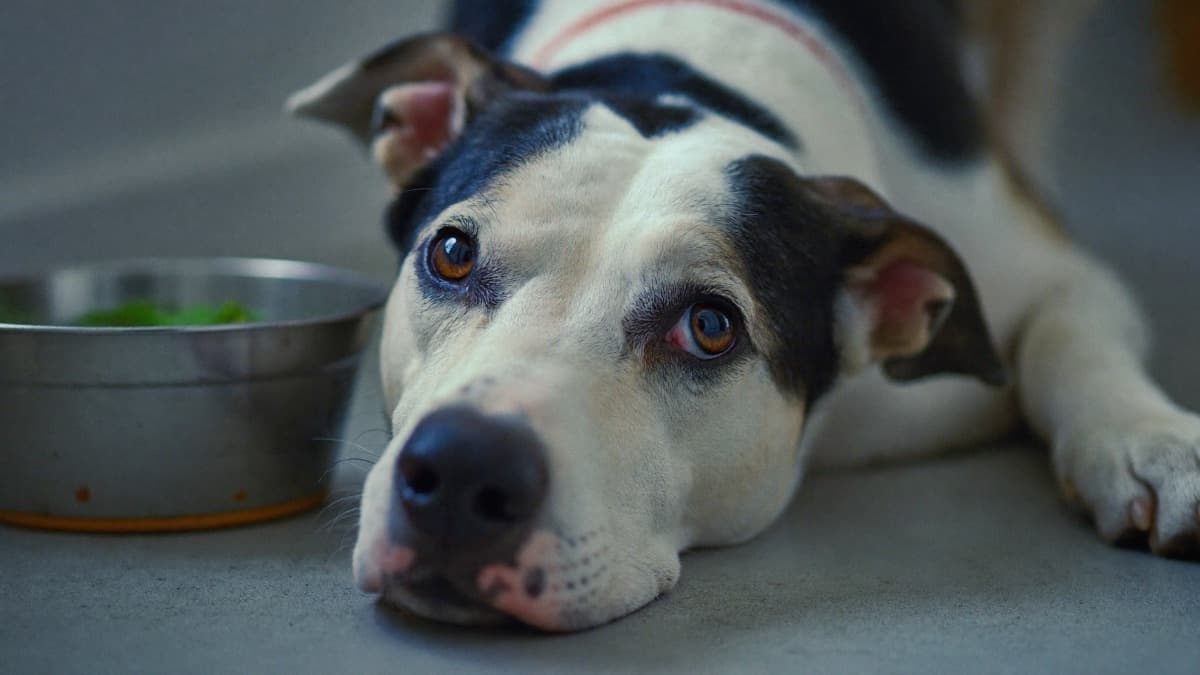
Go to a vet now if any of these are true
- Blood in the stool — fresh red streaks, or black tarry stool (digested blood from higher up the gut).
- Diarrhoea plus repeated vomiting — the combination dehydrates a dog fast and is the classic parvovirus picture in young dogs.
- Lethargy, collapse, or pale, white, or tacky gums.
- A painful, tense, or distended abdomen, or a dog standing in a hunched "praying" position.
- Suspected toxin or foreign body — bin raiding, chocolate, grapes, medication, a chewed toy, bones, or pest bait.
- Unvaccinated or partly vaccinated puppy with diarrhoea — treat as parvovirus until a vet says otherwise.
- Fever, shivering, or a dog that will not stand.
- Explosive, high-volume, watery diarrhoea every hour, or straining that produces only liquid.
- Diarrhoea for more than 48 hours in an adult, or more than 12–24 hours in a puppy, senior, or toy breed.
If your dog swam in or drank from floodwater, drains, or standing water — a real risk in Singapore and Malaysia after heavy rain — mention it. Leptospirosis can begin with vomiting and diarrhoea and is both serious and transmissible to people; it sits squarely on the radar of the animal-health authorities on both sides of the Causeway, Singapore's Animal & Veterinary Service and Malaysia's Department of Veterinary Services.
Probably safe to monitor at home
- One to three loose stools in a dog that is bright, alert, drinking, and still interested in food.
- Soft stool after a known diet change, a new treat, or a stressful day (boarding, grooming, travel).
- No blood, no vomiting, normal pink gums, normal energy.
Monitor actively: check gums, count stools, and note whether the dog is drinking. Re-triage against the red-flag list every few hours.
Safe home care for mild diarrhoea
- Do not fast the dog for more than a few hours, and never fast a puppy. Modern veterinary advice favours feeding small, bland meals rather than starving the gut.
- Feed small portions of plain boiled skinless chicken and white rice (roughly one part chicken to two parts rice), or a veterinary GI diet, every 3–4 hours.
- Keep water available at all times in small, frequent amounts. Plain water, not milk. Oral rehydration solutions only if your vet advises.
- Skip treats, chews, dairy, and table scraps entirely for 3 days.
- Transition back to normal food over 2–3 days by mixing.
- Stop and call the vet if diarrhoea persists past 48 hours, blood appears, vomiting starts, or the dog becomes flat.
A canine probiotic paste can shorten mild episodes and is low-risk. Human anti-diarrheals, antibiotics from a previous illness, and kaolin products are not appropriate without veterinary direction.
How do I know if my dog is dehydrated?
| Check | Normal | Concerning |
|---|---|---|
| Gum colour | Bubblegum pink, moist | Pale, white, brick red, or dry and sticky |
| Skin tent (scruff between shoulders) | Springs straight back | Stays peaked or returns slowly |
| Eyes | Bright, full | Sunken, dull |
| Energy | Normal or slightly quiet | Weak, unsteady, unwilling to stand |
| Urine | Passing normally | Little or none in 8–12 hours, very dark |
Any two of the concerning column means a vet visit today, not tomorrow. In our climate a dog losing fluid through diarrhoea and panting through 33°C heat dehydrates considerably faster than the same dog would in a temperate country — that shortens every threshold on this page.
What does the colour of dog diarrhoea mean?
- Yellow or orange, soft: often a rapid-transit or bile-related upset; monitor if the dog is bright.
- Green: may be grass, or bile moving through quickly.
- Bright red streaks or jelly-like mucus: large-bowel irritation or colitis — vet, same day.
- Black, tarry, sticky: digested blood — urgent vet visit.
- Grey, greasy, foul, large volume: possible fat malabsorption or pancreatic disease — vet appointment.
- Watery with a distinctive metallic smell in a puppy: possible parvovirus — emergency.
Take a photo. Vets genuinely use them, and bring a fresh stool sample if you can — faecal testing for worms, Giardia, and other parasites is cheap and often answers the question. Intestinal worms transmit year-round here, so deworming lapses matter.
When occasional diarrhoea becomes a pattern
A dog with loose stool every week or two does not have bad luck; that is chronic disease presenting quietly. Common causes include food sensitivity, parasites, inflammatory bowel disease, exocrine pancreatic insufficiency, and — in this region — chronic tick-borne infection. Bring a diary of dates, stool consistency, diet, and weight. Unexplained weight loss alongside intermittent diarrhoea always deserves a workup, regardless of how mild each episode looks. If you're between clinics, the Singapore Veterinary Association's vet centre directory is a good place to find one near you.