What is the critical window?
Between about 3 and 14 weeks, a puppy's brain treats novelty as information. After the window closes, the default flips: new things are treated as threats until proven otherwise. That's why an adult dog who never saw umbrellas, motorbikes or children as a puppy doesn't shrug at them — he barks, freezes or bolts, for life, unless you invest months of counter-conditioning that a few relaxed puppy outings would have replaced.
Since most puppies come home at 8 weeks, you have about six weeks. It's less time than it sounds, and it overlaps almost entirely with the vaccine series — which is exactly the tension the next section resolves.
Should I wait until vaccinations are done?
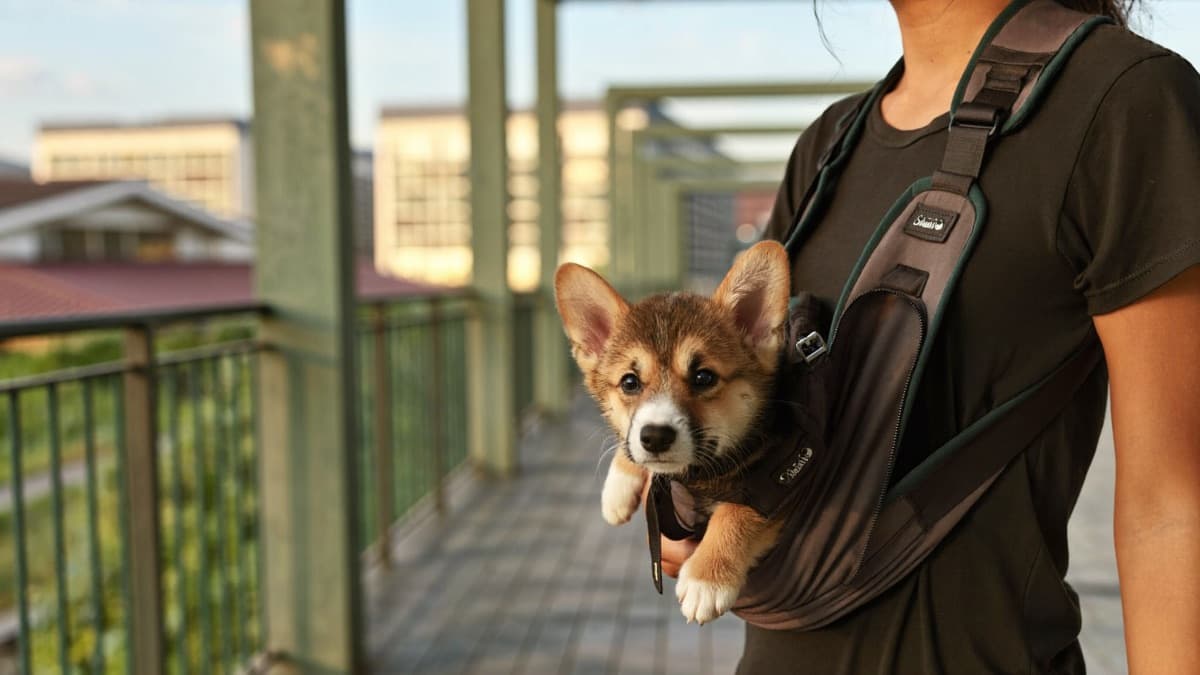
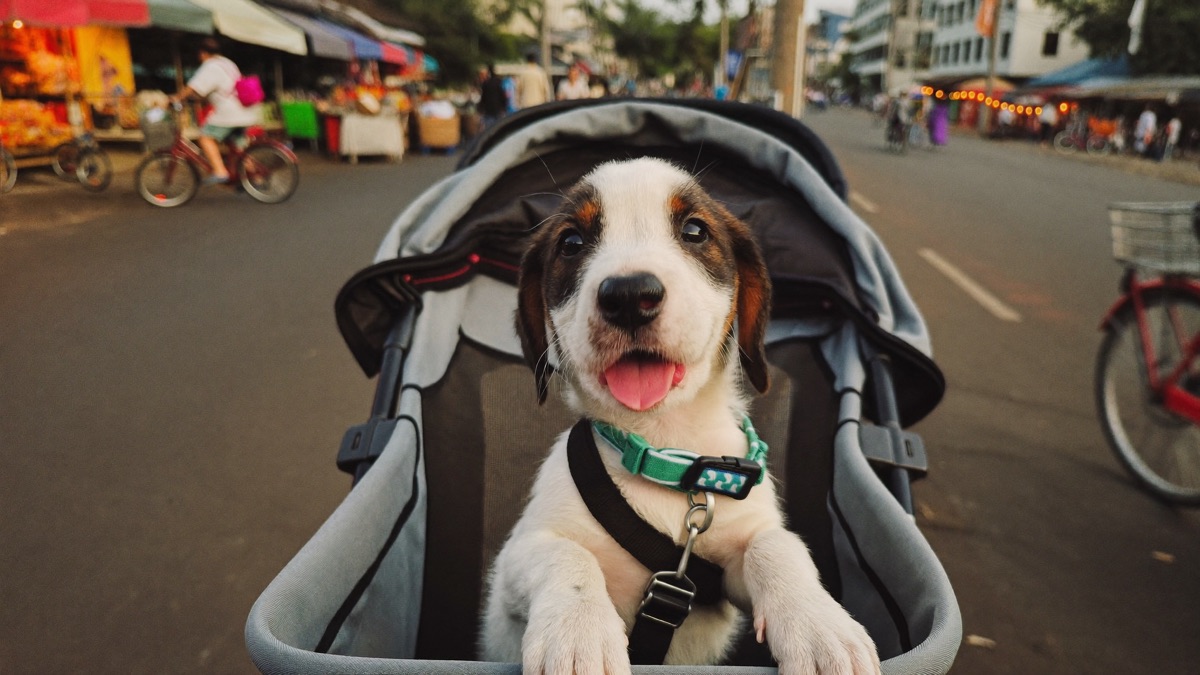
No — waiting until 16 weeks means the window is already shut. The answer, consistent with our puppy vaccination schedule, is carry, don't walk: the disease risk lives on the ground, in soil and in the toilet spots of unknown dogs, not in the air. From your arms, a sling or a trolley, your puppy can watch the whole world safely from day one.
- Do: carry your puppy through the neighbourhood, visit friends' homes with vaccinated adult dogs, attend puppy classes that check vaccine records, let them walk on your own floor and on clean, private surfaces.
- Don't: put paws down at dog parks, grass verges, pet-shop floors or anywhere unknown dogs toilet, until 1–2 weeks after the final 16-week vaccine.
What should a Singapore or Malaysia puppy meet?
Socialise for the life your dog will actually live — which here is dense, loud and humid. A checklist to work through from your arms:
- Lift noises — doors, chimes, the lurch of moving, strangers packed close in a small box
- Void deck and corridor life — kids running, mahjong tiles, trolleys, dropped items, neighbours' doors slamming
- Thunder — play storm recordings quietly under dinner, volume up over weeks; real monsoon season will not wait for your puppy to be ready
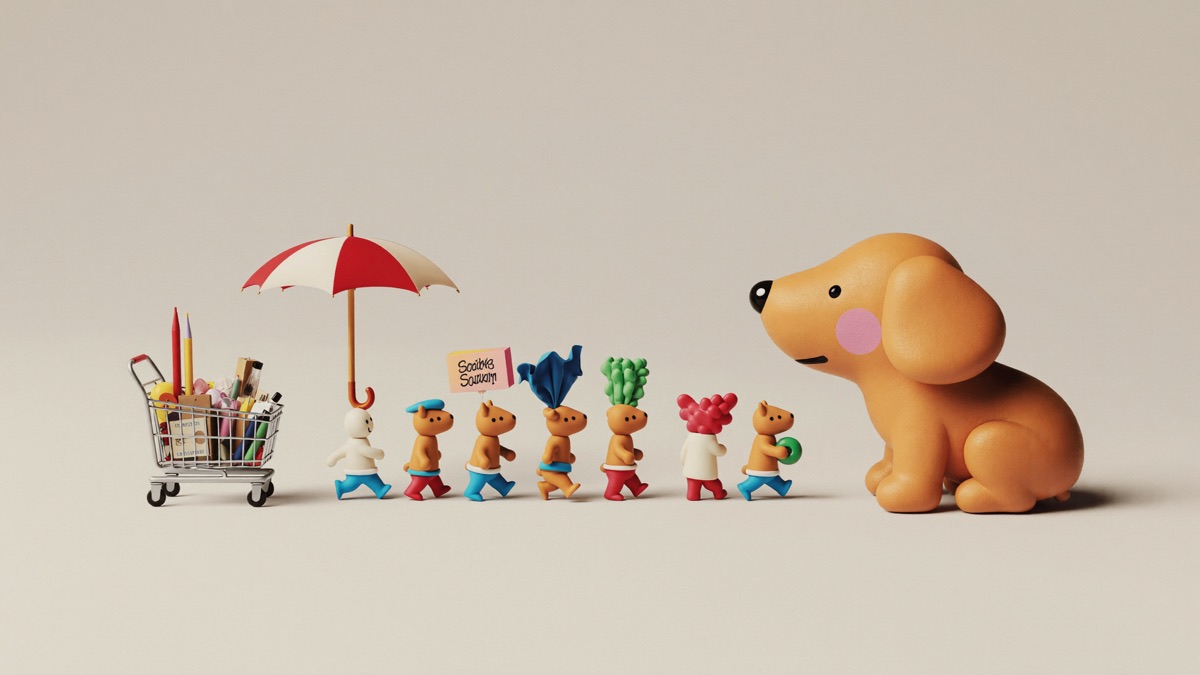
- Umbrellas — opening suddenly, carried low, dripping; on this island they are everywhere
- Wheels — wheelchairs, prams, PMDs, bicycles, wet-market trolleys, delivery riders
- People variety — children (calm ones, treats in hand), elderly neighbours, helmets, uniforms, masks
- Traffic and transport — buses hissing at stops, motorbikes, the MRT rumble from a distance
- Wet market and kopitiam sounds and smells — from a carrier, at the edge, briefly
- Surfaces at home — tiles, grates, cardboard, towels, the bathroom weighing scale
- Rain itself — the smell, the noise on the awning, walking on damp ground once vaccinated
How do I do it right? (Quality over quantity)
Socialisation is not exposure for its own sake — it's good experiences. One rule covers most of it: the puppy chooses, food flows, retreat is always allowed.
- Pair every new thing with treats: umbrella opens, chicken appears.
- Watch the body: loose wiggly puppy taking food = keep going; tucked tail, refusing food, trying to leave = you're too close. Add distance, don't add pressure.
- Never force approach. A puppy carried up to the scary thing learns that being held means being trapped.
- Short beats long: five calm minutes watching the void deck, then home for a nap. A few minutes of this fits inside a normal daily puppy schedule — it doesn't need weekend expeditions.
- Strangers can toss treats, not grab. "Everyone gets to pat the puppy" teaches many puppies to dread strangers, which is the opposite of the goal.
What are fear periods?
Twice in development — once around 8–11 weeks, again somewhere in adolescence (roughly 6–14 months) — puppies pass through short phases where startle responses spike and single bad experiences leave lasting marks. You'll notice it as sudden suspicion of things that were fine last week.
The response is the same both times: don't flood, don't force, don't laugh it off and drag the puppy closer. Keep the routine, keep exposures gentle and food-paired, let the puppy retreat and re-approach on their own, and the phase passes in a week or two. If fearfulness is broad, intense and not lifting — hiding from everything, refusing food outdoors, panic rather than caution — talk to your vet or a qualified force-free trainer early. Fear is far easier to soften at 4 months than at 4 years.