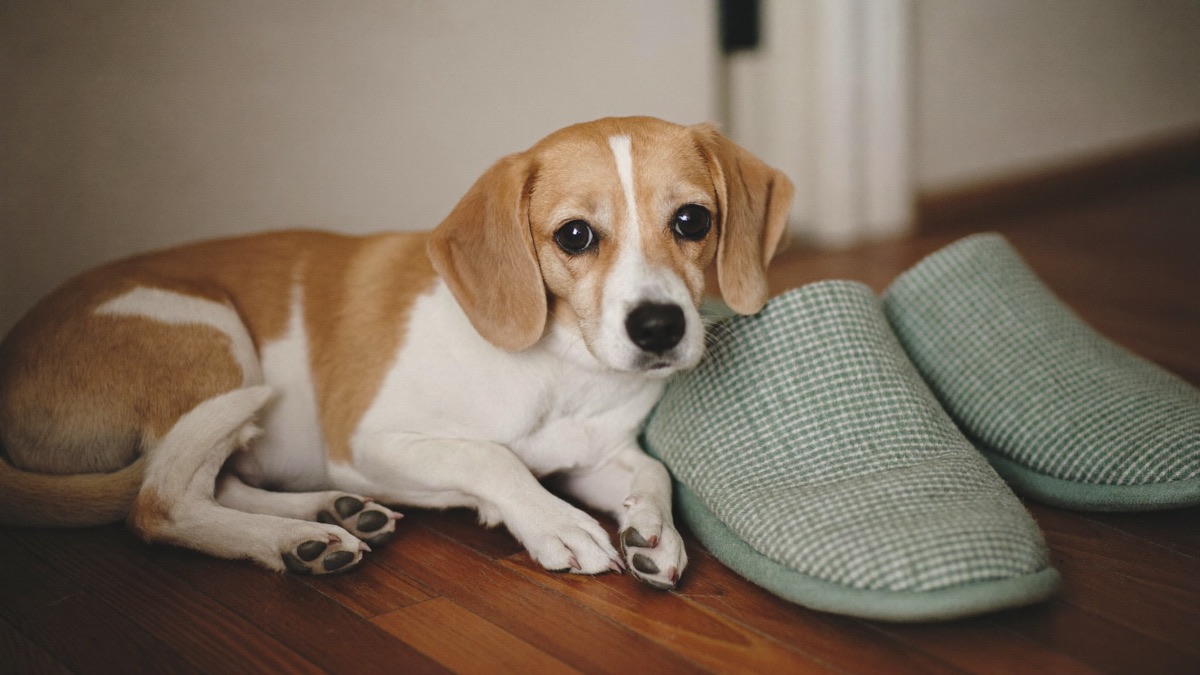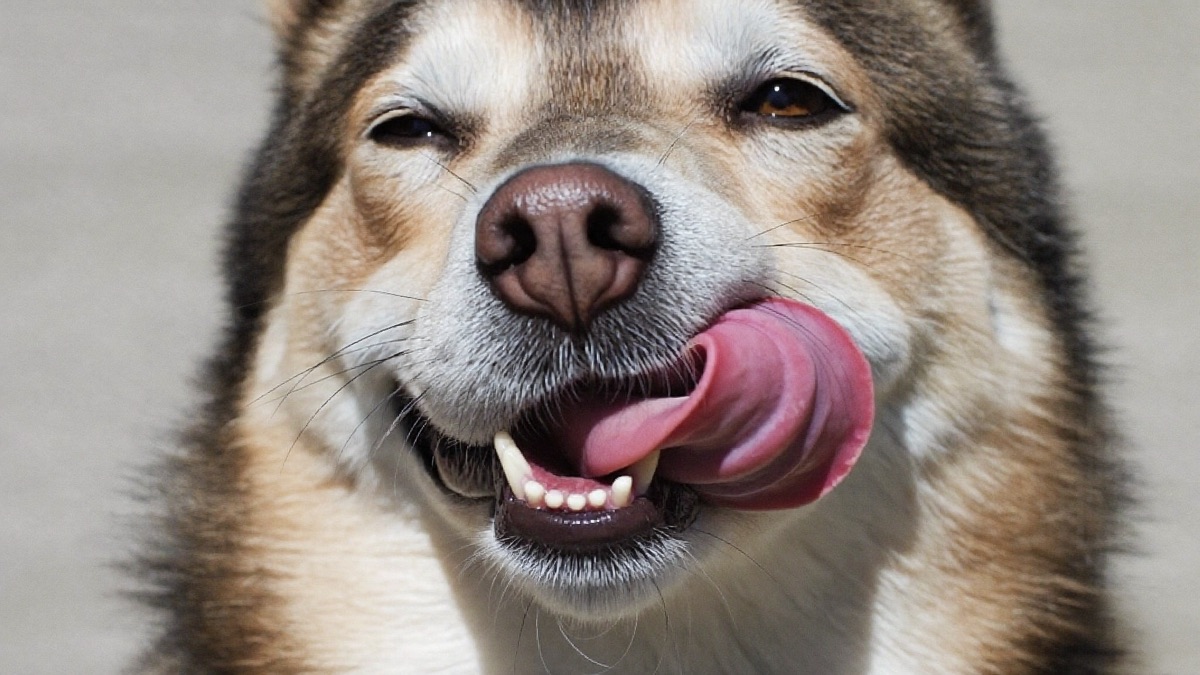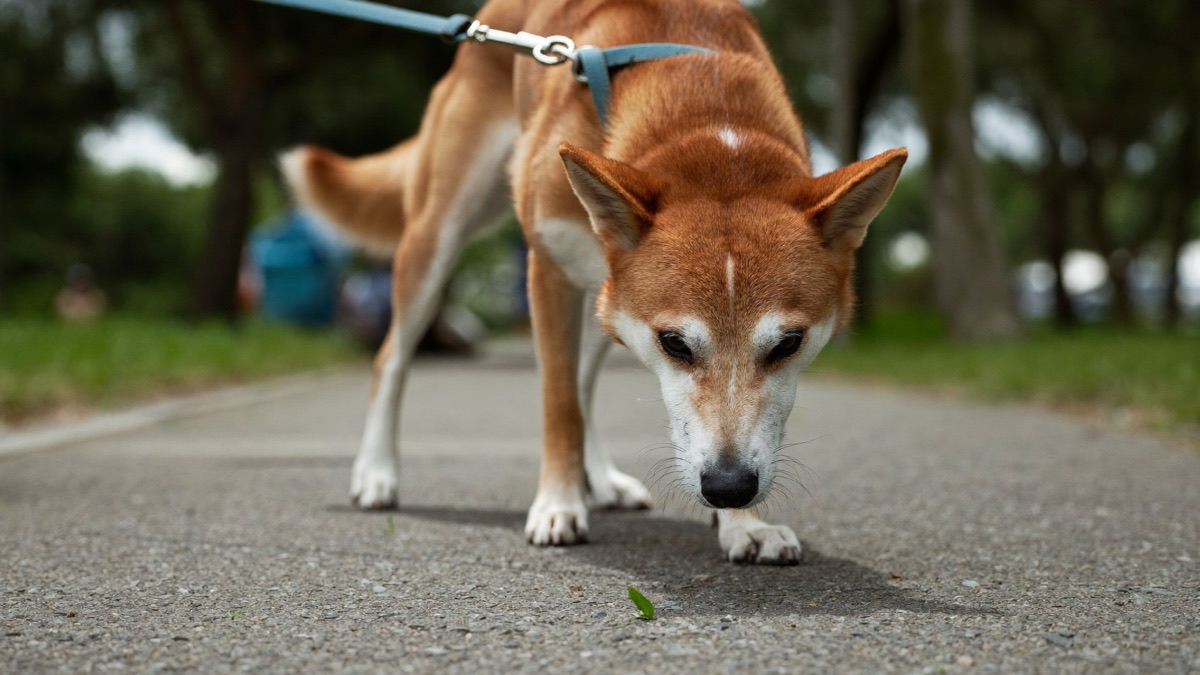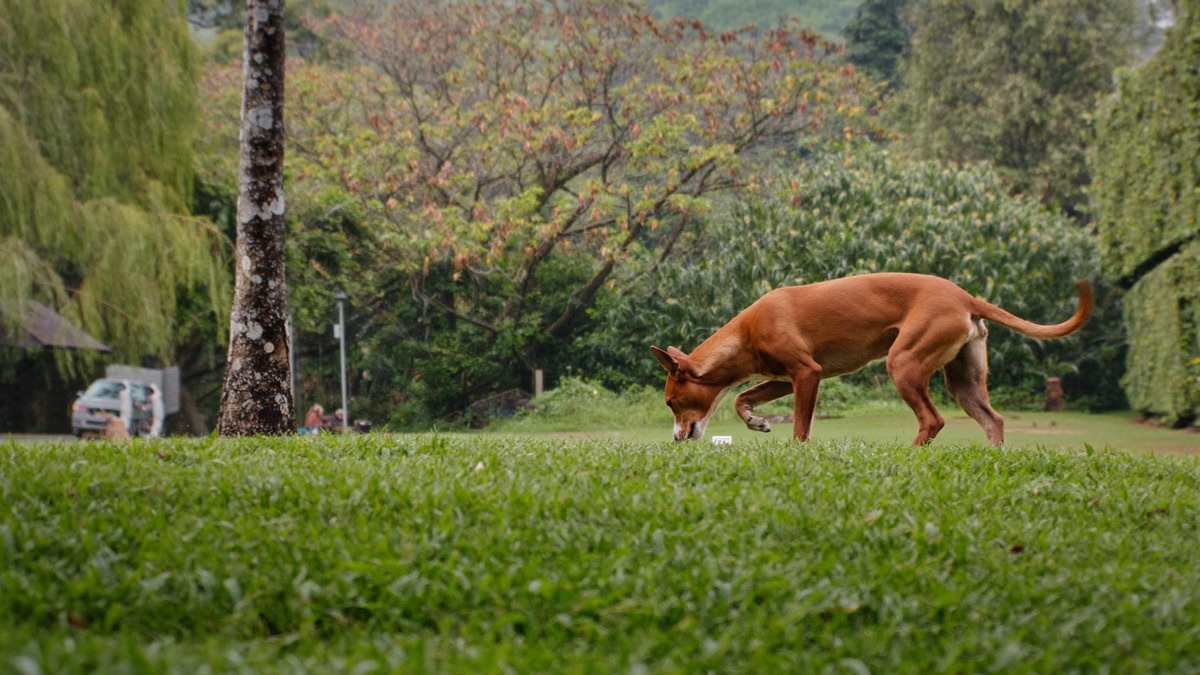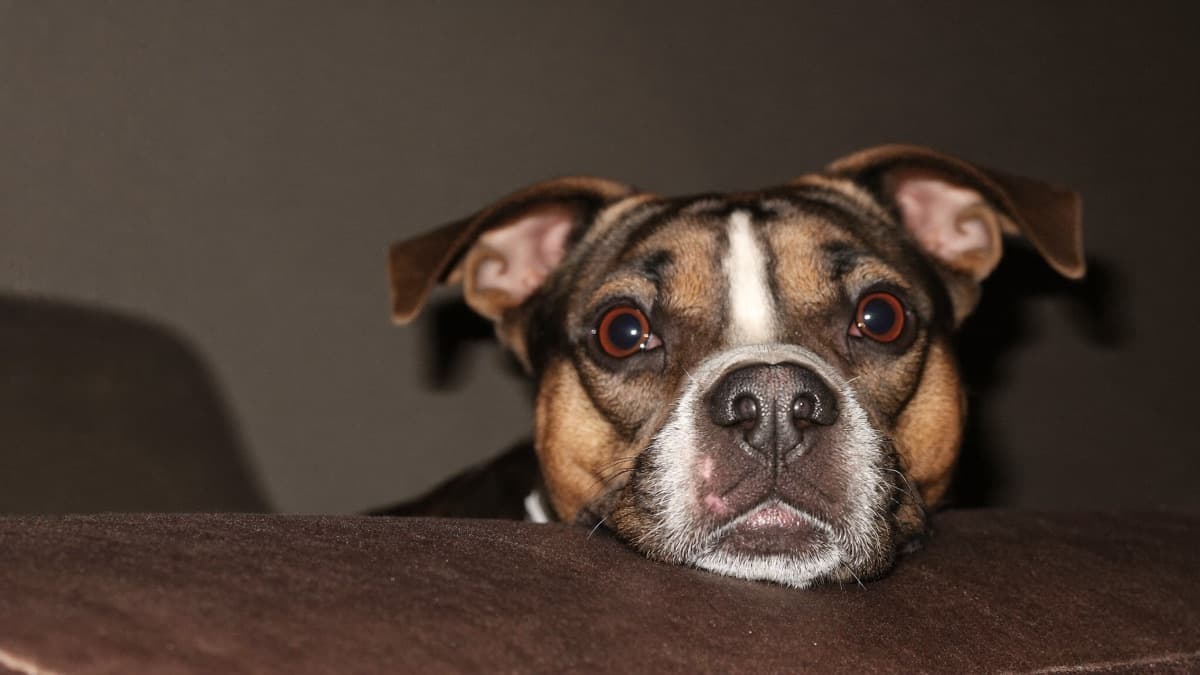
There are a few versions worth telling apart, including one that signals tension and one that matters in older dogs.
Is my dog staring at me out of love?
Often, yes — and this one has unusually good science. Research from Azabu University in Japan, published in Science in 2015, found that when dogs and their owners shared long, relaxed mutual gazes, oxytocin levels rose in both of them. Oxytocin is the same hormone that underpins parent-infant bonding in humans, and the effect ran as a loop: gazing raised the owner's oxytocin, which encouraged more interaction, which raised the dog's. Notably, hand-raised wolves didn't show this — it appears to be something dogs developed alongside domestication.
So the soft, blinky gaze from across the room is fairly described as a chemical hug. You'll recognise it by the rest of the body: loose posture, relaxed ears, maybe a slow tail sweep.
Why does my dog stare at me when I eat?
Anticipation — the least mysterious stare in the repertoire. Dogs are superb associative learners. If staring at you during dinner has ever produced a morsel, the behaviour has been paid for, and dogs repeat what pays. The same mechanism powers the pre-walk stare at 5:59 pm and the laser-lock on the treat cupboard.
If the mealtime stare bothers you, don't scold it — just stop the payouts completely and reward an alternative instead. Feed a stuffed food toy at your dinnertime, or reward your dog for settling on a mat away from the table. Intermittent success is what keeps begging alive; a behaviour that never pays fades, while a better-paying alternative fades it faster.
Why does my dog watch my every move?
Because you're the forecast. Domestic dogs are exceptional readers of human faces, hands, and routines — better than chimpanzees at following human pointing gestures in classic studies. Your dog has learned that shoes mean walks, keys mean departure, and a glance at the lead means the best part of the day.
Cue-watching intensifies in well-trained dogs, who've learned that watching you earns rewards — "check-in" eye contact is actually one of the first things positive-reinforcement trainers reinforce, because a dog watching you is a dog you can communicate with. A herding breed will often dial this up further; attentiveness is in the job description.
Occasionally a stare is a specific request: the water bowl is empty, the door is shut, they need the toilet. If the stare comes with a glance toward a door or bowl, follow the glance.
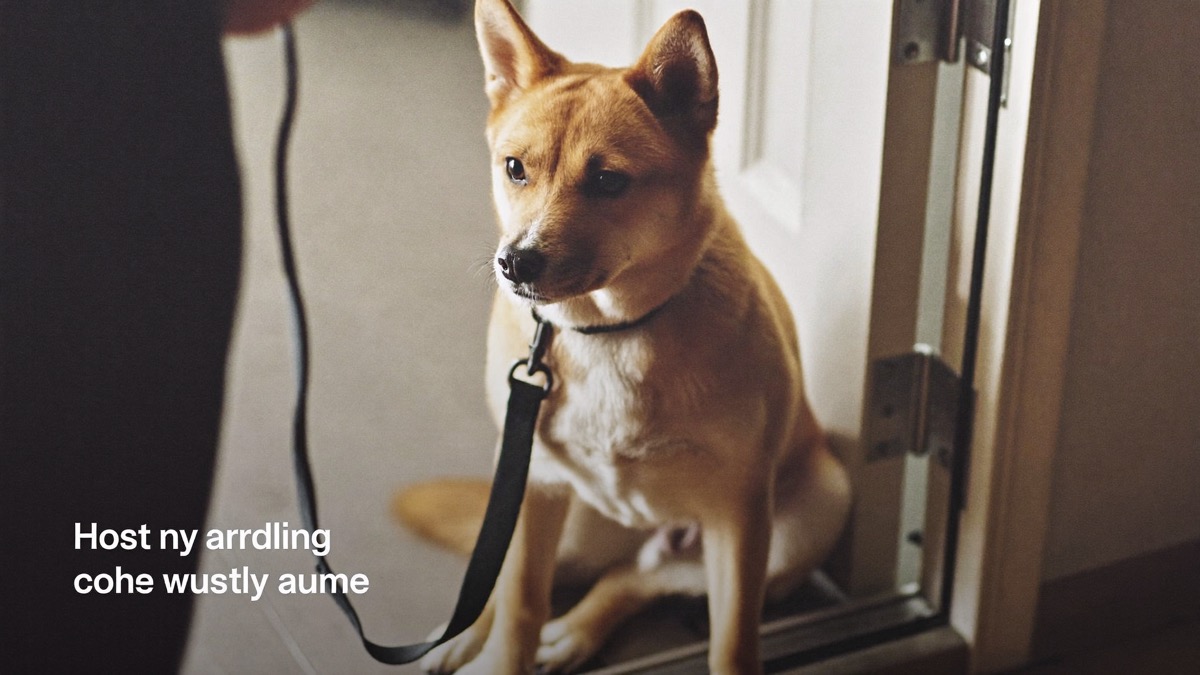
What's the difference between a hard stare and a soft stare?
This distinction matters for safety, especially with unfamiliar dogs.
- Soft stare: loose face, soft or squinty eyes, relaxed mouth, wiggly or neutral body. This is social gazing — fine to return gently with your own dog.
- Hard stare: fixed, unblinking, head still, body stiff and often frozen, mouth closed, sometimes with the whites of the eyes showing. In dog body language this is a distance-increasing signal — a warning that the dog is guarding something or feels threatened, and it often precedes a growl or snap if ignored.
If a dog gives you or anyone a hard stare — commonly over food, a bone, or a resting spot — don't stare back, loom, or reach in. Calmly disengage, give space, and trade rather than take (toss a treat away from the guarded item). Confrontation escalates guarding; management and reward-based training resolve it. Never hold direct eye contact with a dog you don't know: what feels polite to a human reads as a challenge to a dog.
None of this is about dominance or your dog "testing" you — hard stares are about discomfort and resources, and they respond to trust-building, not standoffs. If resource guarding is frequent or intense, get help from your vet or a qualified reward-based behaviourist — in Singapore, start with the AVS-Accredited Certified Dog Trainer list, whose accreditation requires exactly the humane, science-based methods guarding responds to.
Why does my senior dog stare at walls or into space?
New, vacant staring in an older dog is worth a vet visit. Staring at walls or "at nothing," getting stuck behind furniture or in corners, pacing overnight, house-training lapses, and reduced interest in greeting family are hallmark signs of canine cognitive dysfunction syndrome (CCD) — a dementia-like condition linked to brain ageing that affects a substantial share of dogs over about 11 years old.
CCD isn't curable, but it is manageable, and earlier is better: vets can combine medication, diets and supplements formulated for brain ageing, and predictable routines with gentle enrichment to slow decline. Just as important, similar signs can come from treatable problems — failing vision or hearing, pain, high blood pressure, or other medical disease — so vacant staring should be checked rather than chalked up to "just old age."
For everyday staring in a healthy dog, though, relax and enjoy it. You're being read by a specialist, and mostly what they're reading is that you matter.