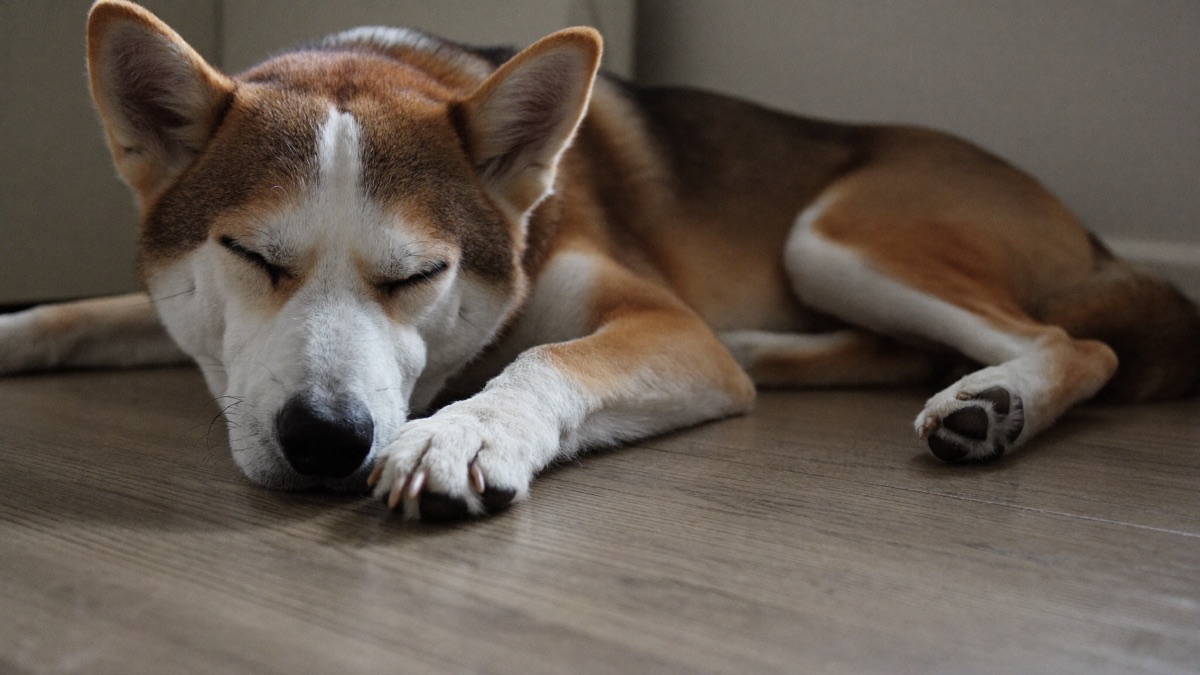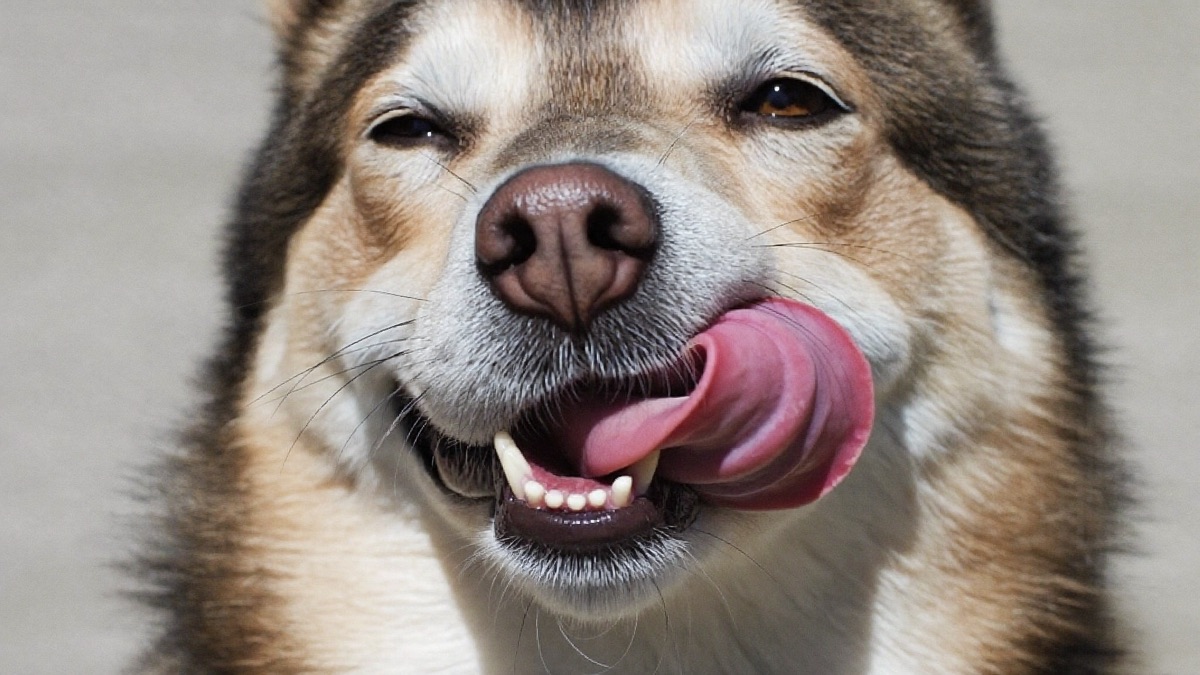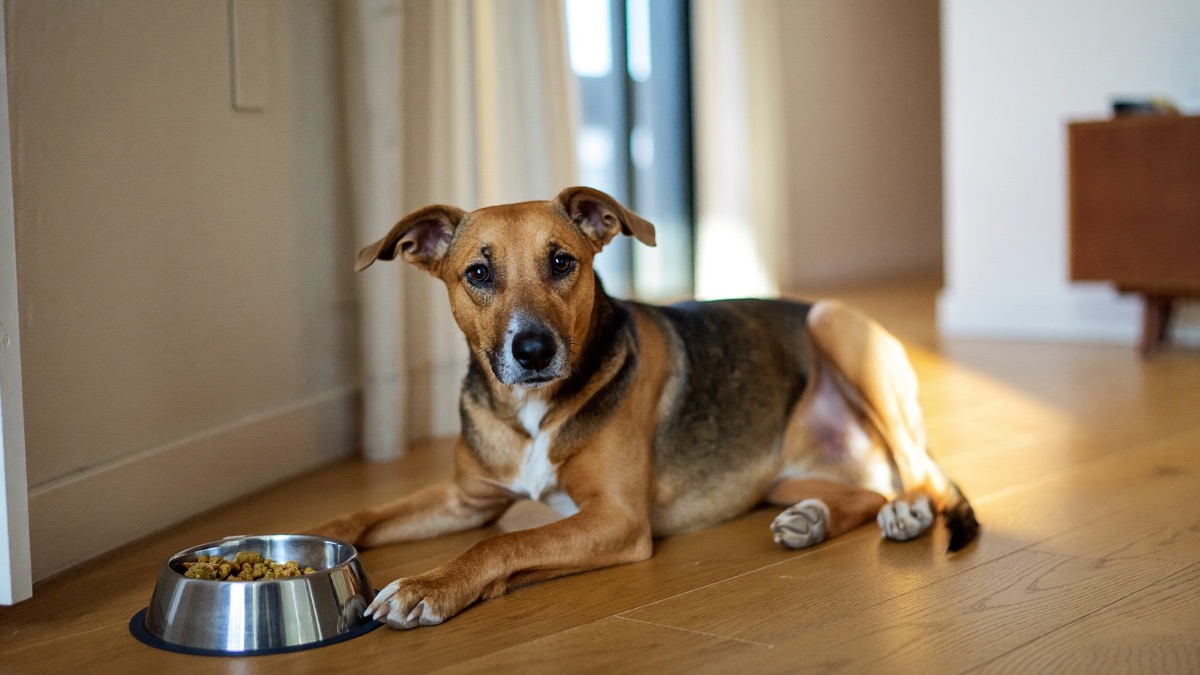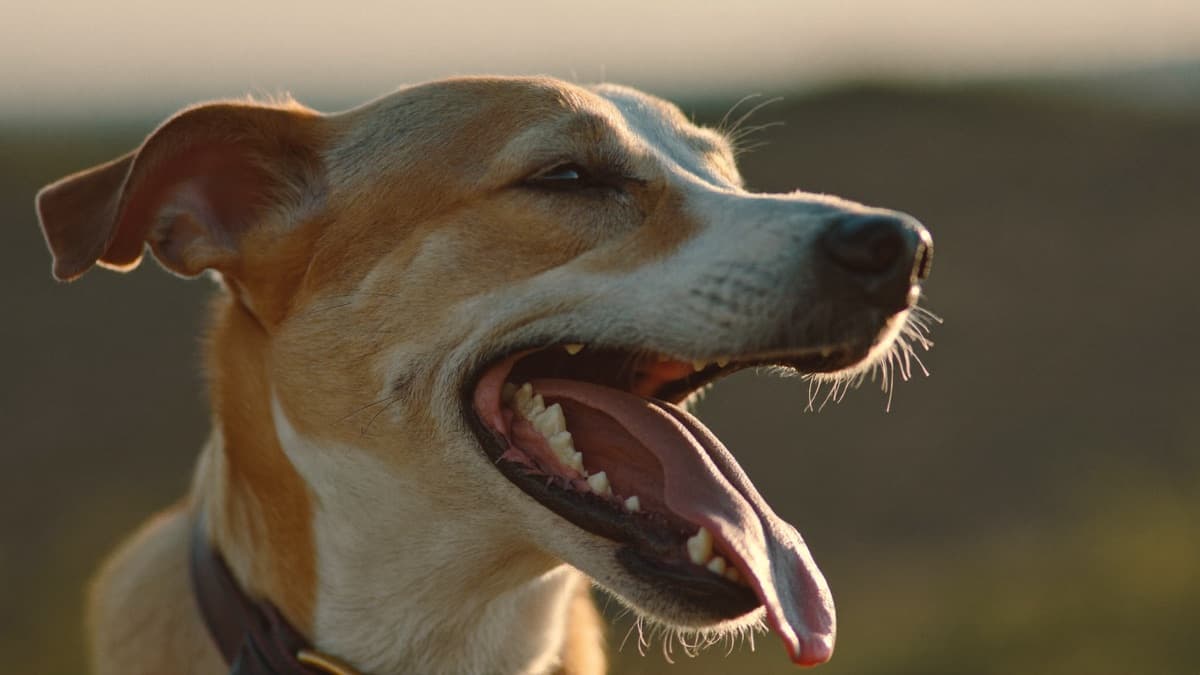
The dividing line is context: normal panting has an obvious cause and an off switch. Worrying panting doesn't.
Go to the vet now if...
Treat panting as an emergency when you see any of the following:
- Suspected heat stroke: frantic, relentless panting after heat exposure, thick ropey drool, gums turning brick red (or later pale/blue), vomiting, diarrhoea, staggering, or collapse. Start cooling on the spot — shade or aircon, cool (not iced) water poured over the body, fan or moving air — and drive to the vet while cooling. Do not wait to "see if it passes"; organ damage progresses by the minute.
- Blue, grey, purple, or white gums or tongue — oxygen isn't getting through. Emergency, full stop.
- Panting with laboured breathing at rest — long neck, elbows out, refusing to lie down, or breathing that looks like work. This is respiratory distress, not panting.
- Sudden panting with a swollen or hard belly, retching, and restlessness — possible bloat (GDV), rapidly fatal without surgery.
- Panting with collapse, extreme weakness, or pale gums — possible internal bleeding, heart failure, or shock.
- Panting after possible toxin exposure or with a known heart condition that suddenly worsens.
Know where your nearest 24-hour emergency vet is before you need it — the Singapore Veterinary Association's directory of vet centres is a quick way to find clinics near you.
Is my dog panting because of heat?
Usually — dogs barely sweat, so panting is their cooling system, evaporating water off the tongue and airways. After a walk or zoomies, expect minutes of open-mouthed panting that eases with rest, shade, and water.
In Singapore and Malaysia, though, heat deserves respect year-round: 30°C-plus with high humidity is exactly the condition where panting stops working, because evaporation fails when the air is already saturated. Practical rules for tropical dog ownership:
- Walk at dawn or after sunset; skip midday entirely. Pavement that's too hot for your palm for seven seconds is too hot for paws.
- Never leave a dog in a parked car, even briefly, even in shade — cabin temperatures rocket within minutes.
- Watch brachycephalic breeds (Pugs, French Bulldogs, Shih Tzus, Bulldogs) doubly hard. Their compressed airways make panting inefficient, so they overheat faster and their noisy, effortful breathing can mask real distress. Overweight, senior, thick-coated, and heart/airway-disease dogs are also high risk.
- Provide water and airflow on every outing; a wet towel and shade beat pushing on.
Heat stroke can develop from ordinary exercise in humid heat — no car required. Know the signs listed above, and remember dogs will keep playing well past the point they should stop.
Why is my dog panting for no reason?
If heat and exercise don't explain it, work through the usual suspects:
- Pain. One of the most missed signs in dogs. Panting with pacing, restlessness, reluctance to settle, licking one spot, or a hunched posture — especially in a senior — often means pain, commonly arthritis. Dogs hide pain; panting leaks it.
- Anxiety and fear. Thunderstorms, fireworks, separation, car rides. Look for the cluster: panting plus pacing, trembling, lip-licking, yawning, clinginess. Address the emotion with safe spaces, gradual desensitisation, and vet-guided anti-anxiety medication where needed — never punishment, which deepens the fear driving the panting.
- Heart and lung disease. Failing hearts and diseased airways trade oxygen poorly, so dogs pant to compensate. Suspect it when panting comes with cough, tiring on walks that used to be easy, or breathing faster than ~30 breaths per minute while asleep — that sleeping respiratory rate is a genuinely useful home check for heart patients.
- Cushing's disease. A hormonal condition (excess cortisol) of mostly middle-aged and older dogs. The classic picture: persistent panting plus drinking and urinating far more, ravenous appetite, a pot-bellied look, thinning coat. Very treatable once diagnosed.
- Other causes your vet will consider: fever, anaemia, obesity, laryngeal paralysis (loud, raspy breathing in large older breeds), and medications — prednisone and other steroids commonly cause panting.
Why is my dog panting at night?
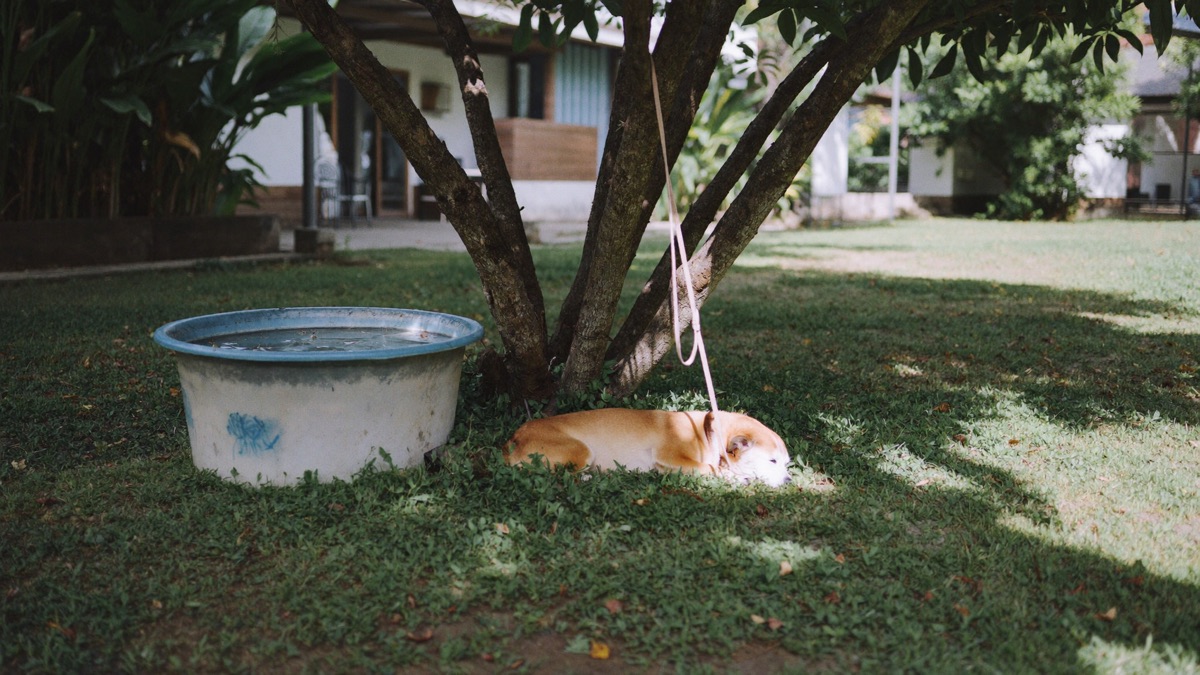
Night panting earns its own section because it filters out the innocent explanations. A dog panting at 2 am in an air-conditioned bedroom isn't hot and isn't exercising — so what remains is the medical and emotional list: pain (arthritic joints stiffen at rest), heart disease (fluid shifts lying down), Cushing's, and anxiety or, in seniors, cognitive dysfunction, which disrupts sleep-wake cycles and shows up as night-time pacing and panting.
One restless tropical night with the fan off proves nothing. Recurring night panting is a pattern, and patterns go to the vet: a physical exam, blood work, and chest imaging catch most of the causes above early, when they're most treatable. Film an episode — a 30-second video of the breathing tells your vet more than any description.
The rule of thumb that covers everything: panting should make sense. When it stops making sense — too much, too long, too loud, wrong time — that's your dog asking for a check-up.