| Quick facts | |
|---|---|
| Size | Medium–large (48–60 cm at the shoulder) |
| Weight | 16–30 kg |
| Lifespan | 12–14 years |
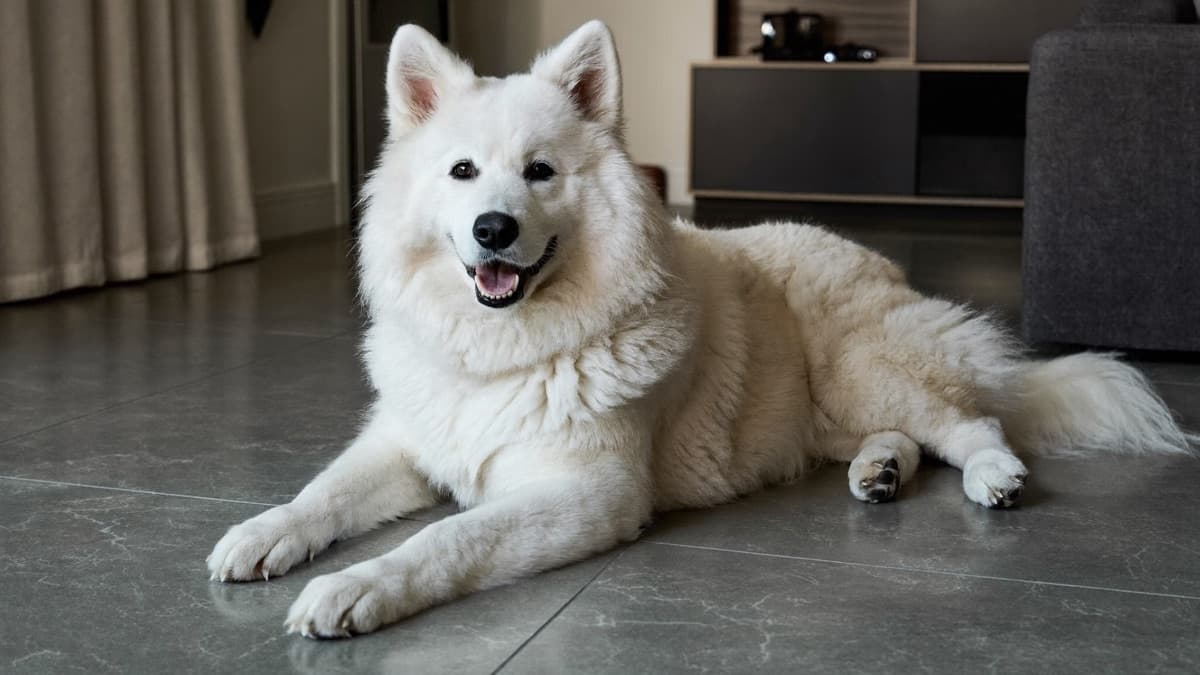
| Coat | Profuse white double coat, built for Arctic cold |
| Exercise | High — 60–90 minutes daily |
| Apartment suitability | Poor–moderate; vocal and energetic; not HDB-approved in Singapore |
What is a Samoyed's temperament like?
Samoyeds are among the friendliest of the spitz breeds — bred to work in teams and sleep in tents with their people, they genuinely like humans, including strangers. That famous "Sammy smile" comes with a gentle, playful, family-oriented nature, and they are usually good with children and other dogs.
The trade-offs are real. Samoyeds are needy: left alone for long workdays they become loud and destructive, and this is one of the most vocal breeds you can own — expect barking, howling, and running commentary that neighbours in a condo will notice. They are intelligent but easily bored, with a streak of husky-style independence, so recall is mediocre and training needs to stay fun. They also dig, chase small animals, and retain a working dog's engine that does not switch off because it is hot outside.
What health problems do Samoyeds have?
Samoyeds are reasonably healthy but carry several breed-specific risks. A responsible breeder screens for:
- Hip dysplasia — both parents should have OFA/BVA hip scores.
- Progressive retinal atrophy (PRA) — a DNA test exists for the Samoyed form; parents should be tested clear, plus a current ophthalmologist eye exam.
- Samoyed hereditary glomerulopathy — an inherited kidney disease of the breed, X-linked and serious in affected males; a DNA test is available and good breeders use it.
- Cardiac disease — ask for a cardiac evaluation on breeding stock.
- Diabetes mellitus and hypothyroidism — both appear at above-average rates in the breed; there is no pre-breeding screen, so ask about family history.
Insist on seeing certificates. A breeder who cannot produce hip scores and PRA/glomerulopathy DNA results is not a breeder to buy from.
How much grooming does a Samoyed need?
More than almost any breed on this site. The double coat needs line-brushing to the skin two to four times a week, daily during the once- or twice-yearly coat blow. In humid Southeast Asian weather, damp undercoat mats fast and traps moisture against the skin, setting up hot spots and fungal infections — so drying the dog thoroughly after rain or baths is essential. Budget for professional grooming every four to six weeks. And never shave a Samoyed: the coat insulates against heat, shields the pink skin from sunburn, and often never regrows properly.

How much exercise does a Samoyed need?
A lot: 60–90 minutes of real exercise daily, plus mental work. Herein lies the tropical dilemma — the dog needs the most exercise of the five breeds in this series, in a climate where it can safely exercise the least. Under-exercised Samoyeds are barky, destructive, and miserable. Indoor play, treadmill work, nose games, and air-conditioned dog gyms become part of the routine here, not luxuries.
Can a Samoyed live in Singapore or Malaysia?
Honestly: this is one of the worst climate matches in dogdom, and you should think hard before choosing a Samoyed here. The breed was developed by the Samoyedic peoples of Siberia to herd reindeer and pull sledges in extreme cold; every part of its design holds heat in. Samoyeds do live in Singapore and Malaysia, but the ones doing well share the same regime:
- Air-conditioning most of the day — not a fan, not a shaded balcony. Heat plus humidity means panting barely works.
- Walks before sunrise or after sunset only, short and unhurried, with water carried. Watch the dog, not the clock.
- Zero tolerance for heatstroke signs: heavy panting that will not settle, thick drool, bright-red gums, wobbling, vomiting, collapse. Begin cooling with room-temperature water and go to a vet immediately — heatstroke is fatal in under an hour in severe cases.
- Never shave the coat; keep the undercoat stripped out by brushing instead.
Housing: in Singapore, HDB flats permit only dogs on the approved small-breed list, which does not include the Samoyed — private housing only, and check the current AVS/HDB list before committing since it is revised over time. In Malaysia, check local council licensing and strata house rules, which often cap dog size.
Who should not get a Samoyed?
Skip the Samoyed if you work long hours away from home, live without air-conditioning, dislike grooming, or need a quiet dog. Choose one if you can offer company, cool air, daily brushing, and creative indoor exercise — and you accept that you are keeping an Arctic dog in the wrong hemisphere and compensating every single day.