What is a Telomian dog?
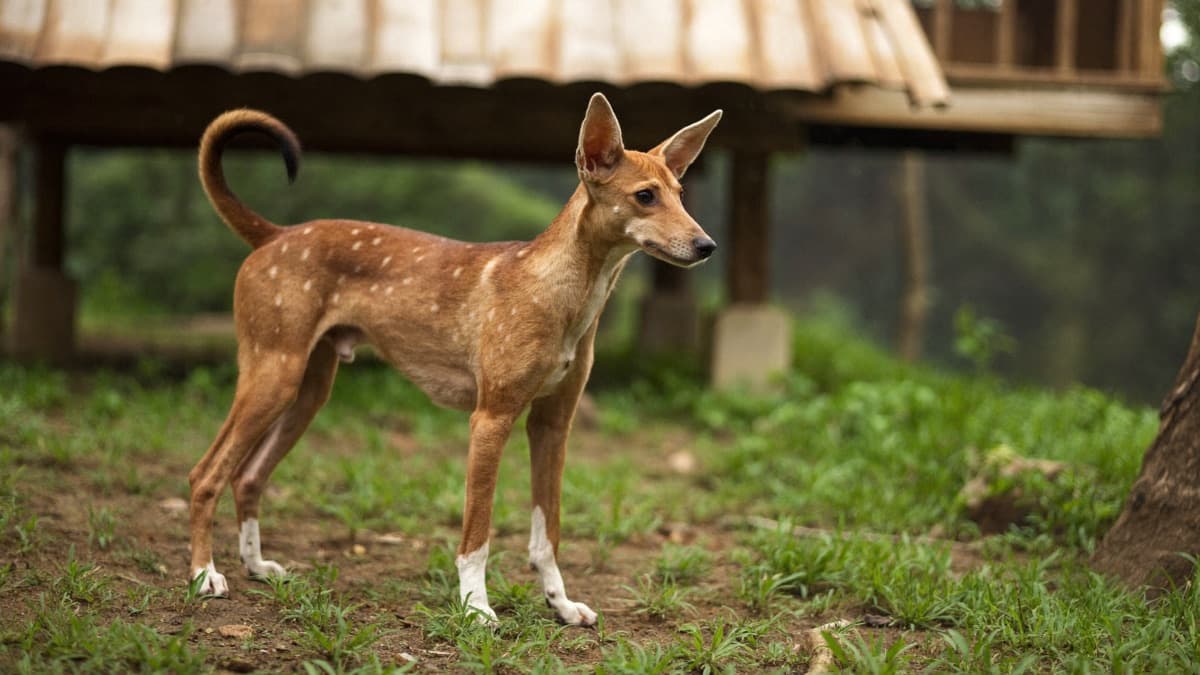
The Telomian is a small-to-medium hunting and ratting dog kept for generations by the Orang Asli in isolated villages of the Malay Peninsula's rainforest. It guarded stilt huts and killed rats, snakes and other vermin, which is why the dog developed its most famous trick.
Dr Orville Elliot, an anthropologist, came across the dogs near the Telom River in 1963 and named them after it. He sent a pair to the United States for study by the behavioural scientist J. P. Scott; a second pair followed in 1973, and every Telomian in the United States descends from those four dogs.
| Quick facts | |
|---|---|
| Size | 38–48 cm at the shoulder |
| Weight | 8–13 kg |
| Lifespan | About 12–14 years (limited data; very small population) |
| Coat | Short and smooth; red, yellow or sable, often with white (piebald) markings and sometimes a black mask |
| Distinctive traits | Climbs ladders; howls rather than barks; bluish-black tongue in some dogs; females come into season once a year |
| Recognition | Not FCI, AKC or MKA; minor US registries only |
Can a Telomian really climb?
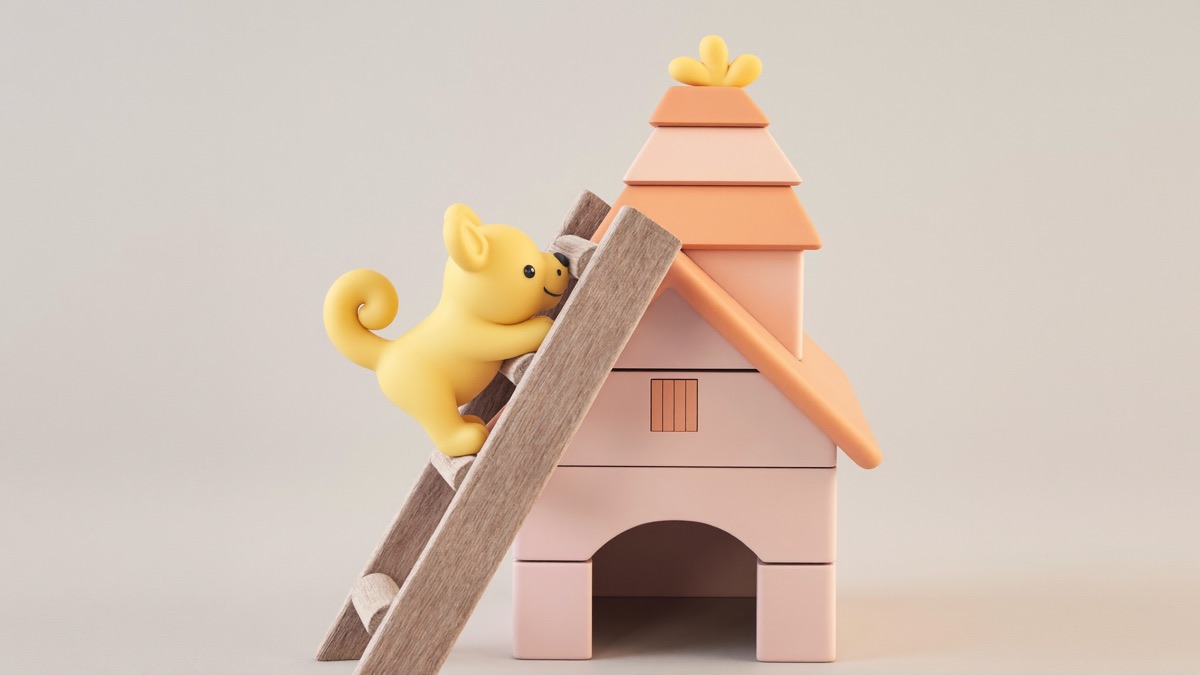
Yes, and it is the trait that made the dog notable. Orang Asli houses are built on stilts, roughly two metres up, and reached by a ladder. Telomians learned to climb up and down them, and the breed developed unusually mobile front paws that can grip.
Owners in the US describe dogs that open doors, hold objects between their paws and go up and down ladders with ease. It is a learnt skill layered on a physical quirk, so a Telomian raised in a flat may never bother — but it will still work out how to open the kitchen cupboard.
What is the Telomian's temperament like?
Sources agree on the core: intelligent, alert, curious, energetic and territorial, with a strong hunting drive and a terrier-like independence. The dog was bred to think for itself in the jungle, so it is not a push-button obedience breed.
The two descriptions of friendliness differ. Older breed pages call it a friendly dog that gets on with children and strangers; a 2025 Petbook profile calls it brave, protective and independent, not suitable for beginners, and says small children are not ideal playmates. Both agree that early socialisation is what decides which dog you get. Expect howling rather than barking, a dog that hunts anything small that moves, and a lot of energy for its size.
What health problems do Telomians have?
There is no breed health survey, because there are too few dogs. Breed pages describe the Telomian as generally healthy with a lifespan of about 12–14 years, and its village-dog ancestry would normally support that.
The genuine risk is genetics. The entire US population traces to four animals, so inbreeding is unavoidable, and a 2025 breed profile says a susceptibility to degenerative or autoimmune conditions cannot be ruled out for that reason. The single annual heat cycle is another sign of how close this dog still is to a wild-type canid. Ask any breeder for the coefficient of inbreeding of a litter, not just a health guarantee.
Is the Telomian a recognised breed?
No. Neither the Fédération Cynologique Internationale (FCI) nor the American Kennel Club recognises the Telomian, and in 2017 the Malaysian Kennel Association went further. Its president, Gopi Krishnan, told The Malaysian Insight the Telomian was "a myth by some Americans after profit" and "just a pariah dog", noting that FCI recognition needs "at least 10 to 15 generations of consistent and documented breeding" and a written breed standard.
Only small US registries such as the American Pet Registry Inc. (APRI) and the Dog Registry of America (DRA) list it. That does not make the dogs any less real — the population near the Telom River existed and was studied — but it does mean "Telomian" on an advert carries no pedigree weight in Malaysia.
Where can I find a Telomian dog?
Realistically, only in the United States, from the handful of breeders descended from the Telomian Dog Club lines. We found no Malaysian breeder registering Telomians; the MKA told The Malaysian Insight there have been no formalised studies of the dog population, and Cilisos reports the dogs in Malaysia are mostly crossbred already.
If what attracts you is the type — a compact, short-coated, heat-adapted local dog — you can have that tomorrow. Malaysian shelters and rescue groups are full of Telomian-looking mongrels, and Singapore's equivalent, the Singapore Special, fills the same niche across the Causeway. Both are far cheaper, already climate-proof and free of the four-founder genetic bottleneck.
What to do next
- Want the look and the temperament? Browse local shelters via our dog adoption guide or a Malaysian rescue group rather than chasing an imported pup.
- Considering a US-bred Telomian? Ask the breeder for a pedigree and inbreeding coefficient, and remember that any dog imported into Malaysia must meet the standard DVS import rules.
- Comparing local-type dogs with pedigree options? Our overview of the most popular breeds in Singapore and Malaysia is the place to start.