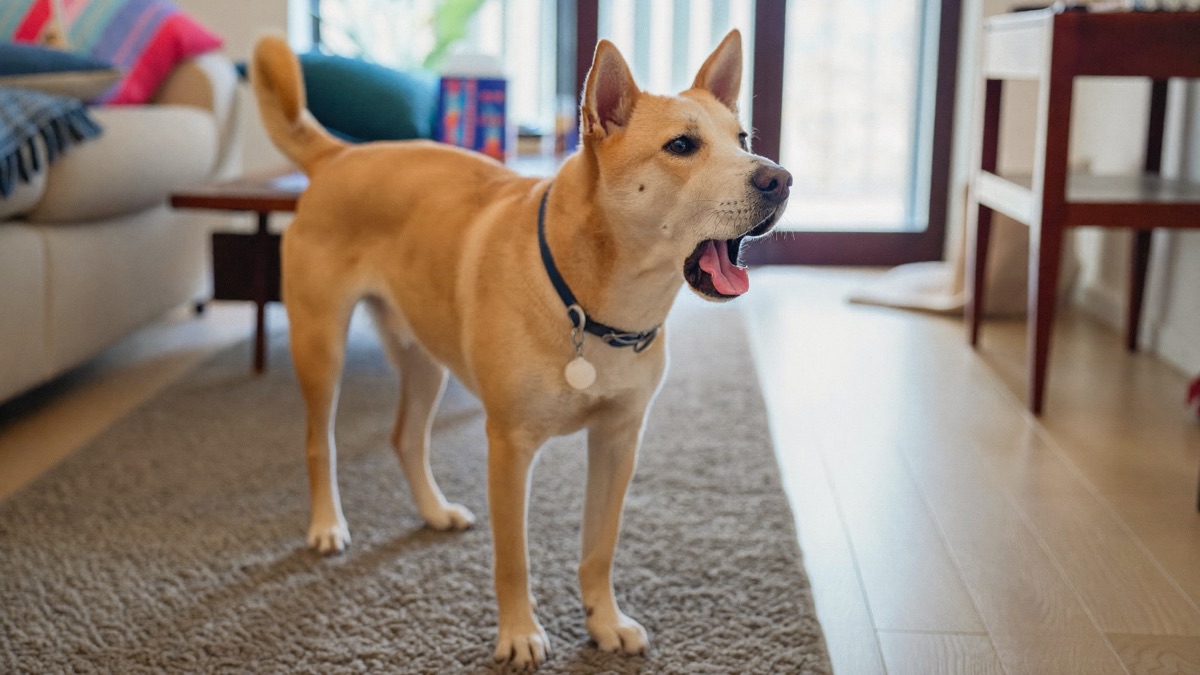
Go to a vet now if any of these are true
- Laboured or rapid breathing at rest, flared nostrils, or breathing with the belly.
- Blue, purple, or grey gums or tongue — oxygen isn't getting through. This is an emergency.
- Coughing up blood, or frothy pink fluid.
- Collapse or fainting during coughing or excitement.
- A dog that cannot settle at night — pacing, sitting up to breathe, refusing to lie flat. Classic for fluid on the lungs from heart failure.
- Gagging and retching with a swollen belly or distress — rule out choking and bloat.
- A cough in a dog with known heart disease that has suddenly worsened.
- A puppy coughing with lethargy, fever, or thick nasal discharge — pneumonia risk.
In Singapore or Malaysia, call your nearest 24-hour emergency vet immediately if any of these apply.
What does the cough sound like?
Vets lean heavily on the sound, so record a video before your visit — coughing dogs go mysteriously silent in clinics.
- Dry, hacking, honking — often ending in a gag or retch of white foam. The signature of kennel cough, and owners frequently mistake the final retch for vomiting or "something stuck in the throat."
- A goose-honk triggered by excitement, pulling on the collar, or picking the dog up. Tracheal collapse until proven otherwise, especially in a middle-aged Chihuahua, Pomeranian, Yorkie, Maltese, or Shih Tzu.
- A soft, wet cough, worse at night or first thing in the morning, often with reduced stamina. Points towards heart disease with fluid accumulation, or pneumonia.
- A chronic, mild cough with tiring on walks in a dog not on regular heartworm prevention — heartworm belongs on the list.

Is it kennel cough?
Kennel cough (canine infectious tracheobronchitis) is a highly contagious airway infection picked up from other dogs — boarding, daycare, dog runs, grooming. The cough is dramatic but the dog is typically otherwise well: eating, playing, no fever. Most healthy adults recover in one to three weeks with rest; your vet may prescribe cough suppressants or, in some cases, antibiotics. Keep the dog away from other dogs for at least two weeks after the cough resolves, swap the collar for a harness, and see a vet promptly if the dog becomes flat, febrile, or off food — that suggests progression toward pneumonia. Vaccination reduces risk and severity and is required by most boarding facilities — in Singapore, boarding and daycare businesses are licensed by the Animal & Veterinary Service (AVS), and reputable ones will ask for proof.
Could it be heart disease?
Small-breed dogs over about eight years old commonly develop mitral valve disease; large breeds get their own heart muscle diseases. A heart cough tends to be soft and wet, worse at night and with excitement, and comes packaged with other clues: slowing down on walks, faster breathing during sleep, and eventually restlessness at night. A genuinely useful home test: count your dog's breaths per minute while fully asleep. Consistently above 30 breaths per minute in a sleeping dog warrants a vet visit soon; a sharp rise in a dog with known heart disease is urgent.
What about tracheal collapse?
In many toy breeds the cartilage rings holding the windpipe open soften with age, letting the trachea flatten during excitement or exertion — producing the unmistakable goose honk. It is managed, not cured: weight control (the single biggest lever), a harness instead of a collar, avoiding heat and over-excitement, and vet-prescribed cough suppressants. Severe cases have surgical options. An overweight, honking Pomeranian on a neck collar is a fixable situation.
Heartworm: the tropical angle
Heartworm is transmitted by mosquitoes, and in tropical climates like Singapore and Malaysia transmission runs all year — no off-season. Adult worms live in the heart and lung vessels; the signs are a soft chronic cough, exercise intolerance, and weight loss, appearing months after infection. By the time a dog coughs from heartworm, damage is established, and treatment is long, expensive, and risky. Prevention — monthly chews or an annual injection from your vet — is close to 100% effective. Any coughing dog not on year-round prevention should be heartworm tested.
When a cough becomes a pattern
One-off coughs happen. A cough that recurs daily for more than a week, wakes the dog at night, or pairs with reduced stamina has a cause that is findable — usually with a chest X-ray, a good listen, and a heartworm test. Book the appointment and bring the video. If you don't yet have a regular clinic, the Singapore Veterinary Association's directory of vet centres lists clinics island-wide; in Malaysia, the Department of Veterinary Services is the national authority overseeing veterinary practice.