How do I measure for the stand-turn-lie-down rule?
Two measurements decide everything, taken from the adult dog — or, for a puppy, estimated from the expected adult size of the breed or mix:
- Length: nose to base of tail (not tail tip), plus ~10 cm
- Height: floor to top of head standing (ears up for pricked-eared dogs), plus ~5–10 cm
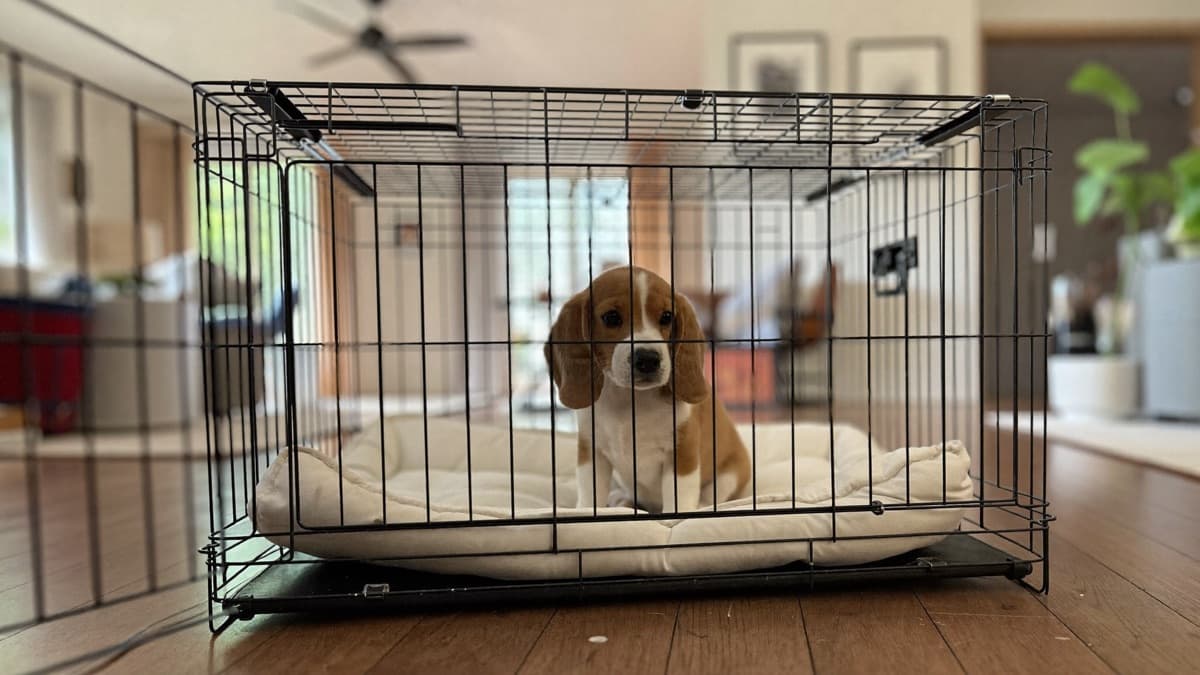
If the dog can stand, turn and stretch out flat on their side, it's big enough. Much bigger than that actively works against you: house training runs on the instinct not to soil the sleeping area, and a half-empty crate offers a bed at one end and a toilet at the other. Snug-but-comfortable is the target — the same principle our crate training guide builds its whole method on.
What size crate for my puppy's expected adult weight?
Wire crates sell in standard lengths, so the chart maps expected adult weight to the usual size:
| Crate length | Expected adult weight | Typical breeds |
|---|---|---|
| 46–56 cm (18–22") | Under 5 kg | Chihuahua, toy poodle, Pomeranian |
| 61 cm (24") | 5–11 kg | Maltese, Shih Tzu, mini dachshund |
| 76 cm (30") | 11–18 kg | Corgi, Beagle, Singapore Special (smaller) |
| 91 cm (36") | 18–30 kg | Border Collie, most Singapore Specials |
| 107 cm (42") | 30–40 kg | Labrador, Golden Retriever, GSD |
| 122 cm (48") | Over 40 kg | Large GSDs, giant breeds |
For mixed breeds, estimate from the parents if known; otherwise your vet can make a fair guess from paw size and growth curve at the vaccine visits. When in doubt between two sizes, take the larger — the divider handles the difference.
What is the divider trick?
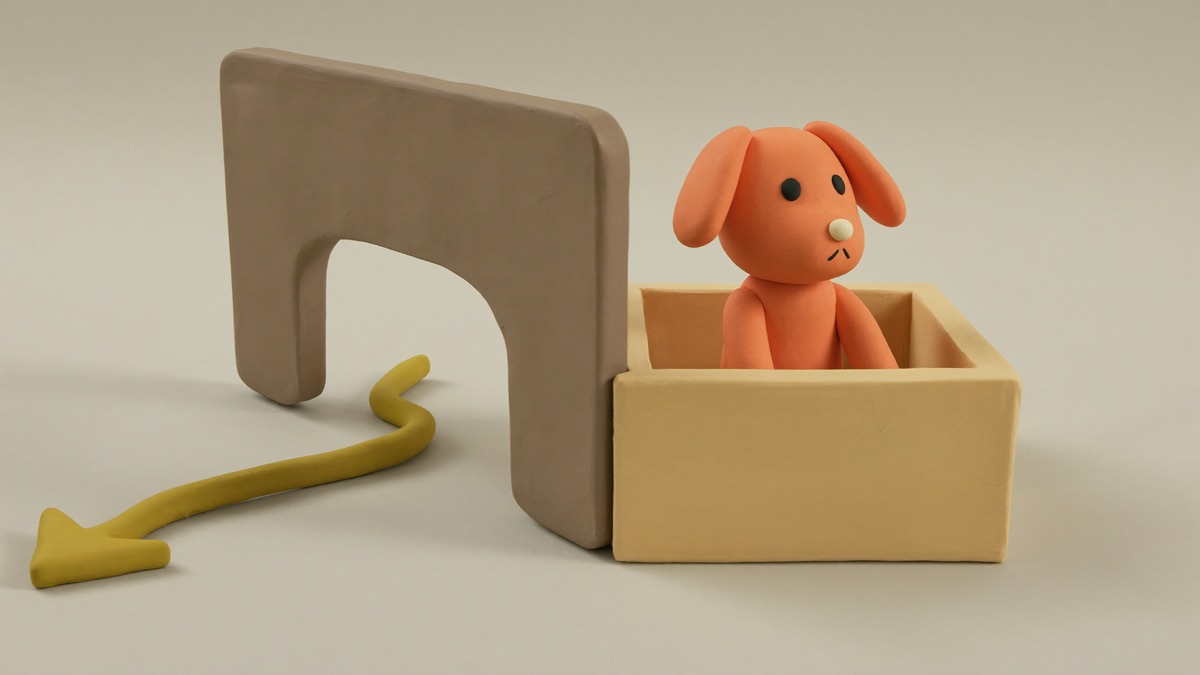
Buy the adult-size crate with a divider panel (most wire crates include one, or sell it cheap) and wall off just enough space for the puppy's current stand-turn-lie-down. Every few weeks, as the puppy grows, move the divider back a notch. One crate purchase, correct fit at every age, and the house-training mechanic stays intact throughout. No divider in the box? A cheap improvised barrier — a securely zip-tied panel of coated wire grid — does the same job.
Wire, plastic or soft crate — which works in tropical heat?
In Singapore and Malaysia, airflow decides this contest before anything else does.
- Wire (open metal): the default choice here. Airflow on all four sides, puppy can see the household, folds flat, takes a divider. In a climate where a dog cools itself by panting, ventilation isn't a comfort feature — it's the safety feature.
- Plastic (enclosed travel style): solid walls trap heat and block airflow — a real problem in an un-air-conditioned room at 32°C. Its legitimate role is travel: airlines require rigid enclosed crates, so treat it as transport equipment, not daily housing. If you use one at home, position it where air moves and never in sun.
- Soft/fabric: light and portable, but a determined puppy chews or claws through in minutes, and zips are not security. They suit calm, fully crate-trained adult dogs at events or trips — not puppies, and not house training.
Whichever type, skip thick padded bedding in our heat — a cotton towel or a cooling mat beats a plush bed a puppy will also happily shred.
Where should the crate go in an HDB flat?
Placement decides how fast a puppy settles:
- Living area, in a corner with two solid sides — part of family life but out of the traffic lane.
- Away from the front gate and the corridor wall — lift chimes, neighbours' slippers and door slams are exactly what a settling puppy doesn't need.
- Out of the afternoon sun. A crate by a west-facing window bakes; check the spot at 4pm before committing.
- Not directly under the aircon vent or a fan blasting on it — moving air nearby is good, a cold draught on a sleeping puppy isn't.
- Nights: crate in or near your bedroom at first, then migrate it out gradually — hearing you breathe is the cheapest cure for night crying.
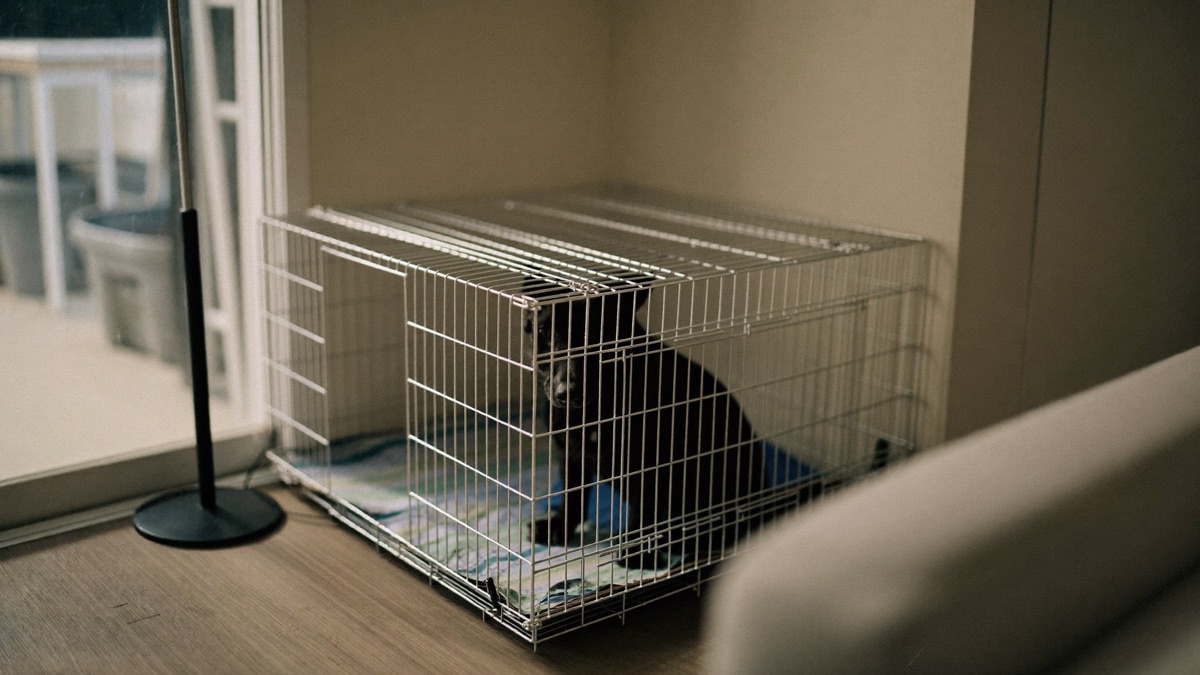
Get the size right, pick wire for the climate, park it in a calm corner — and the crate stops being equipment and starts being the puppy's favourite room, which is the entire point.