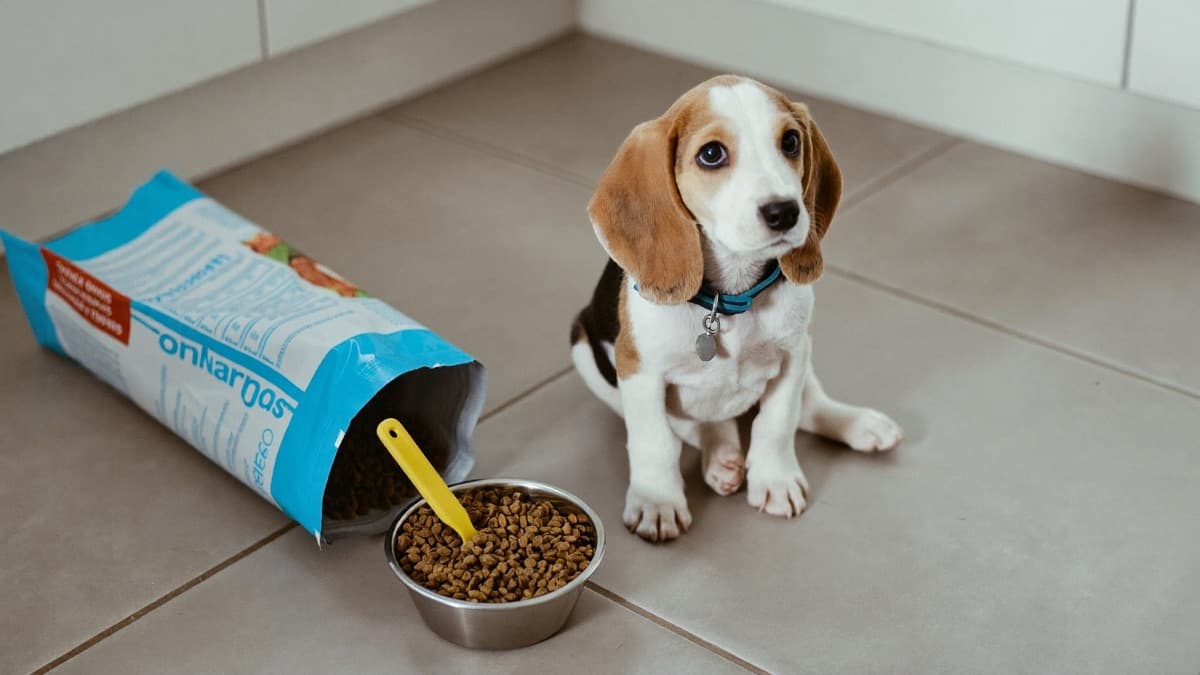
How many meals a day should a puppy have?
| Age | Meals per day | Notes |
|---|---|---|
| 8–12 weeks | 4 | Toy breeds: never skip meals — hypoglycaemia risk |
| 3–6 months | 3 | Drop the late-morning meal first |
| 6–12 months | 2 | Most dogs stay on 2 meals for life |
Fixed times, measured portions, bowl lifted after 15 minutes. This is the same rhythm as our puppy schedule guide — predictable meals are what make predictable toilet trips possible.
How many calories does a puppy need?
Vets estimate puppy needs from resting energy requirement (RER = 70 × bodyweight in kg⁰·⁷⁵): about 3 × RER until roughly 4 months old, easing to about 2 × RER from 4 months until adult size. As a feel for the numbers:
| Current weight | Under ~4 months (kcal/day) | Over ~4 months (kcal/day) |
|---|---|---|
| 2 kg | ~350 | ~235 |
| 5 kg | ~700 | ~470 |
| 10 kg | ~1,180 | ~790 |
| 20 kg | ~2,000 | ~1,330 |
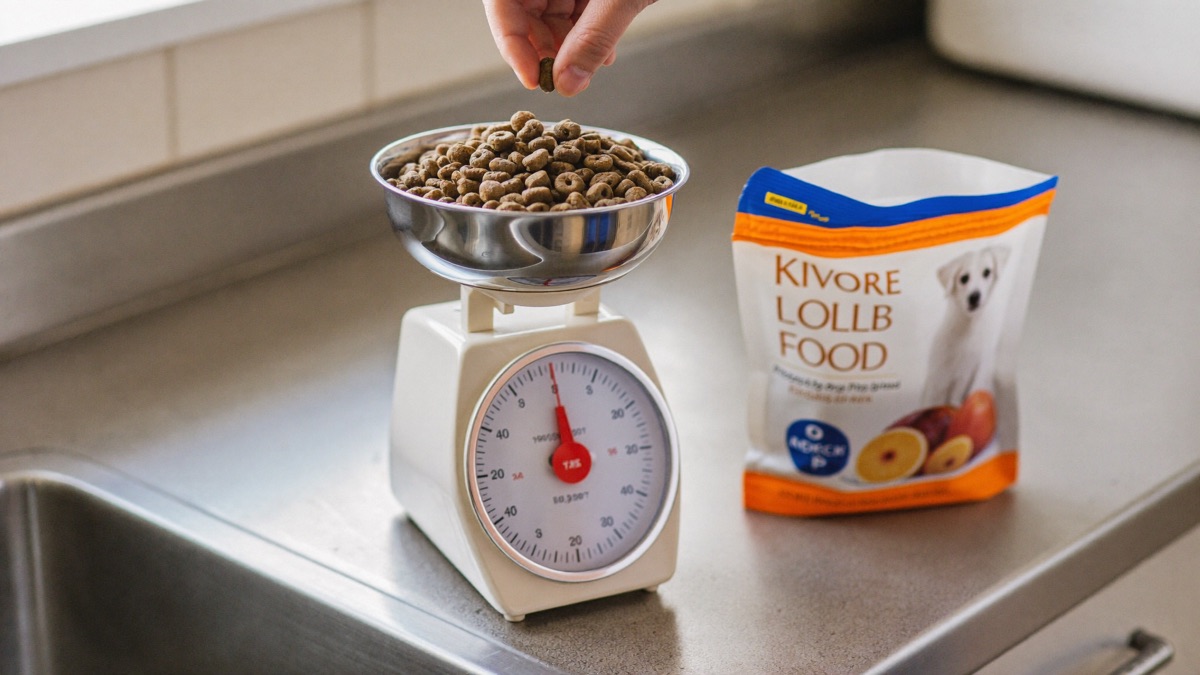
These are estimates with real individual variation — an active kampung-cross puppy and a couch-loving Shih Tzu of the same weight can differ by a third. Check the kcal-per-cup or kcal-per-100g figure on your bag (it varies hugely between brands), weigh portions on a kitchen scale rather than eyeballing a scoop, and recalculate every couple of weeks, because the "right" amount changes as the puppy grows. Which food to put in the bowl is its own decision — our puppy food guide covers the label checks that matter.
How do I do the ribs check on a puppy?
Once a week, hands on the puppy:
- Ribs: easily felt under a thin layer, like the back of your hand — not visible from across the room, not buried.
- Waist: visible from above, behind the ribs.
- Tummy tuck: from the side, the belly rises from chest to hindquarters.
A growing puppy should look slightly lean and a little lanky, especially through the juvenile months. Growth is not the same as chubbiness — the round, roly-poly puppy that relatives coo over is not "thriving", it's overweight, and the fat-puppy-is-healthy idea is a myth worth busting early. Puppyhood fat cells persist, overweight puppies skew toward overweight adults, and lean-fed dogs in lifetime studies lived significantly longer than their overfed littermates. If the ribs disappear, trim portions by about 10% and re-check in a week; if ribs and hip bones are prominent, add 10%.
Why is overfeeding a large-breed puppy a joint problem?
For puppies expected to exceed about 25 kg as adults — Labradors, Goldens, German Shepherds and up — overfeeding does more than add fat. Excess calories accelerate growth rate, and a skeleton pushed to grow faster than it can mineralise is the setup for developmental orthopaedic disease: hip and elbow dysplasia, osteochondrosis. Surgery manages these; nothing cures them.
So large-breed puppies get the strictest version of this article: a large-breed growth formula (controlled calcium and calorie density), measured meals, a permanently visible waist, and no calcium supplements ever. The goal is the same final size, reached more slowly, on straighter joints.
How do treats fit into a puppy's daily amount?
Treats live inside the daily calorie budget, not on top of it — no more than 10% of daily calories, with the main food carrying the other 90% so nutrition stays balanced. For a 10-week-old toy-breed puppy eating ~350 kcal a day, that's a 35 kcal treat budget: tiny.
Practical ways to train generously anyway: use rice-grain-sized soft treats, count out part of the day's kibble each morning as training currency, and skim the treat allowance off the measured meals rather than adding to them. Our treats-per-day guide has the full maths. During heavy training weeks (which is every week with a puppy), it's completely fine for a meal to be 20% smaller because the difference was earned hand by hand — that's not deprivation, that's just relocating the calories.
The one number to remember from all of this: zero. That's how many puppies stay the "right" amount for more than a few weeks — reweigh, re-check ribs, and re-portion as they grow.