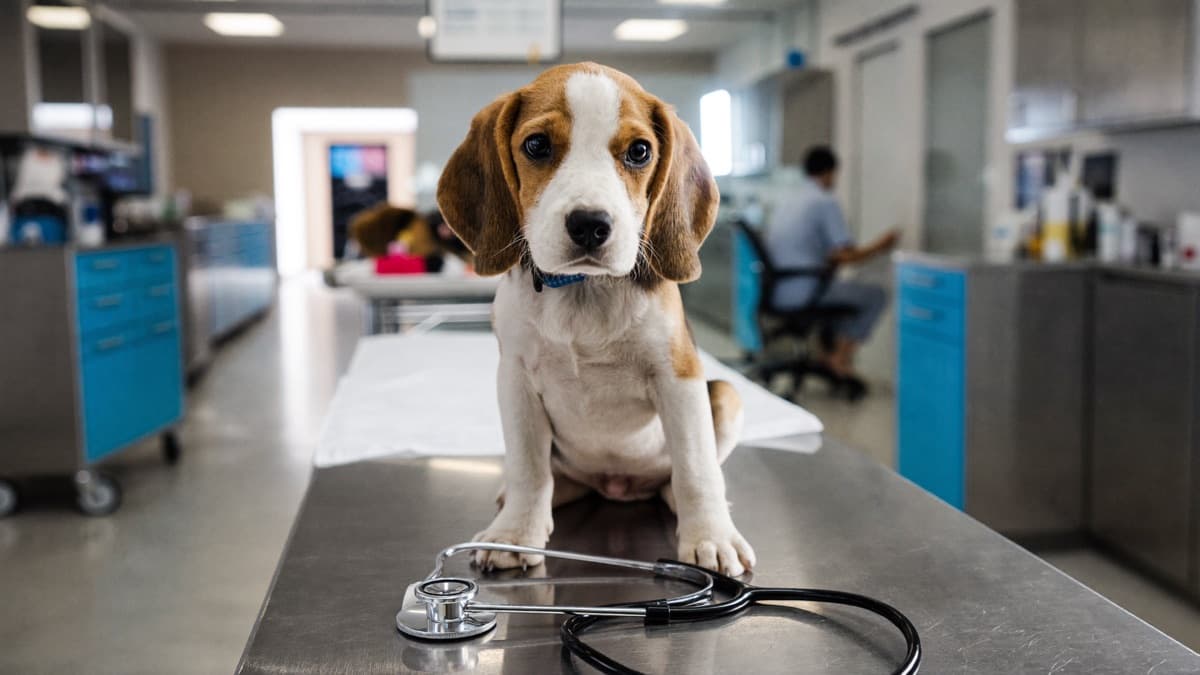
What happens during the first vet visit?
Four things, in roughly this order:
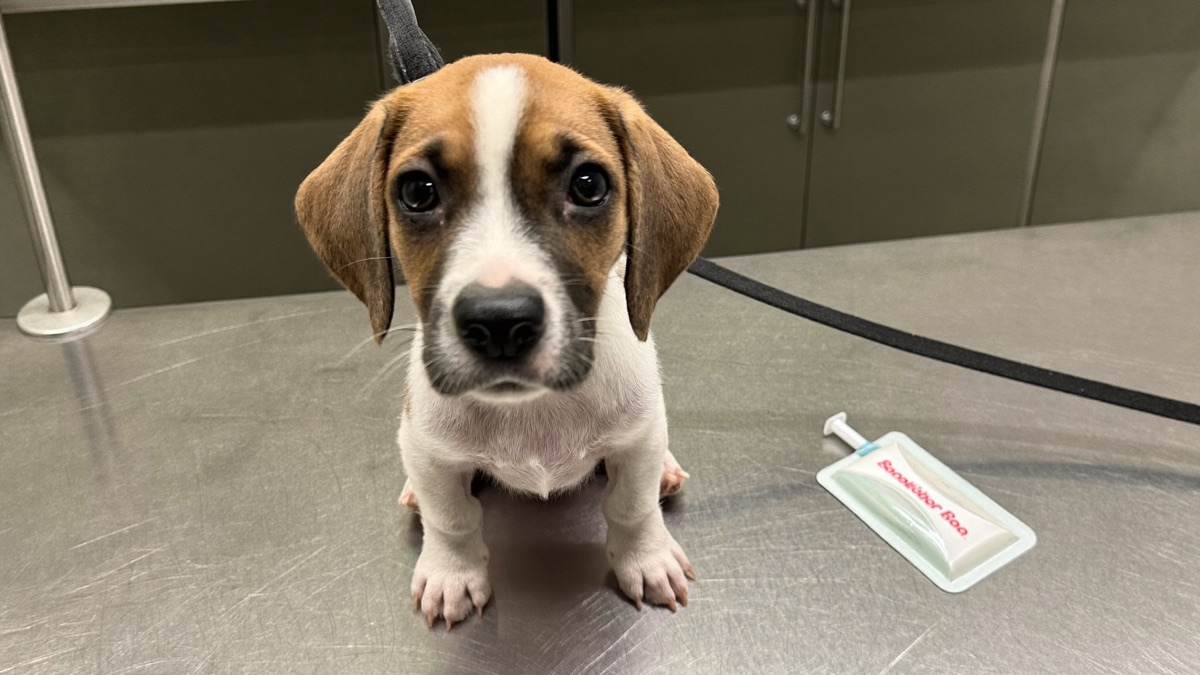
- A head-to-tail physical exam. The vet checks eyes, ears, mouth and bite alignment, listens to the heart and lungs (this is when murmurs get caught), palpates the belly, checks for umbilical hernias, examines skin and coat for fleas, ticks and ringworm, and confirms weight. Most of it looks like petting; all of it is diagnostic.
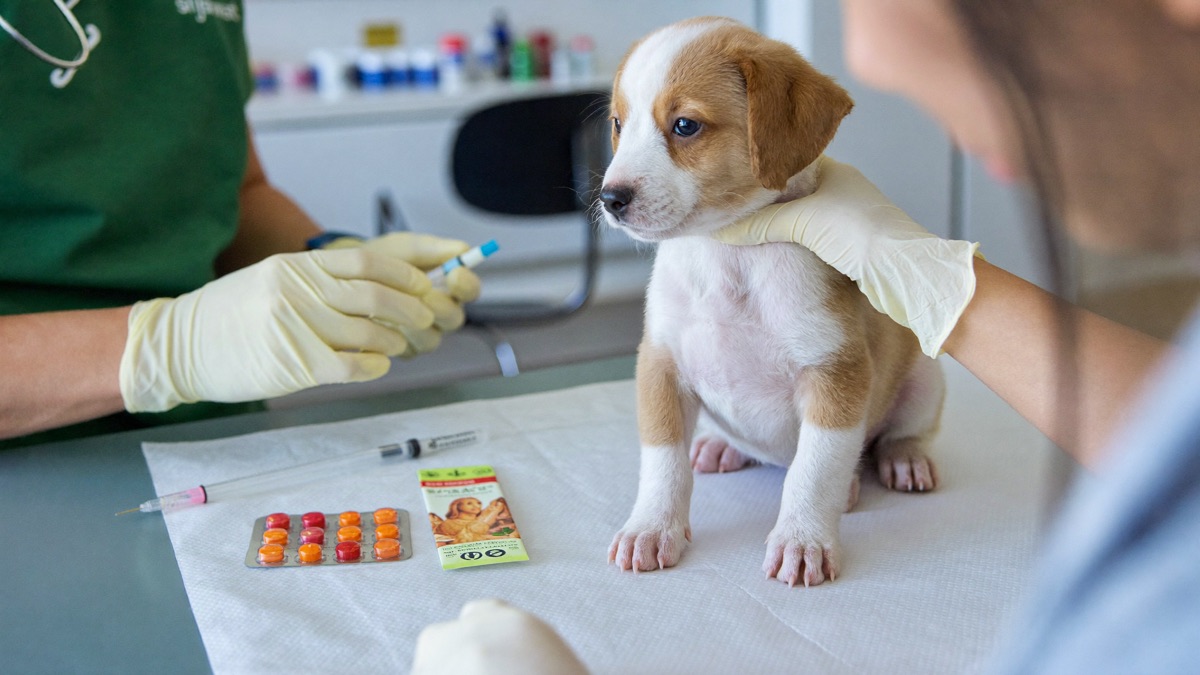
- A vaccine plan. Based on what the breeder or shelter already gave, the vet slots your puppy into the core series — DHPP doses every 3–4 weeks until at least 16 weeks. The logic and full timeline are in our puppy vaccination schedule; the first visit is where it gets personalised.
- Deworming. Puppies are dewormed every 2 weeks until about 12 weeks, then monthly — roundworms are near-universal in puppies and some transmit to humans, so this is not optional. Your stool sample (below) tells the vet whether anything nastier is on board. Expect a conversation about starting heartworm, flea and tick prevention too, which in our climate runs year-round.
- A microchip check. The vet scans for an existing chip and verifies the number against your paperwork. In Singapore, microchipping is required before you can licence your dog with AVS, so if your puppy isn't chipped, this visit is the natural time. In Sarawak, microchipping is legally mandatory alongside rabies vaccination.

What should I bring?
- Every document the breeder or shelter gave you — vaccination booklet, deworming dates, microchip certificate, pedigree or adoption papers. The vet builds the schedule off these; without them, doses may need repeating.
- A fresh stool sample in a clean bag or container, collected the same day if possible.
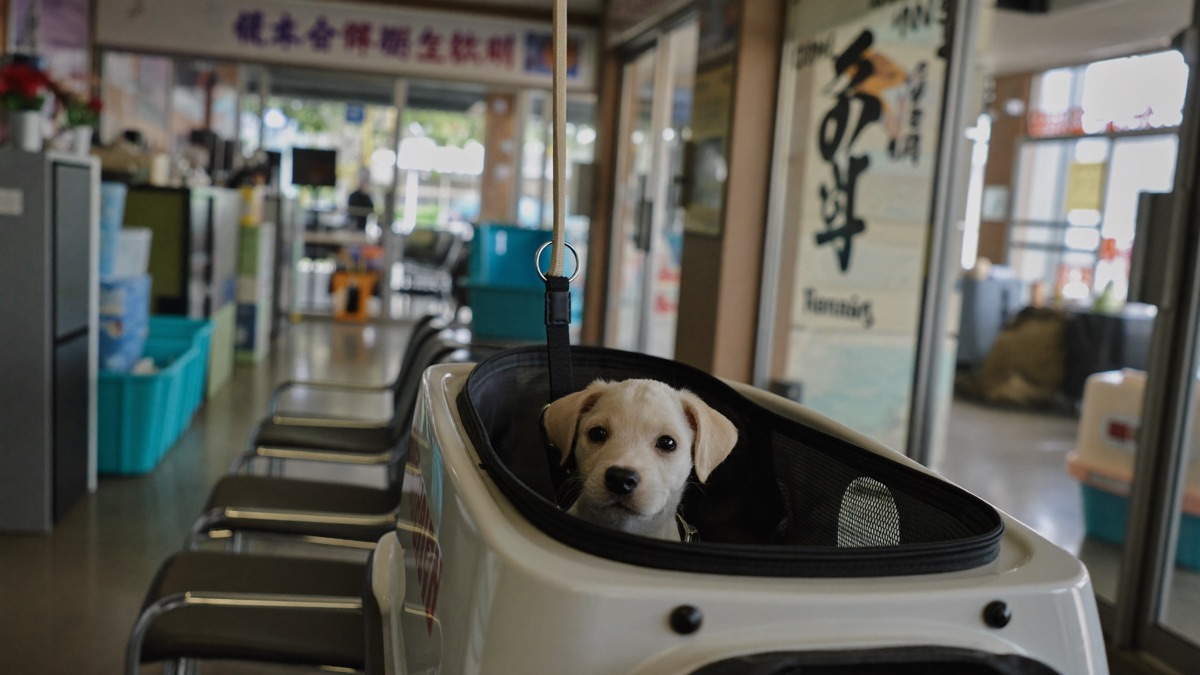
- The puppy in a carrier, not walking through the clinic — waiting rooms and clinic floors see sick dogs all day, and your puppy is mid-vaccine-series.
- A small pouch of their regular food or treats to make the table a good place.
- Your questions, written down. You will forget them otherwise.
What questions should I ask?
The first visit is cheap access to expertise — use it:
- What weight should this puppy be, and how much should I actually feed per meal?
- When is the final vaccine, and when after that is ground contact and dog-park access safe?
- Which parasite prevention do you recommend for our lifestyle, and how often?
- When would you sterilise, and what does it cost here?
- What are your emergency arrangements — are you 24-hour, and if not, which hospital do you refer to at 2am?
- Does anything about this breed need watching (airways in flat-faced breeds, kneecaps in toy breeds, hips in large breeds)?
How much does the first visit cost in Singapore and Malaysia?
As of 2026, typical neighbourhood-clinic pricing:
| Item | Singapore | Malaysia |
|---|---|---|
| Consultation | S$25–60 | RM35–80 |
| Vaccine dose (DHPP) | S$30–55 | RM50–120 |
| Deworming | S$10–30 | RM10–40 |
| Typical first-visit total | S$80–150 | RM100–250 |
| Microchip (if needed) | S$50–90 | ask your clinic |
Large private hospitals can run noticeably higher — consultations alone reach S$100+ — which is fine if that's the relationship you want, but routine puppy care doesn't require it. Full local pricing, including the whole vaccine course, is in our SG/MY vaccination cost guide.
How do I choose a clinic?
Pick one you can reach quickly, because you'll be back every 3–4 weeks through the vaccine series and, statistically, at least once in a panic. The Singapore Veterinary Association lists member clinics across the island; in Malaysia, look for a clinic registered with the Malaysian Veterinary Council and ask neighbours with dogs who they actually use. Beyond location, weigh opening hours, whether they handle their own after-hours emergencies or refer to a 24-hour hospital, and how the staff handle your puppy on visit one — a clinic that takes two minutes to feed treats and let the puppy relax is buying you a dog who walks into the vet happily for the next fifteen years.