What should I set up before my puppy arrives?
Do this before the puppy is in the flat, because you will not have hands free afterwards:
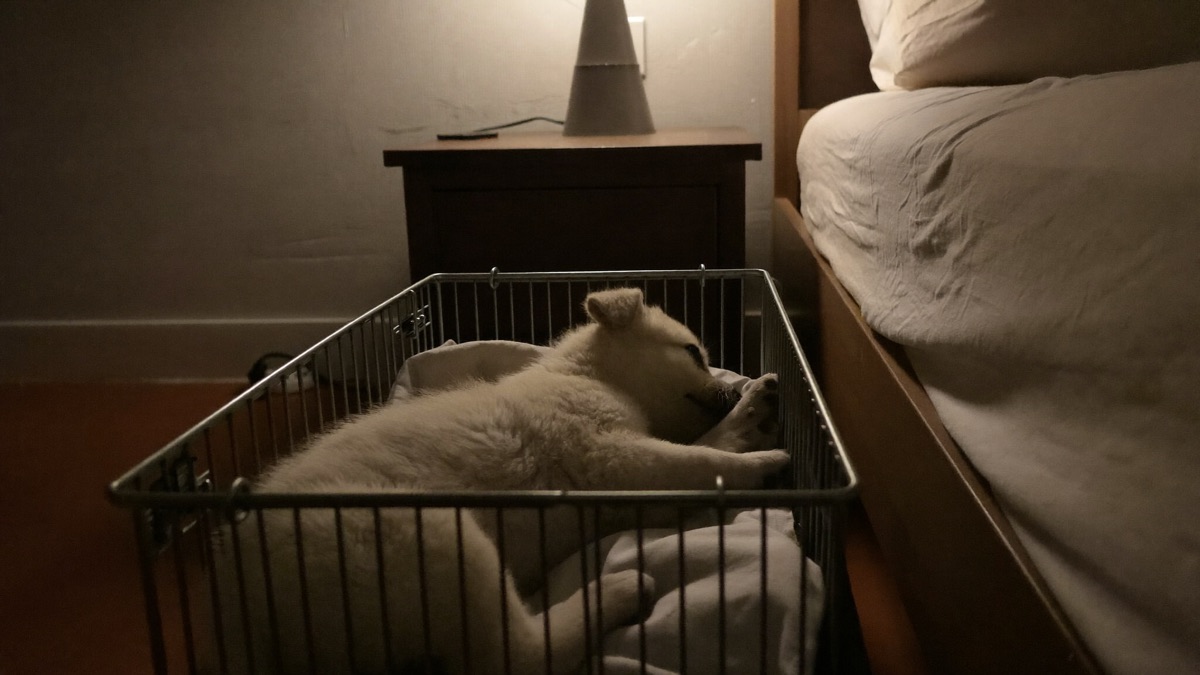
- Sleeping spot ready. Crate or small pen next to your bed, soft bedding, and a blanket that smells of the litter if the breeder or shelter gave you one. Our crate training guide explains how to make the crate a good place from hour one.
- Toilet spot chosen. Decide tonight's toilet route now — the grass patch downstairs, or a pee tray on the service yard if you're mid-toilet-training. Fumbling with lifts at 3am while holding a puppy with a full bladder is how accidents happen.
- Food sorted. Feed whatever the breeder or shelter was feeding, in the same amounts. A diet change on day one stacks diarrhoea on top of everything else.
- Hazards cleared. Cables, shoes, houseplants and anything chewable at nose height. The full list is in our new puppy checklist.
- A boring evening planned. Skip the welcome gathering. A puppy who has just left their litter, ridden in a car and landed in a new-smelling flat is already at their limit.
Where should my puppy sleep on the first night?
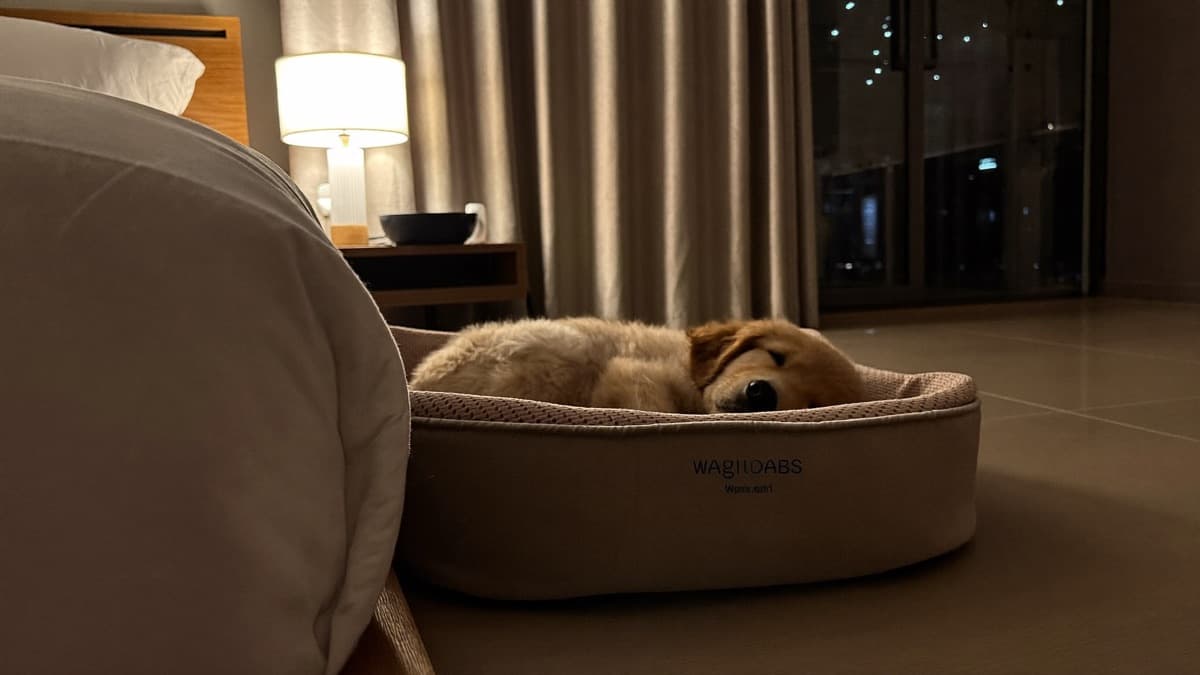
Beside your bed, in the crate — this is the single decision that most changes how the night goes. Until today, your puppy has never slept without warm bodies around them; alone in the kitchen, that absence becomes panic. Next to your bed, they can smell you, hear you breathe, and you can drop fingers near the crate door without getting up.
Make the crate a nest, not a cell: bedding, the litter-scented cloth, a safe chew, and a snuggle toy or a wrapped warm (not hot) water bottle standing in for littermates. Keep the room dark and comfortably cool — aircon or a fan doubles as white noise against corridor sounds. This is a first-week arrangement, not a life sentence: once your puppy sleeps through, you shift the crate toward its permanent spot half a metre at a time.
What if my puppy cries?
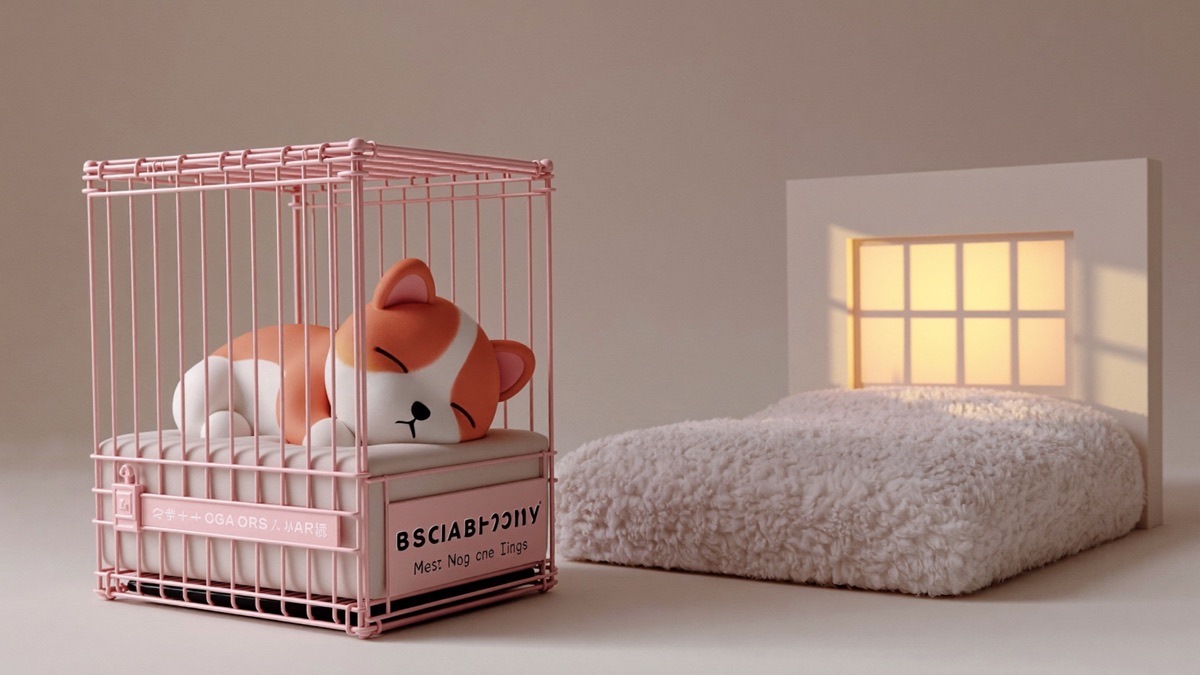
Some crying is close to guaranteed, and it is not manipulation — it is a baby animal reporting genuine distress or a genuinely full bladder. Learn the difference between settling grumbles (intermittent whines and sighs — wait them out) and escalating distress (continuous urgent crying — respond calmly with a quiet voice and a hand near the crate door). Never haul the puppy out for cuddles and play at midnight; you are proving they haven't been abandoned, not opening negotiations. The full playbook, including a realistic week-by-week timeline, is in our puppy crying at night guide.
How do night toilet trips work?
An 8-week-old bladder cannot hold 7–8 hours, so plan one trip roughly 3–4 hours after lights out — set an alarm rather than waiting for crying, so toilet trips never become a reward for vocalising. The trip itself should be aggressively boring: minimal lights, no chat beyond a soft toilet cue, carry the puppy to the spot, quiet praise when they go, straight back into the crate. No play, no snack, no detour. If you treat 3am as social time once, your puppy will book the same slot tomorrow.
What should I NOT do on the first night?
- Don't let them fall asleep in your bed "just for tonight." Night one sets the precedent that is hardest to unwind. Crate beside the bed gives them your presence without the habit.
- Don't leave them to "cry it out" in another room. It teaches the puppy that the crate predicts abandonment, and it makes every future night worse, not better.
- Don't punish accidents. A puppy who toilets on the floor at 2am is a puppy whose schedule failed, not a bad puppy. Clean it with enzymatic cleaner and adjust the alarm.
- Don't run a midnight play session. Play tells the puppy that night-time noise pays out. Keep every interaction between lights-out and morning at library volume.
- Don't panic if they skip a meal. New-home nerves commonly blunt appetite for a day. If refusal runs past 24 hours, or you see vomiting or diarrhoea, call a vet.
From tomorrow morning, structure takes over — a predictable daily puppy schedule of meals, naps and toilet trips is what turns one survived night into a settled dog.