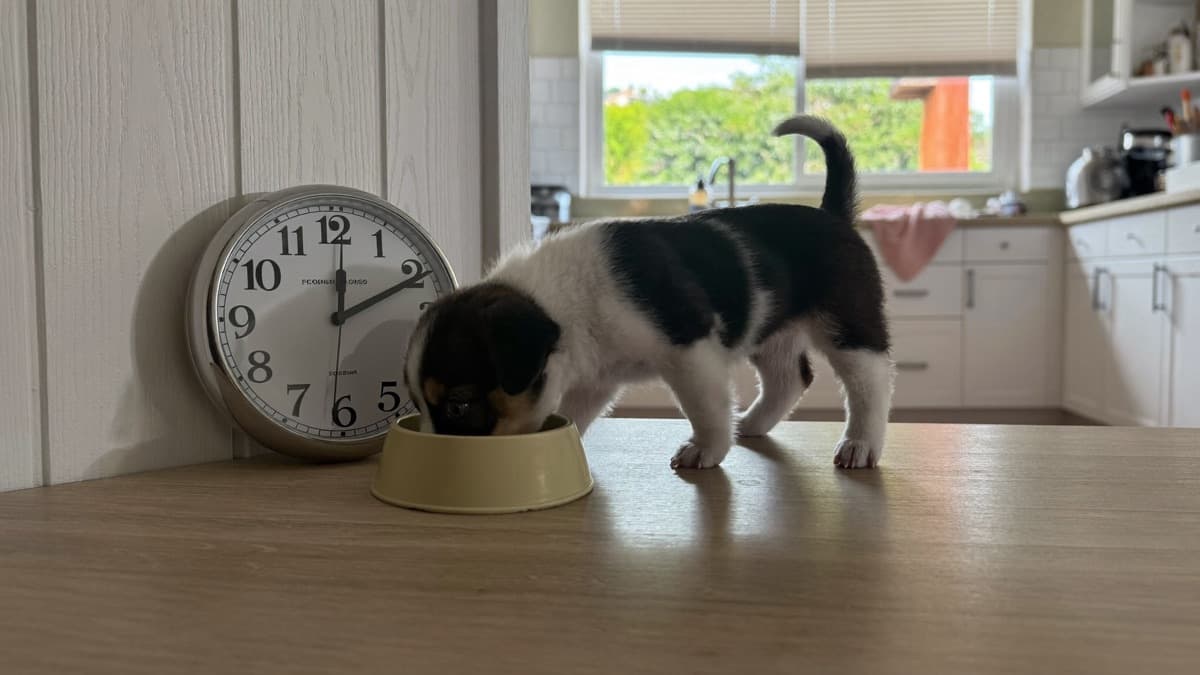
How often should a puppy eat?
| Age | Meals per day | Notes |
|---|---|---|
| 8–12 weeks | 4 | Small breeds: watch for low blood sugar; never skip meals |
| 3–6 months | 3 | Drop the late-morning meal first |
| 6–12 months | 2 | Most dogs stay on 2 meals for life |
Feed at fixed times and lift the bowl after 15 minutes. Scheduled meals aren't just discipline theatre — what goes in on a schedule comes out on a schedule, which is the entire secret of toilet training.
What is the toilet-after-everything rule?
Take the puppy to the toilet spot immediately after every trigger event: waking up (including short naps), every meal, every drink, every play session, and before bed. Add a timer on top — every 45–60 minutes at 8 weeks, stretching gradually as they grow. In a flat, that means the pee tray or a fast lift trip; our apartment toilet training guide covers the setup. Reward within two seconds of the puppy finishing, at the spot. Accidents are your scheduling errors, not the puppy's — clean up with an enzymatic cleaner and shorten the interval.
Why do naps have to be enforced?
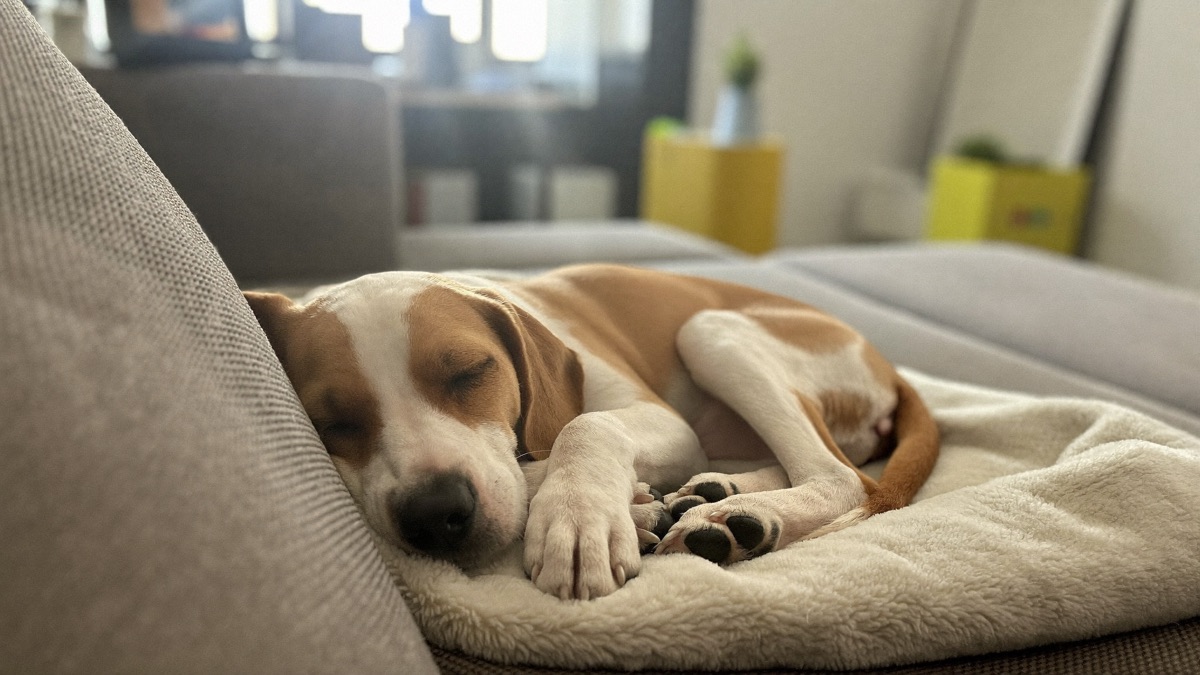
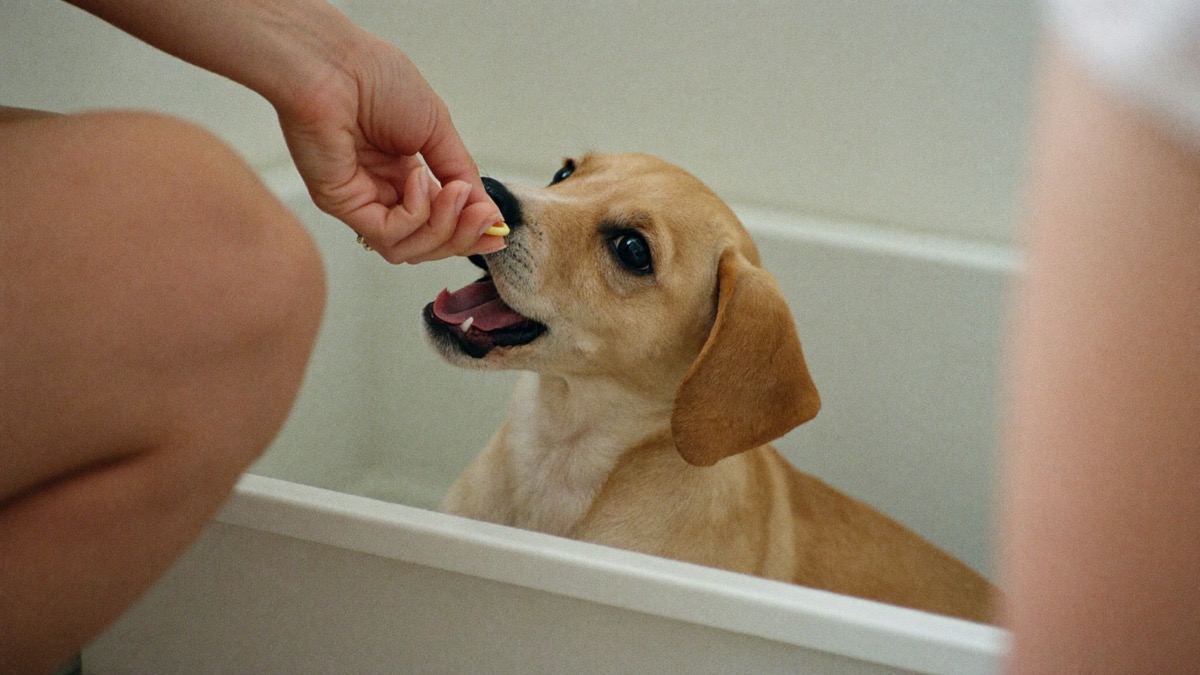
Young puppies need 16–20 hours of sleep a day, and almost none of them will take it voluntarily in an exciting new home. An overtired puppy looks exactly like a "badly behaved" one: frantic biting, zoomies at 10pm, screaming in the pen. The fix is scheduled naps — roughly one hour awake, then 1–2 hours down in the crate or pen, lights and drama low. If the biting suddenly gets worse, the answer is almost never more exercise; it's a nap. Crate training makes enforcement humane and easy, and it's the same skill that gets you through night crying.
How much exercise does a puppy need?
Use the 5-minute rule: about five minutes of structured exercise per month of age, up to twice a day. A 3-month-old gets ~15-minute outings, not hour-long hikes — growth plates are still open, and joints pay later for overexercise now. Free play on grass or in the flat doesn't need rationing; forced marching does. In Singapore and Malaysia, schedule outdoor time before 8am or after 7pm anyway — pavements here can burn paws by mid-morning. Note that walks outside your home only start after the vaccination course allows it; check our puppy vaccination schedule.
What does a working-owner day look like?
A sample timetable for a 10–12-week-old puppy in a household where someone can take a midday break (or hire one):
| Time | Activity |
|---|---|
| 6:45am | Wake, straight to toilet spot |
| 7:00am | Meal 1, then toilet again |
| 7:15–7:45am | Play/training in the flat, toilet, then nap |
| 8:00am–12:00pm | Pen/crate rest while you work; toilet break mid-morning if anyone is home |
| 12:00–1:00pm | Midday break: toilet, meal 2, 15 minutes of play, toilet, back to nap |
| 1:00–5:30pm | Rest block with one toilet break if possible |
| 5:30pm | Toilet, meal 3, short outing or garden time (after 7pm once it's walk-age) |
| 6:30–8:30pm | Family time: play in short bursts with toilet trips after each |
| 9:00pm | Meal 4 (drop this first as they age), toilet |
| 10:00pm | Final toilet trip, then crate for the night |
| 2:00–3:00am | One night toilet outing for the first weeks — boring, silent, back to bed |
How does the schedule change as the puppy grows?
Loosen it gradually, never suddenly. Around 4 months, drop to three meals and stretch toilet intervals to 2–3 hours; by 6 months, two meals and most puppies can hold 4 hours awake. Keep two things fixed for the first year: the morning toilet-and-meal sequence, and enforced rest after excitement. And fit socialisation inside the routine — a few minutes of calmly watching the void deck, traffic or the wet market from your arms or a mat counts as a session, and the 8–14-week window won't wait for the weekend.
The exact times matter less than the pattern: nothing exciting ever happens without a toilet trip after it, and every burst of activity is followed by enforced rest. Hold that shape for eight weeks and you'll have a house-trained puppy that settles on cue — which is most of what people mean by a "good dog".