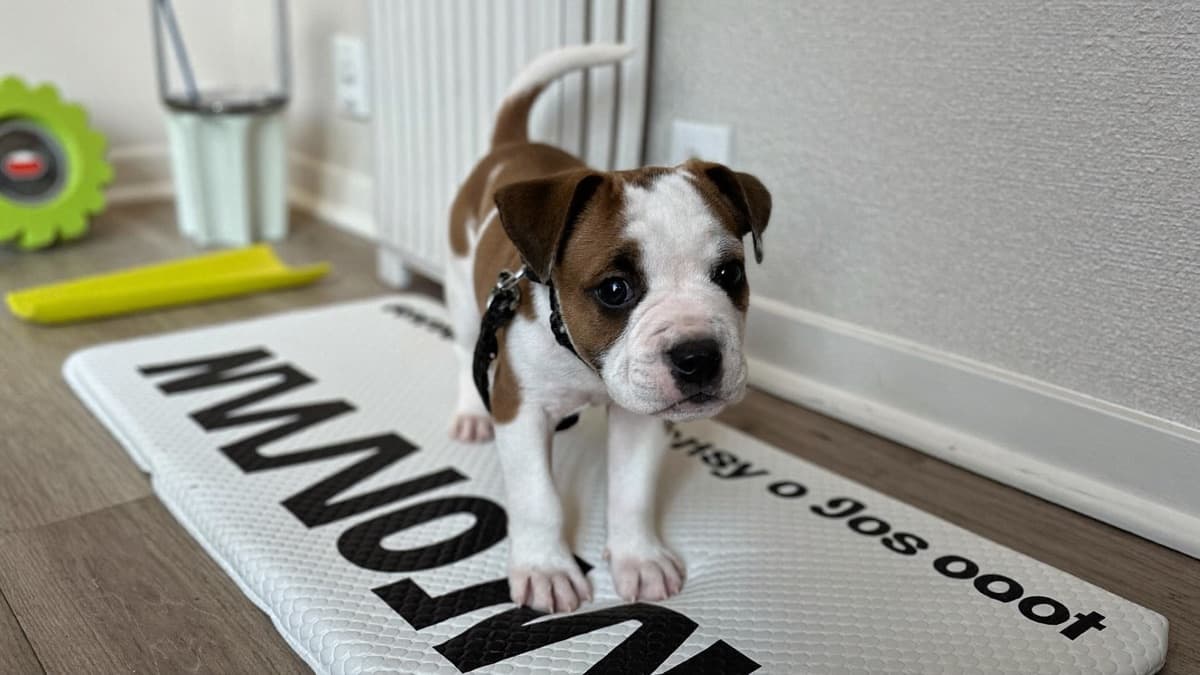
No garden changes the logistics, not the principles. The lift, the corridor, and the void deck all sit between your dog's bladder and the grass, so apartment owners need either a faster indoor option or a dog with rock-solid holding power. Here's how to build both.
Should I use pee pads or an outdoor schedule?
Decide the end goal first, because switching plans mid-training is where most apartment dogs get confused.
Pads (or a balcony grass patch) as the permanent toilet suit small dogs, owners with long work days, high-floor units far from the lift, and Singapore/Malaysia's afternoon thunderstorms. Anchor the pad in one fixed spot — a corner of the service yard or bathroom is ideal because tiles forgive misses. Budget roughly S$15–30 / RM35–90 for a 50-pad pack as of 2026. A real-grass or synthetic-grass balcony patch works the same way and transfers more easily to outdoor grass later; rinse synthetic patches daily, because in tropical heat they turn ripe fast.
Outdoor-only suits medium and large dogs and anyone who'd rather not manage an indoor toilet forever. It demands more of you early on: a young puppy may need six to eight trips down the lift a day at first.
The hybrid (pads now, outdoors later) is legitimate — most puppies transition fine — but do it deliberately: shrink the pad area gradually, move the pad toward the door, then eliminate it once outdoor trips are reliable.
How does the crate and confinement method work?
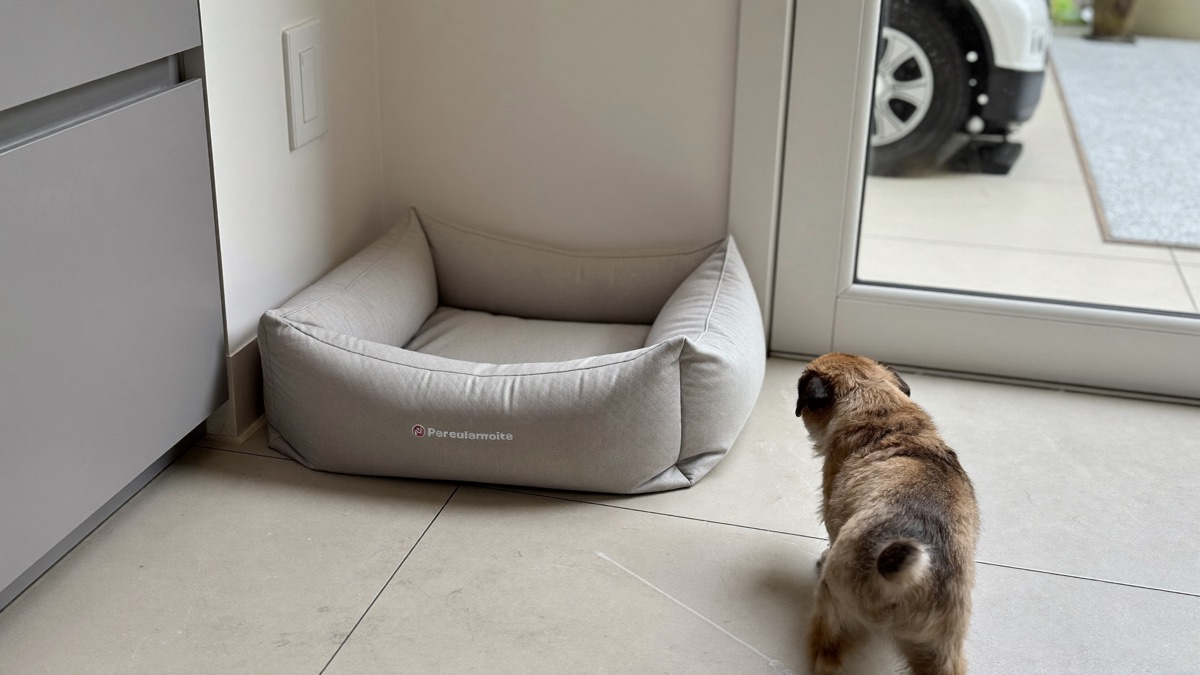
Dogs avoid soiling where they sleep, and toilet training exploits that instinct kindly. Use a crate just big enough to stand, turn, and lie down, or a small pen with bed on one side and pad on the other if you're away longer than the dog can hold.
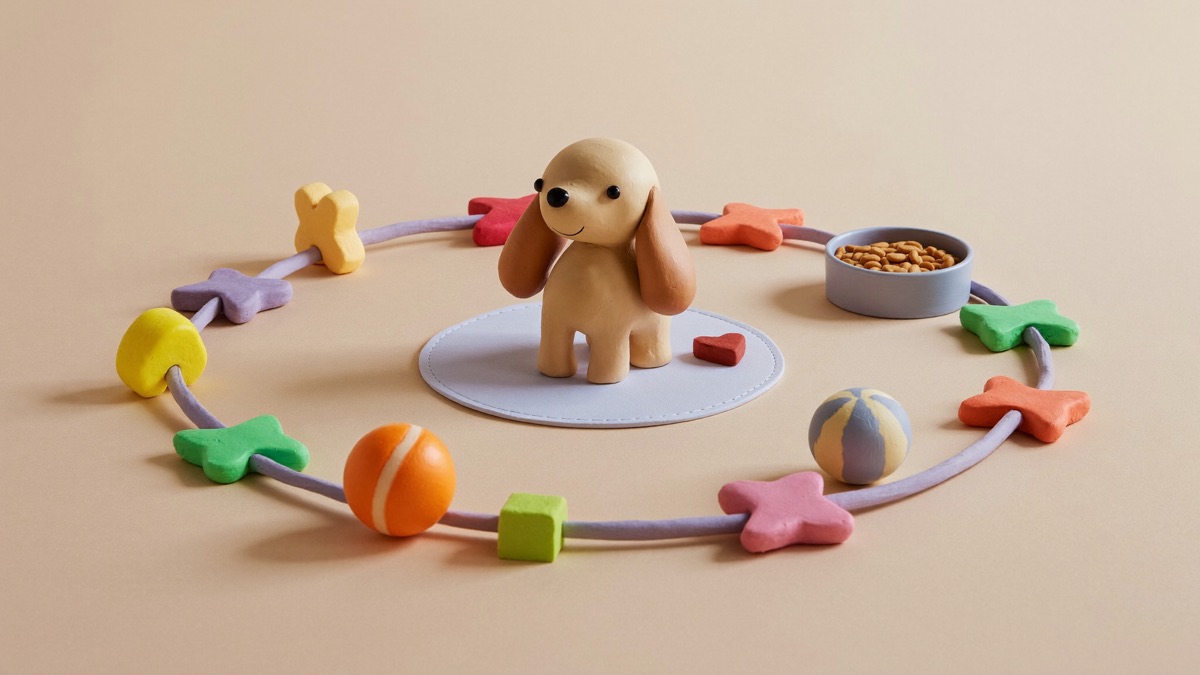
The cycle: dog rests in the crate → you take them straight to the toilet spot → they go → reward with a treat and five minutes of freedom or play → back to supervised freedom or the crate. Between toilet trips, the dog is either watched like a hawk or confined — never loose and unobserved. Every unnoticed accident teaches the dog that the living room rug is also a toilet.
Rule of thumb for holding time: age in months plus one, in hours, up to about 6–8 hours for adults. A three-month-old puppy can manage roughly four hours — and less when awake and playing.
Never punish accidents. Rubbing a dog's nose in it or scolding after the fact teaches exactly one thing: don't pee near the human, which produces dogs that sneak behind the sofa. If you catch them mid-stream, interrupt cheerfully, carry them to the right spot, and reward whatever lands there.
How do I clean accidents so they don't repeat?
This step is quietly the most important in a flat, because tile grout and rug fibres hold urine smell for months. Blot up as much as possible, then saturate the area with an enzymatic cleaner (sold at pet shops as urine or stain-and-odour eliminators) — the enzymes digest the urine proteins rather than perfuming over them. Let it sit per the label and air dry. Avoid ammonia-based cleaners entirely; ammonia smells like urine to dogs and can attract repeat visits. For grout and pad-adjacent floors in a humid climate, a weekly enzymatic wipe-down keeps the "toilet zone" clearly defined by smell.
Is training an adult rescue dog different from a puppy?
Different, and often easier. An adult has a full-sized bladder and can physically hold for hours — the challenge is history, not hardware. A rescue that lived in a kennel or on the street — including dogs adopted through SPCA Singapore and local shelters — may never have learned that indoors and toilet are different places, or may have been punished into secretive habits. Treat them exactly like a puppy for the first two to four weeks: full schedule, confinement or supervision, big rewards at the spot, zero scolding. Most adults click within a month. If a previously trained adult starts having accidents, see a vet first — urinary tract infections, kidney issues, and early cognitive decline are common medical causes.
What's a realistic timeline?
Weeks one and two: frequent accidents, heavy management, first successes at the spot. Weeks three to six: accidents become rare, the dog starts heading to the pad or the door on their own. Weeks six to twelve: reliability in your normal routine. True bomb-proof reliability — visitors, storms, schedule changes — usually lands around five to six months for puppies, and one to three months for adults. If you're stuck past those marks despite genuine consistency, book a vet check, then a force-free trainer — in Singapore, the AVS-Accredited Certified Dog Trainer list is the reliable place to find one.