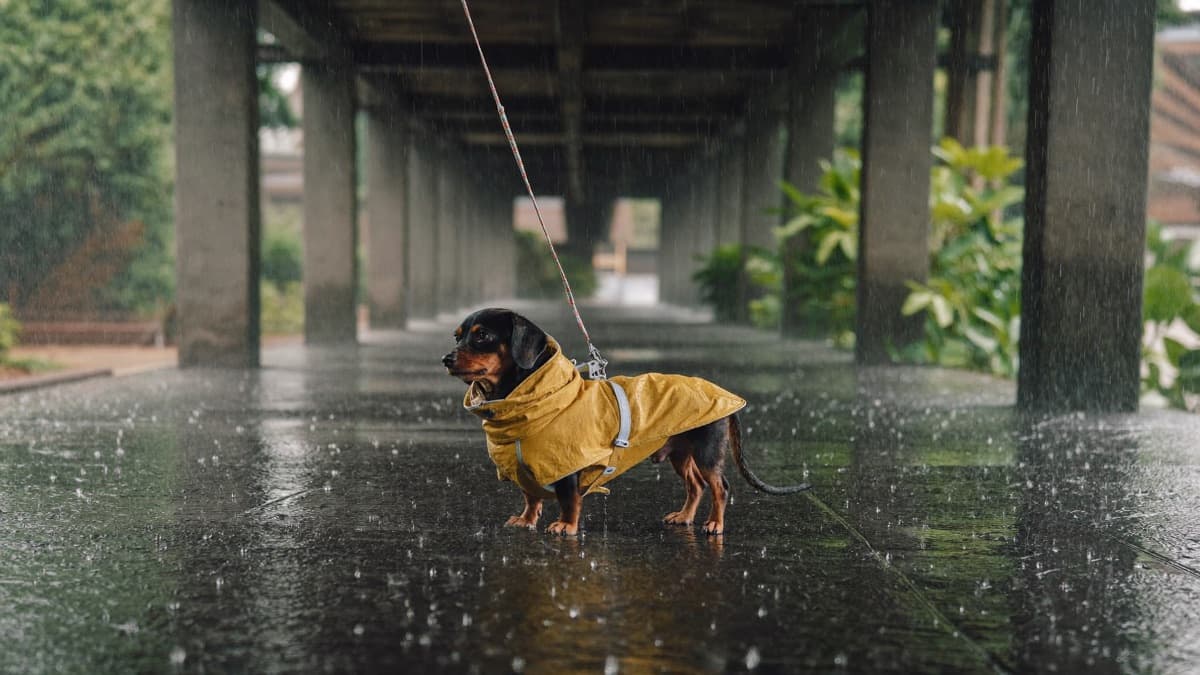
When should I walk my dog in the rainy season?
Tropical rain is intense but short — the skill is timing, not endurance. Download myENV, NEA's official app: it pushes heavy-rain and lightning alerts for your bookmarked locations and shows a lightning map of recent strikes, which beats squinting at clouds. The routine that works:
- Check the 2-hour forecast before leashing up; walk the gaps, not the schedule
- Lightning alert means indoors — Singapore has one of the highest lightning densities in the world, and open fields and tree lines are exactly where you walk dogs
- Shift the main walk to whichever end of the day is drier that week; wet season rewards flexibility over routine here
- Storm already overhead? Skip it. A missed walk costs nothing; see the indoor plan below
If your dog panics at the first rumble, that's its own project — the safe-den setup and counterconditioning plan are in our guide to dogs scared of thunder.
Which wet-weather gear is actually worth buying?
Honest ratings from tropical practice:
| Gear | Verdict |
|---|---|
| Raincoat | Worth it for short-coated breeds (Frenchies, Beagles, Minpins) and small dogs that get drenched in seconds — a drier dog is a faster dry-down. Double-coated dogs mostly don't need one |
| Dog boots | Rarely tolerated. Most dogs high-step, freeze or chew them off; damp boots also trap moisture against the paw. Skip unless a vet advises them for a specific wound |
| Umbrella-leash gadgets | Gimmick. One gust and it's a kite |
| Big absorbent towel by the door | The real MVP. Buy two |
| Quick-dry harness instead of fabric-heavy ones | Underrated — soggy padded harnesses stay wet for hours and rub |
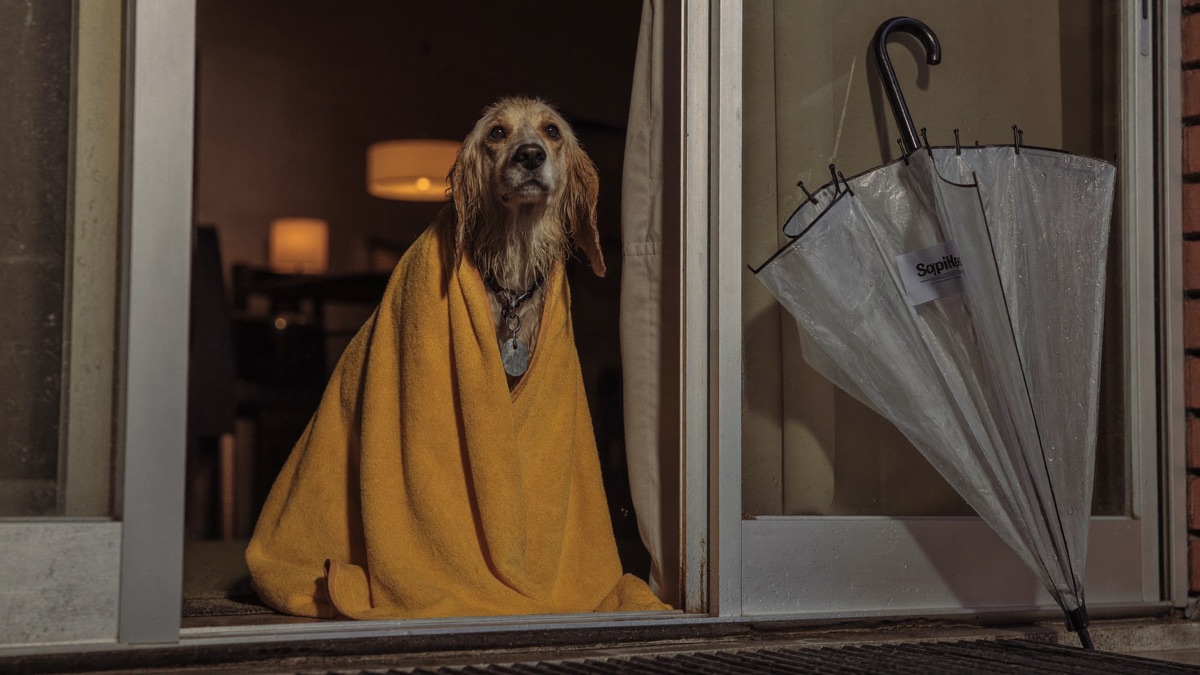
What's the post-rain dry-down routine?
In this humidity a wet dog doesn't air-dry — it ferments. Every rain walk ends the same way:
- Towel hard at the door: paws, armpits, groin, tail base — the folds first, not just the back
- Between the toes matters. Interdigital moisture is where fungal irritation starts
- Ears next: floppy ears trap wet-season humidity beautifully
- Damp-smelling coat several days running means moisture is winning — adjust washing frequency per how often you should bathe your dog, and don't shampoo daily, which strips the skin barrier and makes things worse
- Recurring itching, hot spots or that yeasty smell despite good drying? Work through our guide to skin problems in the humid climate
Why are puddles the real wet-season danger?
Because of leptospirosis — a bacterial disease spread mainly through water contaminated by rat urine, and wet season is its high season: rain flushes contaminated soil into exactly the puddles and drains dogs find fascinating. It can cause kidney and liver failure, and it's zoonotic — humans can catch it too. The rules:
- No drinking from puddles, drains or floodwater. Ever. Train "leave it" until it's reflex
- Carry water on every walk so thirst never argues with you
- Rinse paws and belly after walks through standing water
- Ask your vet about the lepto vaccine — it's a standard conversation for dogs here
Symptoms, vaccine details and what treatment looks like are in our full guide to leptospirosis in dogs.
How do I exercise my dog when it rains all day?
Some monsoon days are simply washouts. Ten minutes of brain work fatigues a dog roughly like a half-hour walk, so rotate:
- Scatter feeding / snuffle mats — dinner takes twenty minutes instead of twenty seconds
- Training bursts — three five-minute sessions of new tricks beat one slog
- Hide and seek with you or with treats around the flat
- Tug with rules (sit to start, "drop" to pause) for physical burn in two square metres
- Corridor or void-deck sniff loops during drizzle — legal, leashed, and sheltered enough between proper downpours
A week of storms with daily brain work produces a tired, sane dog. A week of storms with nothing produces a renovation project. Choose accordingly, and by February — or whenever your side of the Causeway dries out — the routine hands back your usual map.