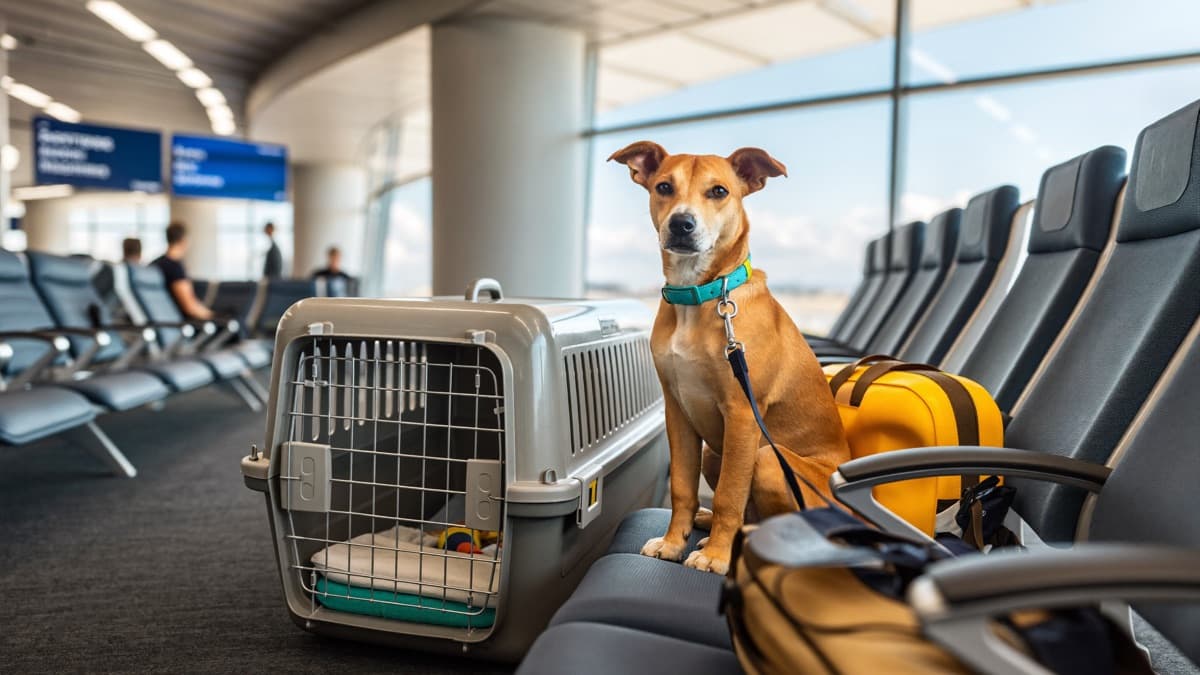
What does Singapore require on the export side?
Singapore's side is the easy half. As of 2026:
- Export licence — apply via the GoBusiness portal within 90 days of travel. S$50 for normal service (about 2 working days) or S$100 express; the licence stays valid for 90 days
- Veterinary health certificate — required by most destinations. A private vet completes it and AVS endorses it; the endorsed certificate is typically valid for only about 7 days, so this lands in the final week
- Pre-export inspection — only if the destination demands one; book at least 5 days before departure
- After the move, cancel your dog's licence in PALS
The dog also needs an ISO-standard microchip and up-to-date vaccinations, because everything downstream hangs off that chip number. For the licence, endorsement and inspection steps in order, with fees, see exporting pets from Singapore.
Why do destination rules matter more than Singapore's?
Because they vary wildly, and the strict ones are calendar traps. Malaysia is comparatively simple; the EU is moderate; Australia and New Zealand are famously demanding, with approved-country rules, specific test sequences and quarantine on arrival. The pattern that catches people out is the rabies titre test: blood drawn at least 30 days after rabies vaccination, sent to an approved lab, needing a result of at least 0.5 IU/mL — and some destinations then impose a waiting period of three months or more after the blood draw before the dog may enter. Stack vaccination, the 30-day gap, lab turnaround and the waiting period, and you're at four to six months before you've booked a flight. Always work from the destination government's own import page, not a forum post, and build the timeline backwards from your moving date.
Will my dog fly in the cabin or in cargo?
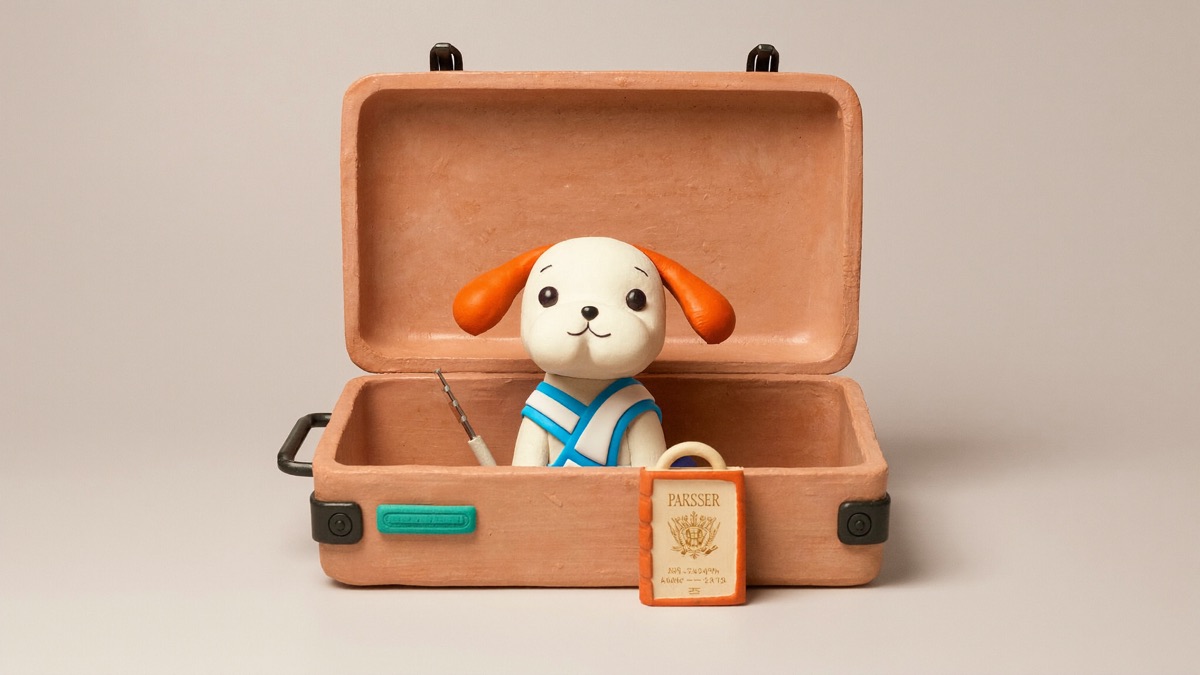
For most dogs leaving Singapore: cargo. Singapore Airlines, for example, does not carry pets in the cabin at all (guide dogs excepted) — dogs travel as checked baggage or manifest cargo in a pressurised, temperature-controlled hold, and snub-nosed breeds like Bulldogs and Pugs are refused outright because of their airway risk. Some foreign carriers allow small dogs in-cabin on routes out of Changi, subject to tight weight limits (usually around 7-8kg including carrier); check the specific airline and route.
Two tropical realities to plan around:
- Tarmac heat. The dangerous window is on the ground, not at altitude. Favour late-night departures out of Changi — conveniently, most long-haul flights are red-eyes anyway — and avoid tight transits through hot-daytime hubs
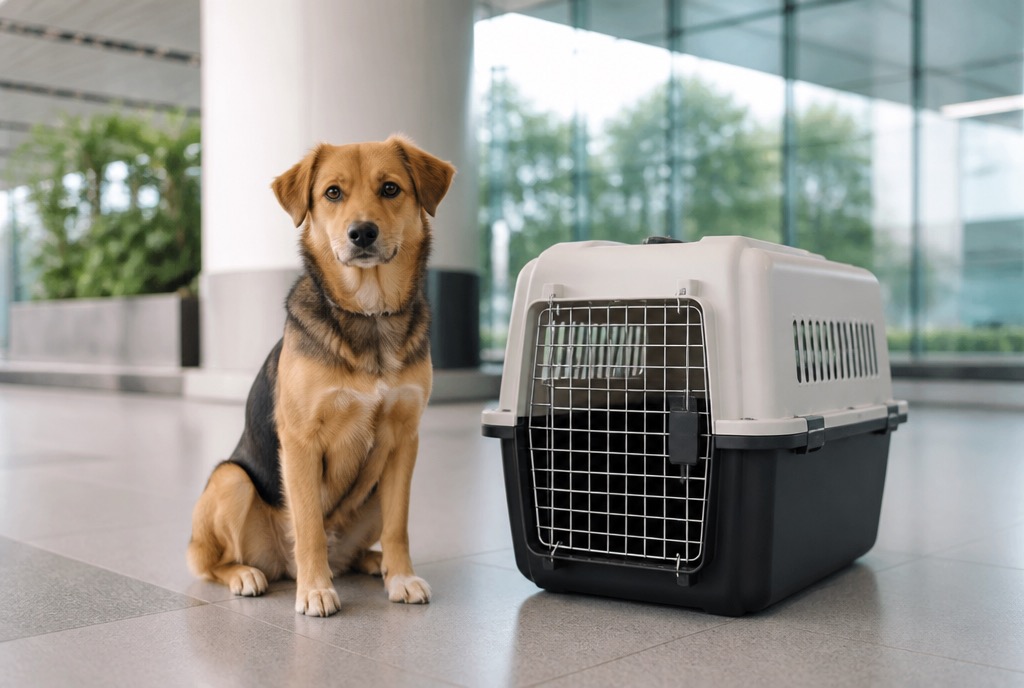
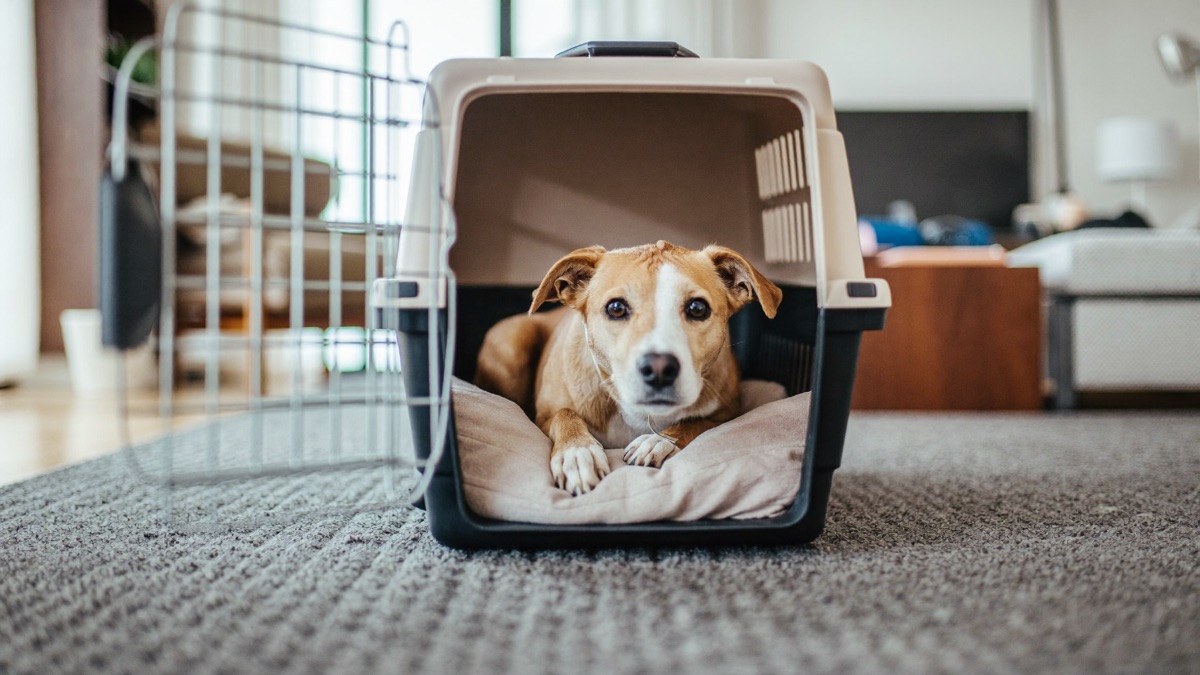
- Crate training is welfare, not admin. An IATA-compliant crate the dog has slept in for weeks turns the flight from a trauma into a boring night
Should I use a pet relocation agent?
Pet relocation agents are a genuine industry in Singapore, and for complex destinations they earn their fee: they sequence the vet work, book the animal cargo slot (which you often can't book directly), supply the IATA crate, handle export/import permits on both ends and arrange arrival clearance or quarantine. Full door-to-door service typically runs S$3,000-5,000+ in agent fees alone as of 2026. For a straightforward move — small dog, lenient destination — a well-organised owner can do it solo. For Australia, the UK or a multi-leg route, most people who tried solo once use an agent the second time.
What will the whole thing cost?
As of 2026, a realistic all-in budget for relocating a dog from Singapore is roughly S$2,000-8,000, and strict-destination, full-service moves (UK, Australia, large dogs) commonly reach S$9,000+. Rough anatomy:
| Item | Typical range (S$) |
|---|---|
| Airfreight | 1,000-4,000 (size- and route-dependent) |
| Vet prep, titre test, certificates | 1,000-1,500 |
| IATA crate | 200-800 |
| Agent fee (if used) | 3,000-5,000+ |
| Destination quarantine (where required) | varies widely — check the destination |
Dog size drives everything: airfreight is priced by volumetric weight, so a Labrador can cost triple a Toy Poodle on the same route.
What's the first-week plan on arrival?
Treat arrival like a house move with jet lag: quiet room, familiar bedding from the crate, old food carried with you, and short lead-only outings while the dog maps the new smells. The settling playbook is the same one we lay out in moving house with a dog — just add a local vet registration and a check of local licensing rules in your first fortnight.