What is the difference between desensitisation and counterconditioning?
They are two halves of one technique.
Desensitisation means exposing your dog to a weakened version of the trigger — quieter, further away, slower — and only increasing intensity as the dog stays comfortable. A dog worried by motorbikes might start 60 metres from a parked one, not beside a revving one.
Counterconditioning means changing the dog's emotional answer to the trigger by pairing it with something the dog loves, usually spectacular food. Motorbike appears, chicken rains down; motorbike leaves, chicken stops. Repeated enough times under the right conditions, the sight of a motorbike starts to predict chicken, and the emotion flips from "danger" to "jackpot".
Obedience training teaches behaviours; DSCC treats emotions. A dog told to sit-stay while terrified is still terrified — it has simply been asked to hide the evidence. When you fix the emotion, the barking, lunging, trembling and hiding fall away on their own, because they were only ever symptoms.
What is the threshold rule?
Threshold is the line between a dog that notices the trigger and a dog that is reacting to it. Under threshold, your dog can see the scary thing and still eat, look back at you, and respond to its name — the thinking brain is online, and learning is possible. Over threshold — barking, frozen stiff, refusing food, straining to flee — the emotional brain has taken over, no learning is happening, and every second there is another rehearsal of the fear.
This is the whole game: under threshold, your dog is learning; over threshold, your dog is practising being afraid. Distance is your main dial, but intensity counts too — volume of a sound, speed of an approaching person, whether the trigger is moving or still. Watch for the early warnings from our dog body language guide: lip licks, look-aways, a closed tense mouth and weight shifting back all say "closer to the line than you think". A refusal of good food is the clearest single test — a dog that cannot eat cannot learn. And remember thresholds move: after a stressful morning, yesterday's easy distance may be too close, which is why trigger stacking matters.

Why does the order of trigger and treat matter?
The sequence must be: trigger appears, then the good stuff starts. Dog notices the skateboard, then chicken flows; skateboard passes, chicken stops. The trigger has to predict the food — that prediction is what rewires the emotion.
Get the order backwards and you teach nothing useful. Feeding before the trigger appears, or waving food to lure a nervous dog towards the scary thing, at best does nothing and at worst teaches the dog that chicken predicts trouble — some dogs start refusing treats on walks for exactly this reason. Luring is especially sneaky: the dog follows its nose past its own threshold, arrives too close, and panics with food still in its mouth. Let the dog choose every step; your job is only to make the trigger a reliable weather forecast for wonderful things.
One session should look boringly simple: trigger appears at an easy distance, you feed generously for a few seconds, trigger goes (or you calmly move away), food stops. Repeat five to ten times, end while it is still easy, and come back tomorrow.
How fast should progress be?
Slower than you want, and that is fine. Realistic timelines run from a few weeks for a mild, recent worry to several months for a fear rehearsed over years. VCA recommends short sessions at least twice weekly; daily five-minute sessions are better still. Progress is not linear — expect brilliant days followed by wobbly ones.
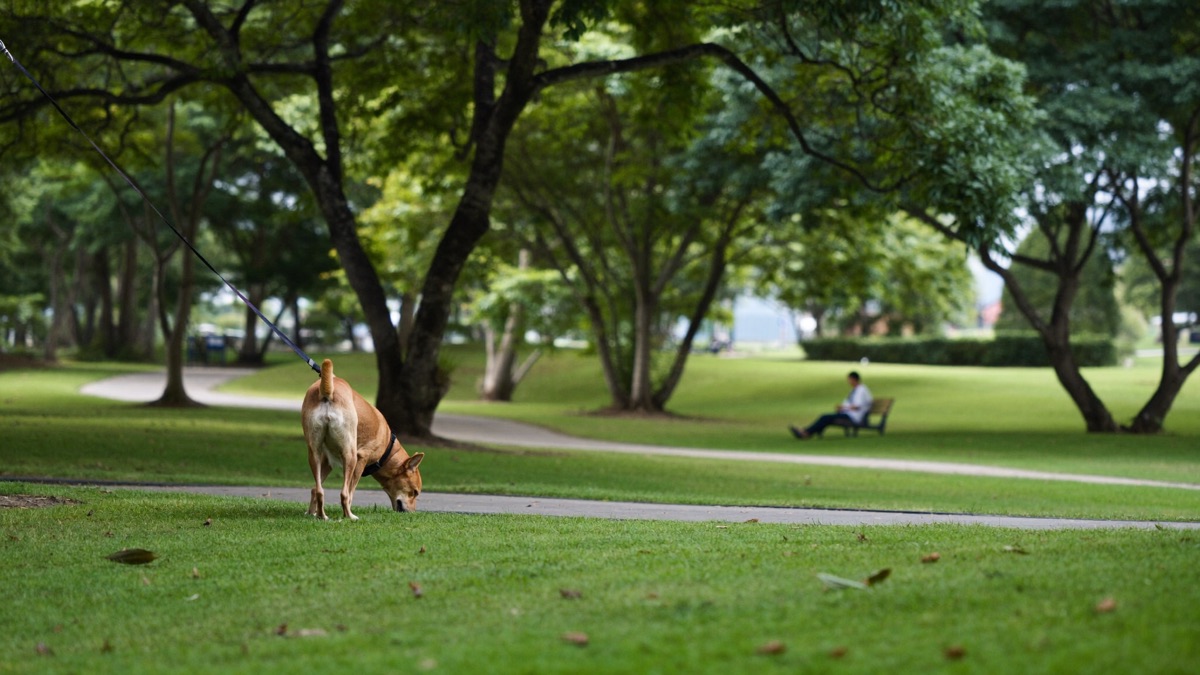
Measure progress by the dog's body, not the calendar: a softer face at the same distance is progress, even before the distance shrinks. If you have gained nothing in a month, change something — usually the starting distance was too ambitious — or bring in a professional from the AVS-Accredited Certified Dog Trainer list.
What are the most common DSCC mistakes?
- Flooding. Forcing the dog to "face its fear" at full strength — holding a thunder-phobic dog by the window during a storm, carrying a nervous dog up to strangers. Flooding does not build tolerance; it deepens the fear and teaches the dog that you will not protect it.
- Working over threshold. The most common error by far. If the dog cannot eat, you are too close. Add distance without apology.
- Luring past threshold. Covered above — food should follow the trigger, never bait the dog towards it.
- Raising the difficulty too fast. One brilliant session at 20 metres does not earn a jump to 5 metres. Shrink the gap in slices small enough to feel silly.
- Skipping days, then cramming. Three short calm sessions a week beat one heroic Sunday marathon.
- Ignoring the stress bucket. After fireworks, a vet visit or a scare, thresholds shrink for days. Train easy or not at all until your dog is back to baseline — our dog anxiety signs guide shows what "not yet recovered" looks like.
DSCC is the engine underneath our guides to thunder fear and leash reactivity — same rules, different triggers. Master the threshold rule and the trigger-then-treat sequence, and you can apply it to almost anything your dog fears.