Is it frustration or fear?
Two opposite emotions produce the same fireworks, and it pays to know which you have.
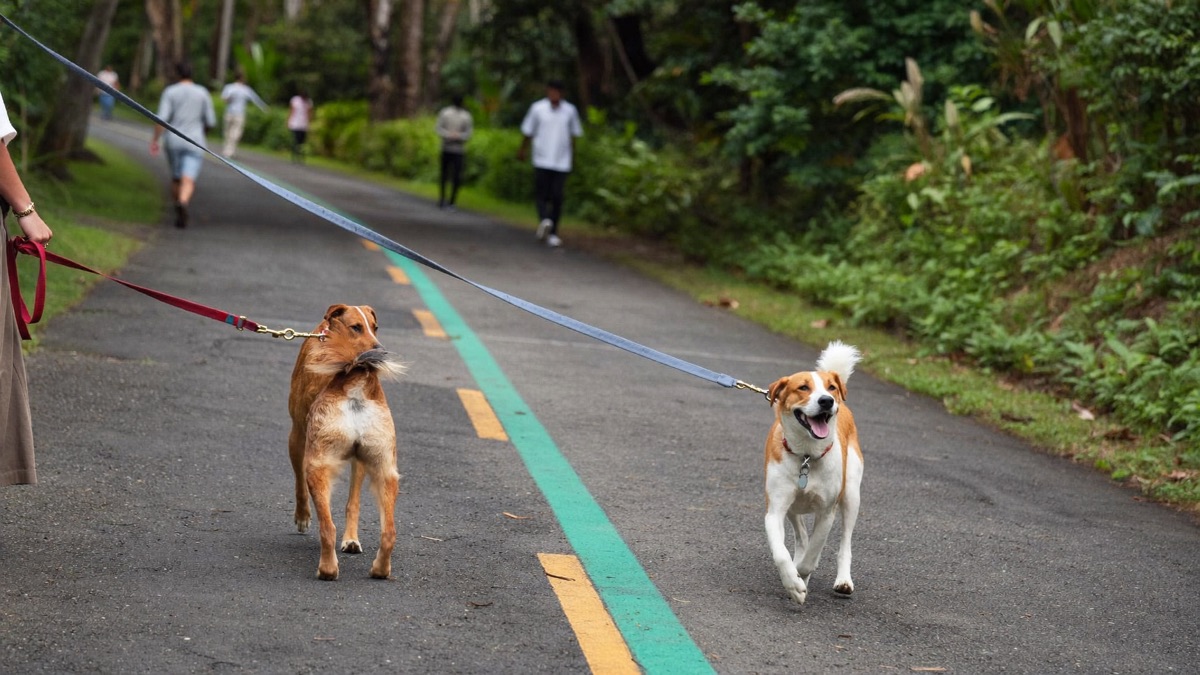
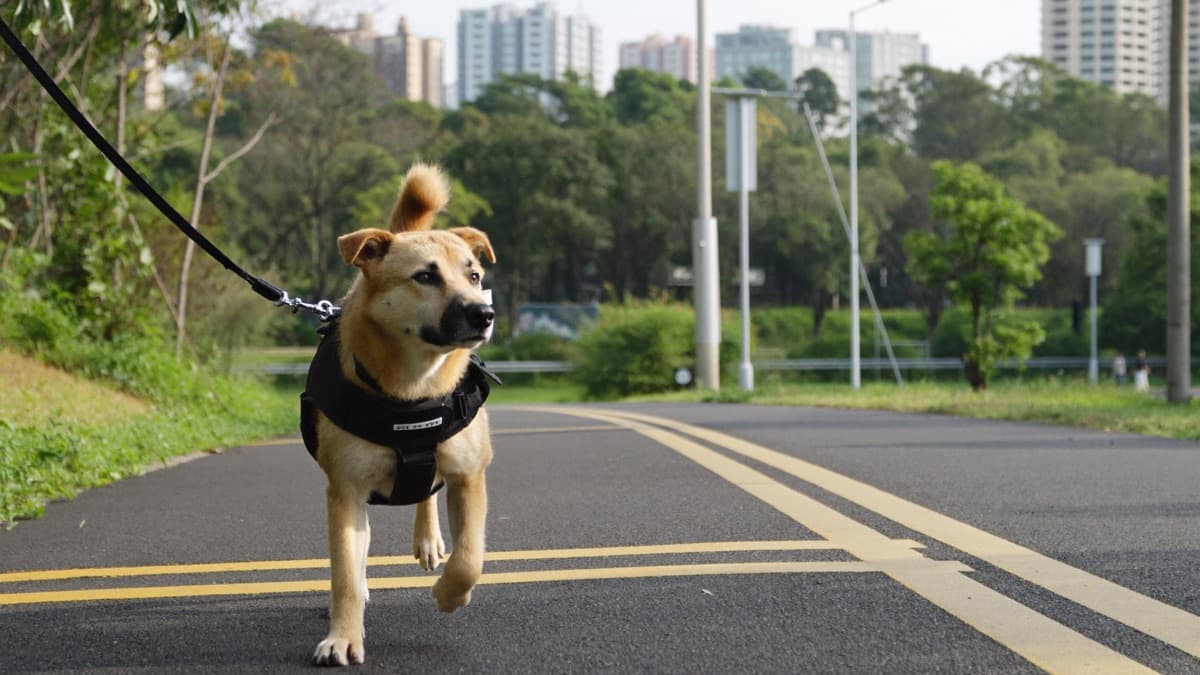
Frustrated greeters love other dogs — off-leash they play beautifully — but the leash blocks the greeting, frustration boils over, and the explosion is the canine equivalent of rattling a locked door. Body language before the outburst is bouncy: tail high and sweeping, whining, pulling toward with a loose face.
Fearful reactors want the other dog gone. The display is distance-increasing: stiff body, weight shifted back or frozen, hard stare, low or tucked tail, and barking that starts deep. It works, too — the other dog walks on, the scary thing recedes, and the behaviour is reinforced every single time.
The training mechanics below are the same for both, but the goal differs: frustrated greeters also need calm off-leash outlets and a rule that leashes never lead to greetings; fearful dogs need the trigger to reliably predict good things and never be forced closer. Brush up on the pre-explosion signals with our dog body language guide.
What is threshold distance?
Threshold is the distance at which your dog notices a trigger but can still think, eat, and respond to you. Inside it, the emotional brain takes over — no cookie, cue or correction gets through, which is why shouting "sit!" at a lunging dog achieves nothing. Every dog's threshold is different (50 m for one dog, 5 m for another) and it moves daily with stress, sleep and how many triggers already fired that walk — trigger-stacking is real, and the third dog of the morning gets a bigger reaction than the first.
Your job is to become obsessive about working under threshold: cross the road early, use car parks and void deck pillars as blockers, turn and arc away. Distance is not avoidance — it's the only place learning can happen.
How does the engage-disengage game work?
Engage-disengage teaches your dog that noticing a trigger and looking back at you is the most profitable move on the walk.
- Level 1 — mark the look. At a comfortable distance, the moment your dog notices the other dog (ears prick, head turns), mark ("yes!") and feed as your dog turns back to you. You're paying for looking at the trigger calmly. Repeat until the glance-back is automatic.
- Level 2 — mark the disengage. Now wait a beat after your dog notices: when it looks away from the trigger on its own, mark and pay. The dog is now choosing disengagement.
- Shrink the distance one small step at a time, only while your dog stays loose and able to eat. Barking means you've moved too close too fast — add distance, don't add volume.
Ten minutes of this at the right distance beats an hour of gritted-teeth walking. Pair it with loose-leash foundations from our leash pulling guide so the equipment side (front-clip harness, not neck hardware) is already handled.

How do I manage HDB corridors and lifts?
High-rise living hands a reactive dog its worst-case geometry: narrow corridors, blind corners, and lifts — sealed steel boxes with zero escape distance. Practical management as of 2026-standard HDB layouts:
- Lifts: let an occupied lift go; it costs 90 seconds. If a dog is already inside, wait for the next one. Exiting, keep your dog behind you so a nose isn't first through the opening doors.
- Corridors and stairwells: hug the outer edge for sightlines, and use a "let's go" U-turn cue the instant you spot a neighbour's dog. Practise the U-turn on boring walks until it's reflexive.
- Timing: shift walks 20 minutes off the peak 7am/7pm dog traffic and the number of triggers per walk collapses — fewer reps of the bad habit, more room to train.
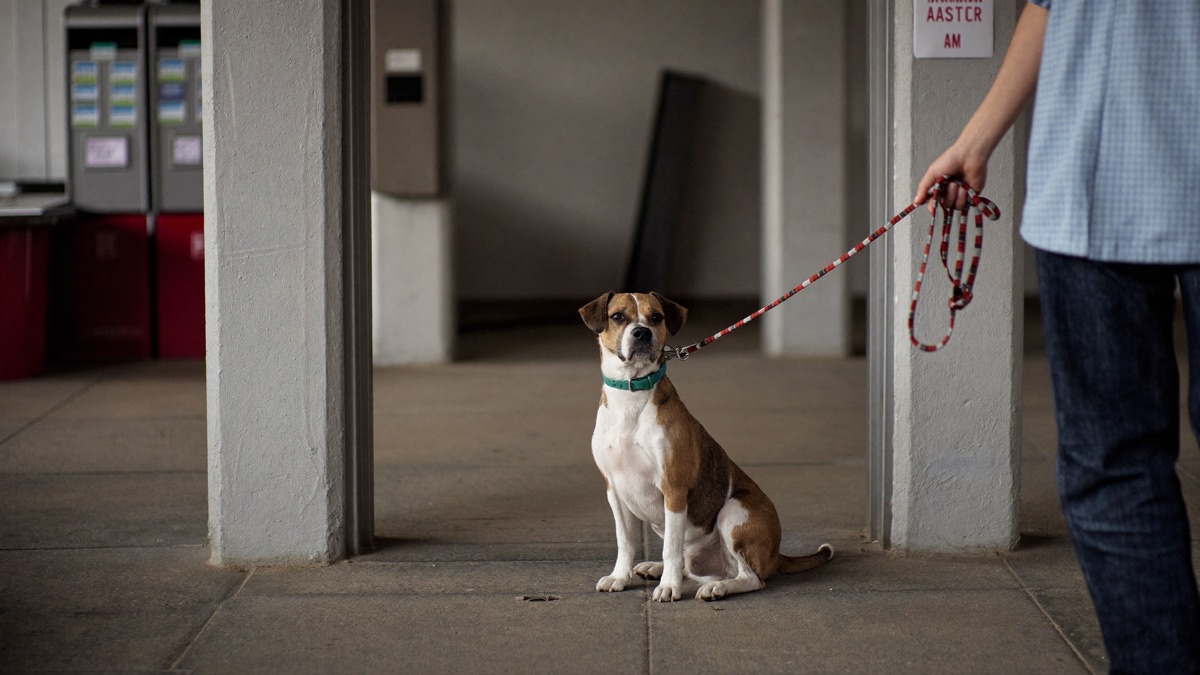
- Void decks: pillars are free visual blockers; a dog that can't see the trigger often doesn't fire.
Why do leash corrections make reactivity worse?
Because they confirm the dog's theory. Yank a fearful dog every time another dog appears and the lesson lands cleanly: other dogs appearing causes pain in my neck — the trigger just got scarier. Corrections may suppress the barking for a while, which looks like progress, but the emotion underneath intensifies, and suppressed warnings resurface as bites. AVSAB's position is blunt: aversive methods increase fear and aggression risk and are less effective than reward-based work. Prong, choke and "e-collar" fixes for reactivity are how mild barkers become serious cases.
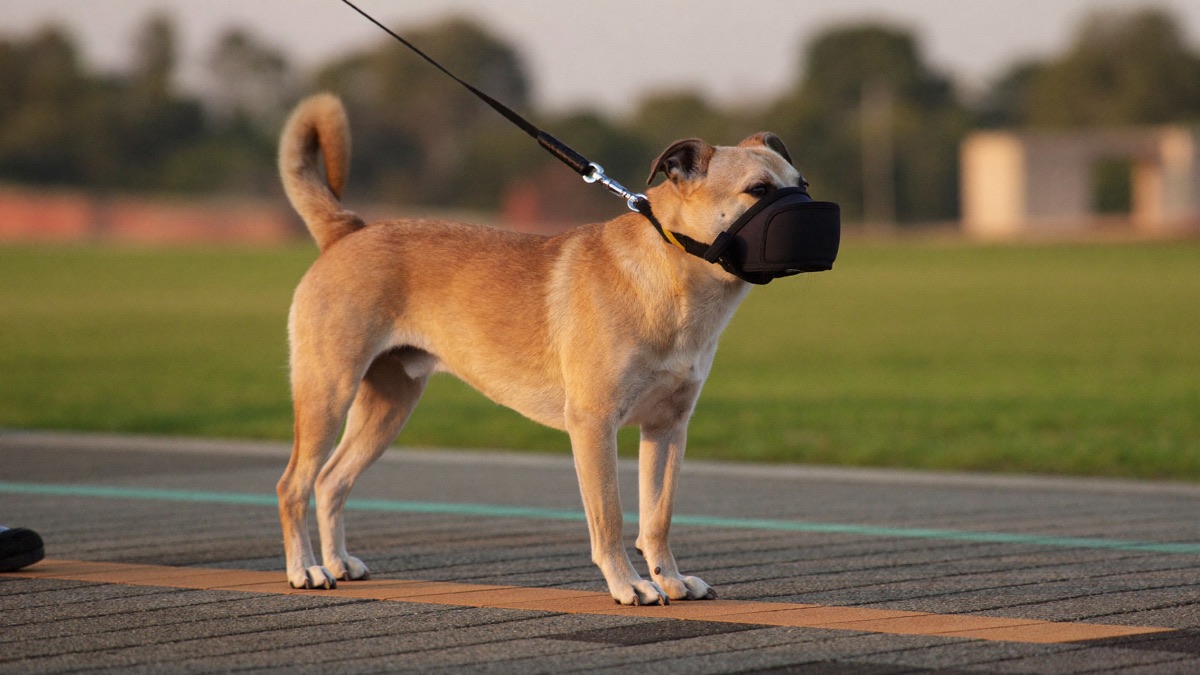
One legal note for Singapore: Specified ("scheduled") breeds must already be leashed and muzzled in public under AVS rules. If that's your dog, condition the muzzle slowly with treats until it's a happy signal — a well-fitted basket muzzle allows panting, drinking and treat delivery, so engage-disengage training runs exactly the same.
If your dog has redirected onto you, has bitten, or you're not gaining ground after a couple of months, bring in a force-free professional from the AVS-Accredited Certified Dog Trainer list. Reactivity is one of the most trainable serious-looking problems in dogs — distance, pay-cheques for calm glances, and patience beat corrections every time.