Why is the doorbell such a powerful trigger?
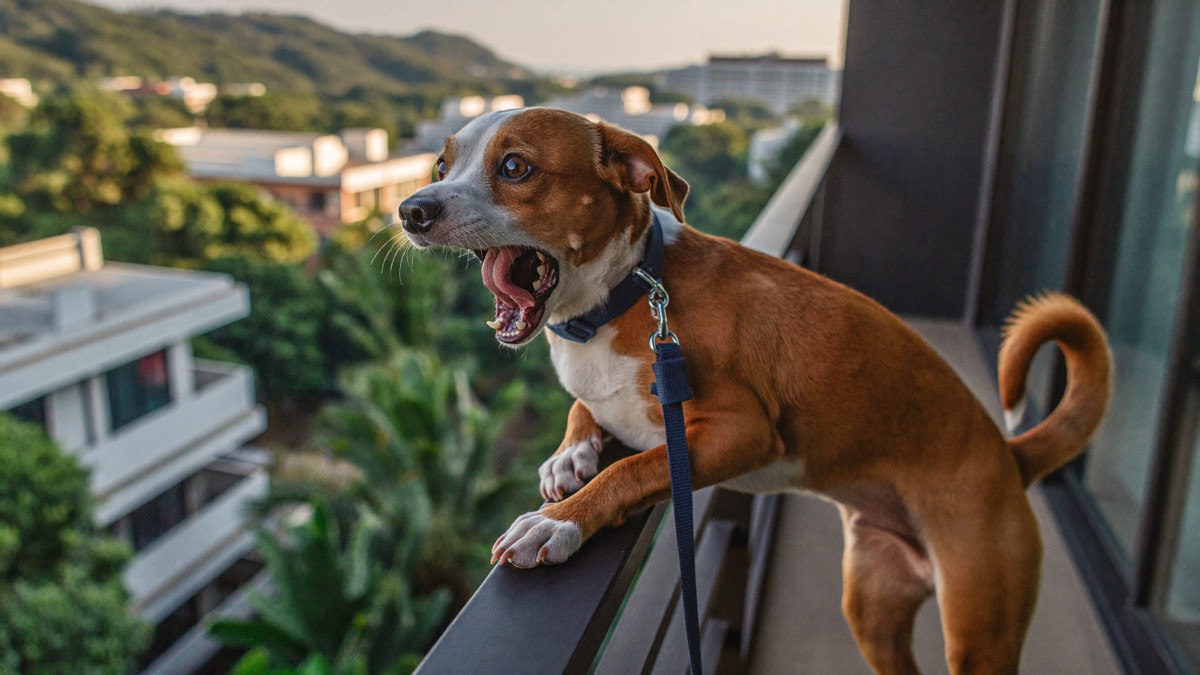
Think about the doorbell from the dog's side. It is a perfect predictor of intruders™ — in your dog's entire life, that sound has never once rung without a person standing at the territory line seconds later. No other cue in the household has a 100% hit rate. Add the pay-off: your dog barks, and the delivery rider always leaves. As far as the dog can tell, the barking works every single time. A perfectly reliable trigger plus a perfectly reinforced response is why "he just goes mad at the door" is one of the most common complaints in dog training, and why yelling over the top of it achieves nothing.
The good news: perfect predictors are retrainable precisely because they're so consistent. You're going to keep the prediction and swap the meaning.
How do I teach doorbell-means-mat?
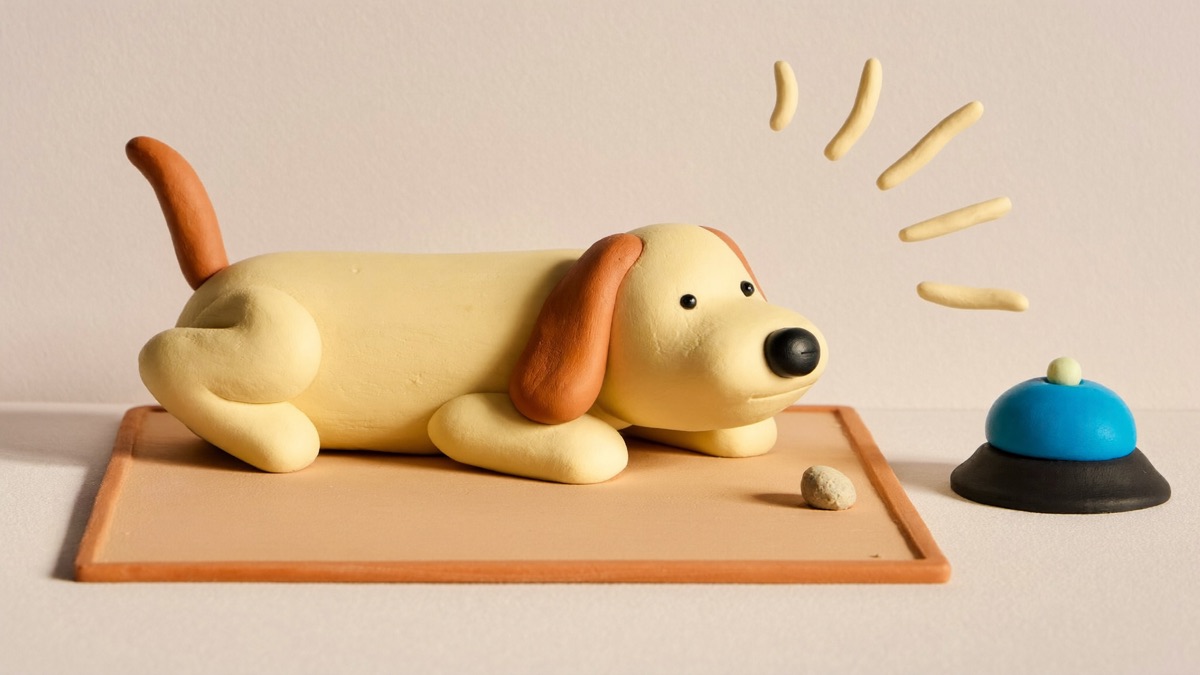
Place a mat or bed where your dog can see the door but isn't at it — three to four metres back works in most flats. Then:
- Charge the mat (days 1–3). Several times a day, toss a treat onto the mat, say nothing, let your dog eat it and wander off. The mat becomes a lottery that keeps paying.
- Add the chime at low intensity (days 3–7). Have someone press the bell once — or play a recording quietly — and immediately toss a treat onto the mat. Bell, then treat on mat. Order matters: the chime must predict the treat, not follow it.
- Wait for the dog to beat you to it (week 2). After enough repetitions, the chime rings and your dog looks at the mat or moves towards it before you throw. Pay that instantly and generously.
- Add duration and the door (weeks 3–4). Treat on the mat, then take one step towards the door and return. Build up to opening the door while the dog stays parked, feeding at intervals.
- Go live gradually. Recruit a friend to be a boring "visitor" who rings, waits, and ignores the dog completely while you run the pattern for real.
Keep sessions under five minutes and end before your dog is tired of the game.
What if my dog explodes at even a recording?
Then the chime is over threshold and you need the volume knob. Record your actual doorbell on your phone, play it at a volume so low your dog merely flicks an ear, and pair that with treats — then raise the volume over sessions. This is standard desensitisation and counterconditioning, and our DSCC guide explains the threshold rules in full. The one non-negotiable: if your dog barks during a session, the volume was too high, and the fix is turning it down, not repeating the exposure.
What about the daily parcel avalanche?
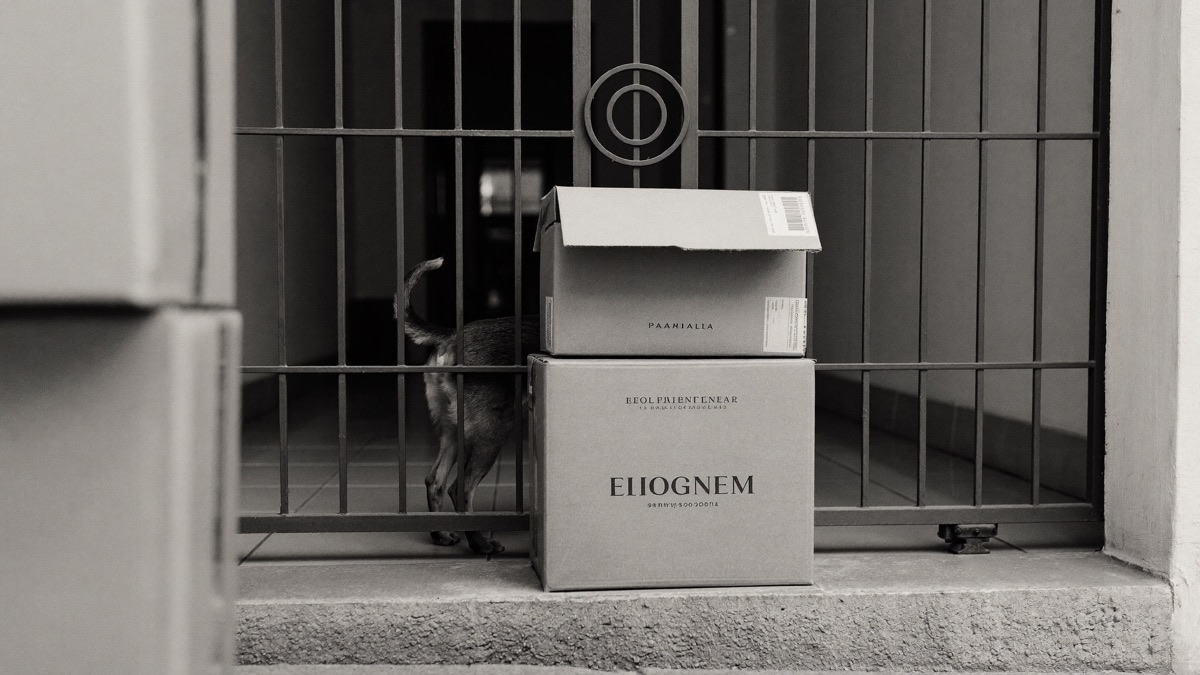
In Singapore especially, the doorbell isn't an occasional event — between Shopee, Lazada, Grab, and foodpanda, some households get five or more rings a day, and every untrained ring is a rehearsal of the old behaviour. During the training weeks, take rehearsals off the table: tape over the bell and put up a "please knock softly / leave at door" note, set delivery apps to drop-at-door with a photo, or use the letterbox and a riser gate. This isn't cheating; it's the same logic as not practising piano mistakes. Once the mat pattern is solid, reconnect the bell and let real deliveries become paid training reps.
How do I manage real guests while training?
Live arrivals outrank practice chimes, so bridge the gap with management. Before guests arrive, give your dog a long-lasting chew or frozen Kong behind a baby gate or in another room, and bring the dog out on lead once everyone is seated and calm. Ask guests to ignore the dog completely — no eye contact, no greeting — until it settles; attention from visitors is rocket fuel for door drama. If your block's corridor sounds set your dog off before the bell even rings, that's alert barking with a different trigger, and the masking and retraining sequence in our apartment barking guide is the place to start. For the full picture of why the fix always depends on the bark type, see how to stop dog barking.