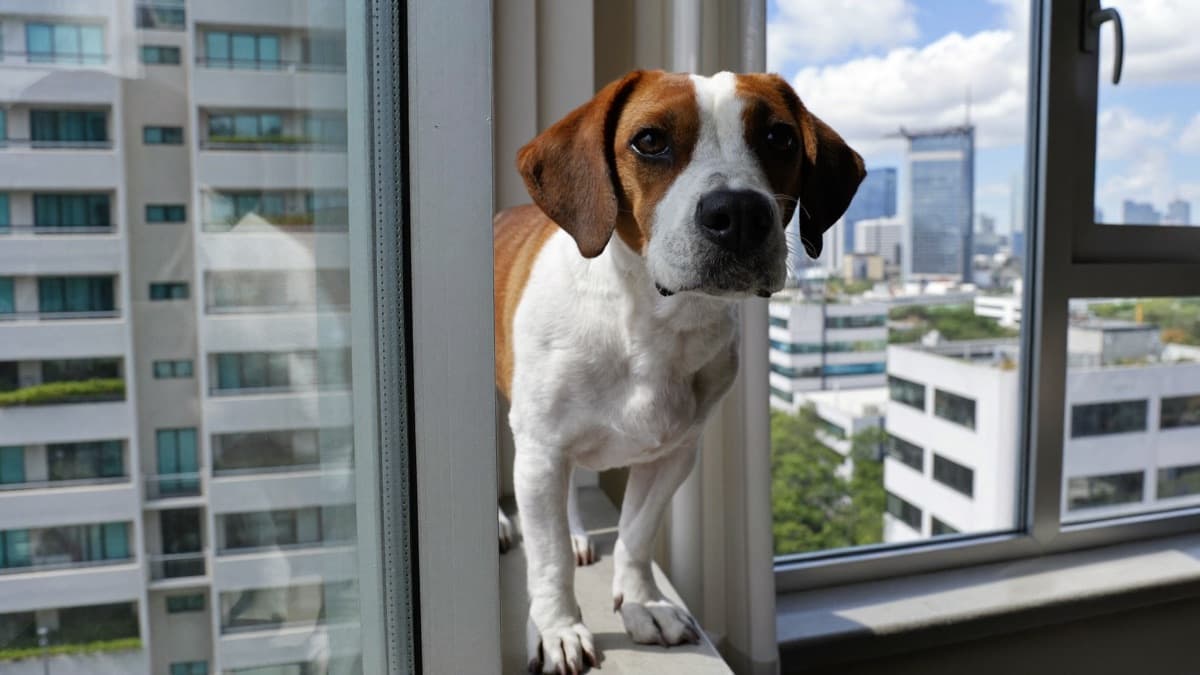
One scope note before anything else: this guide is about barking at dogs from home. If your dog barks and lunges at dogs on walks, that's on-leash reactivity, which has its own causes and its own protocol — our leash reactivity guide covers it properly.
Why does my dog bark at every dog that passes?
Because from your dog's perspective, the patrol works flawlessly. A dog appears at the edge of the territory; your dog barks; the other dog leaves. It always leaves — it was walking past anyway — but your dog doesn't know that. Result: a 100% success rate on "chasing off intruders", logged and reinforced several times a day, every day. This is why sentry-duty barking gets stronger over time while you're doing nothing wrong: the environment itself is doing the training.
Barrier frustration stacks on top. A dog that would happily sniff and move on at the park can't complete any normal social sequence through glass or grille, and that blocked motivation vents as barking and fence-running. The longer the habit runs, the more the window becomes your dog's full-time job.
What should I block first?
Management beats training here, because you cannot out-train several free rehearsals a day. Take away the sentry post before you teach anything:
- Frosted window film on the lower half of the offending window is the single highest-value purchase — S$15–40 / RM40–120 a roll from hardware stores or online as of 2026, cuts the dog's sightline at dog-height while keeping your light and your view standing up.
- Rearrange furniture so the sofa or cat-tree-style perch no longer faces the window; many window barkers are launched from a couch-back observation deck.
- Close the door of the patrol room when you're out. Boredom plus a window is the classic combination — check the exercise baseline too, because an under-walked dog self-employs as security.
Expect the barking to drop sharply within days on management alone. That's not the finish line, but it stops the habit deepening while you train.

How does the watch-then-disengage game work?
The goal isn't to stop your dog noticing other dogs — that's impossible — it's to change what noticing leads to. You'll teach: see a dog, look back at your human, get paid.
- Set up under threshold. Start at a window or gate where dogs appear far enough away that yours watches with interest but doesn't bark. If there's no such distance at home, start the game on quiet walks and import it later.
- Mark the look. The moment your dog notices a dog — ears up, head orients — say "yes" calmly and feed a treat away from the window, so eating breaks the stare.
- Wait for the voluntary turn. After repetitions, your dog will glance at a passing dog and then swivel to you unprompted, invoicing you. Pay that generously — it's the whole behaviour.
- Raise difficulty slowly. Closer dogs, the actual trigger window with film removed later, then the corridor or lift lobby.
If your dog barks during a session, the trigger was too close or too exciting — add distance or re-frost, don't scold. Punishing the bark teaches "dogs passing predict trouble", which is how window barking escalates into genuine reactivity.
What are the rules for balconies and HDB corridors?
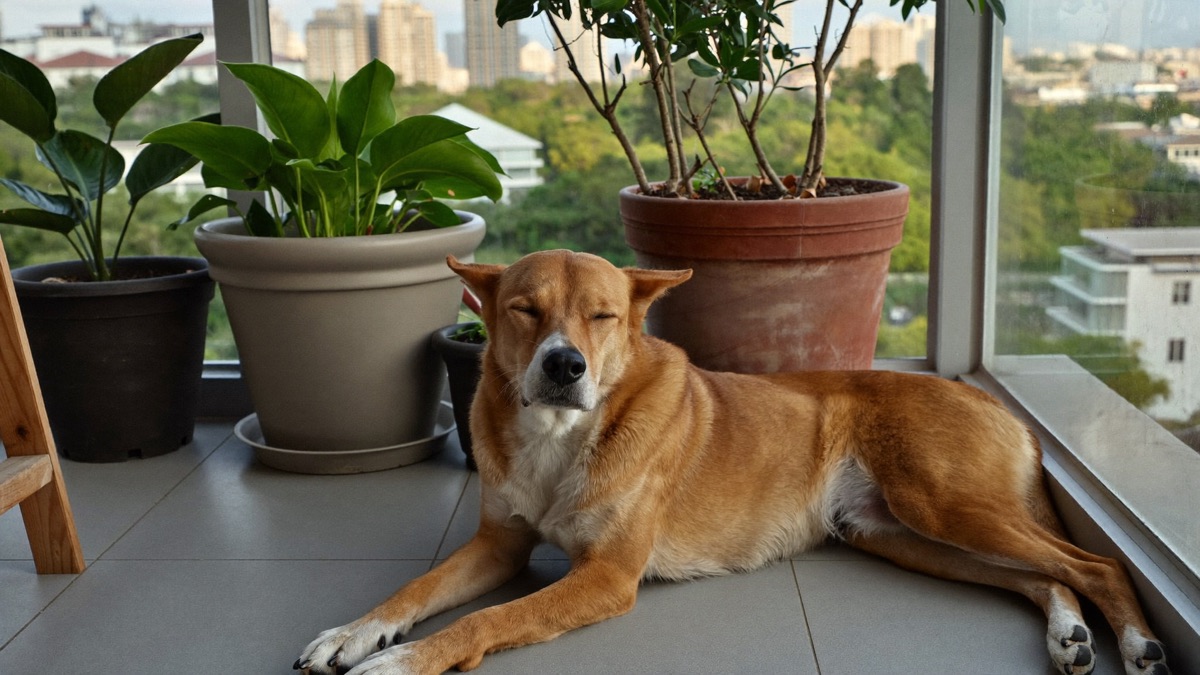
Condo balconies: treat the balcony as a privilege, not a dog run. Out when calm and supervised, straight back in the moment patrol behaviour starts — no drama, just "shift's over". Never leave a balcony barker out there alone; beyond the training damage, repeated balcony barking is the quickest way to a management-office complaint, and the heat is its own risk in our climate.
HDB corridors: the front gate is the usual sentry post, with a straight sightline down the corridor. Fix the sightline: a solid door panel or opaque film over the lower gate grille, the dog's resting spot moved away from the door, and a fan or white noise masking approach footsteps. Corridor rules about obstruction limit what you can build outside, so work on your side of the gate. If the barking targets sounds and passers-by generally rather than dogs specifically, that's alert barking — the masking and retraining sequence in our apartment barking guide is the right track, and the six-type table in how to stop dog barking will confirm which problem you actually have.