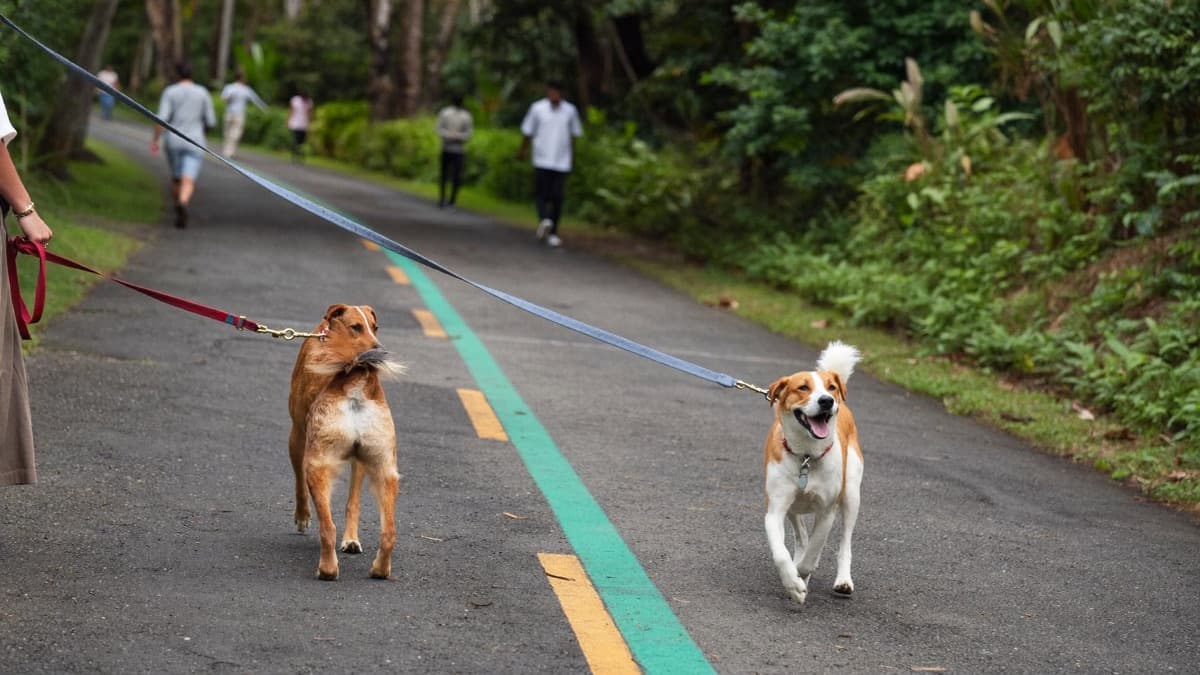
Why is my dog scared of other dogs?
Two histories produce the same behaviour:
- Under-socialisation. Dogs that missed easy, positive dog contact between roughly 3 and 14 weeks of age — common in ex-street dogs, pandemic puppies and kennel-raised dogs — never built the fluency to read canine body language. Other dogs are unpredictable aliens to them.
- A bad experience. One serious attack, or a string of rude, body-slamming greetings, can teach a previously social dog that other dogs are dangerous. These dogs often single out the type that scared them: big black dogs, huskies, off-leash runners.
The distinction matters less than people expect, because the treatment is the same. What matters more is honesty about where your dog sits on the spectrum — from "worried and avoidant" to "lunging and snapping to make the scary thing go away". The second is still fear; it's just fear that has learned offence works better than defence. That pattern overlaps heavily with leash reactivity.
What does "distance is medicine" mean?
Every fearful dog has a threshold — the distance at which it notices another dog but can still think, eat and respond to you. Outside that line, learning happens; inside it, only panic does. Your entire job is staying outside the line while good things happen, then letting the line move closer on its own. The full method — pairing the trigger with food until the emotional response itself changes — is covered in our guide to desensitisation and counterconditioning.
At threshold, the working loop is simple: dog notices dog → you mark ("yes") → treat → the other dog goes away or you do. Ten clean repetitions at 40 metres beat one white-knuckle pass at 4 metres.
How do parallel walks work?
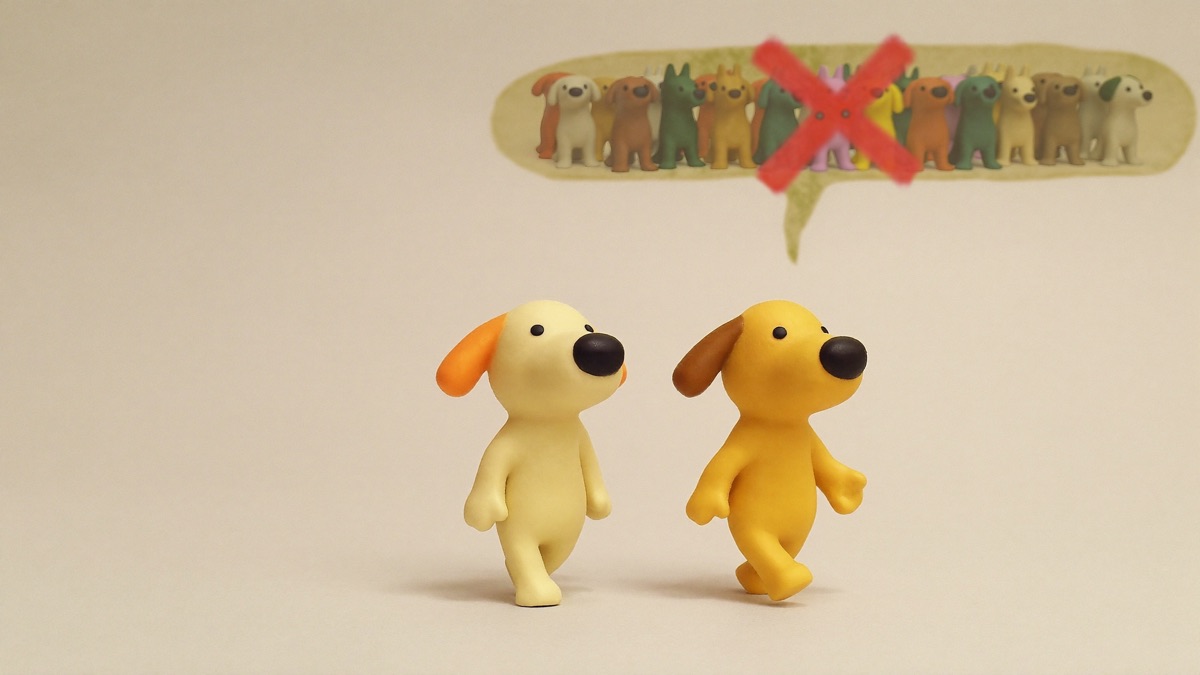
Parallel walking is the gold-standard bridge from "dogs at a distance" to "a dog I know". Recruit one calm, dog-neutral adult dog — not a bouncy adolescent — and walk the two dogs in the same direction, handlers between them, with a gap wide enough that your dog stays loose and sniffy. Same direction is the magic: no head-on approach, no eye contact, shared movement and shared sniffing spots.
Over multiple sessions, let the gap shrink gradually — and let your dog set the pace. Many pairs walk metres apart for weeks before a brief, three-second sniff happens naturally at a bush. That's success. Repeat with the same dog until they're genuinely relaxed together before even thinking about a second dog.
Why are dog parks the worst rehab venue?
Say it plainly: the dog park is the single worst place to rehabilitate a dog-fearful dog. It fails every requirement of good rehab at once — no control over distance, no control over which dogs approach, no escape routes, and a population skewed towards the pushiest, rudest greeters whose owners are looking at their phones. For a fearful dog, five minutes in a dog run is a flooding session that can undo months of careful work, and it's exactly where "worried" dogs learn that lunging first is the only thing that keeps space open.
Dog runs have their place for confident, dog-social dogs — our dog-friendly Singapore guide covers dog run etiquette for those dogs. Yours isn't one of them yet, and may honestly never need to be. A dog that calmly ignores other dogs on a park connector has a perfectly complete life.
What handling skills do I need?
- Body blocking. Step calmly between your dog and an approaching dog, side-on, and walk your dog away on an arc. You claiming the problem is enormously relieving for a fearful dog — it learns you handle the scary stuff.
- The cheerful U-turn. Practise "let's go!" with a treat at home until it's reflexive, then use it the moment you spot trouble. Leaving early is a skill, not a defeat.
- Advocacy scripts. "Please call your dog — mine is in training" said early and loudly. Off-leash greeters are your biggest hazard; plan routes and timings around them.
- Muzzle comfort if there's any bite history. A conditioned basket muzzle removes catastrophe from the equation and visibly buys you space from other owners. Train it properly first — our muzzle training guide has the full conditioning ladder.
If your dog can't eat or disengage even at very long distances, or has bitten, bring in an AVS-accredited force-free trainer or a veterinary behaviourist rather than pushing on alone.