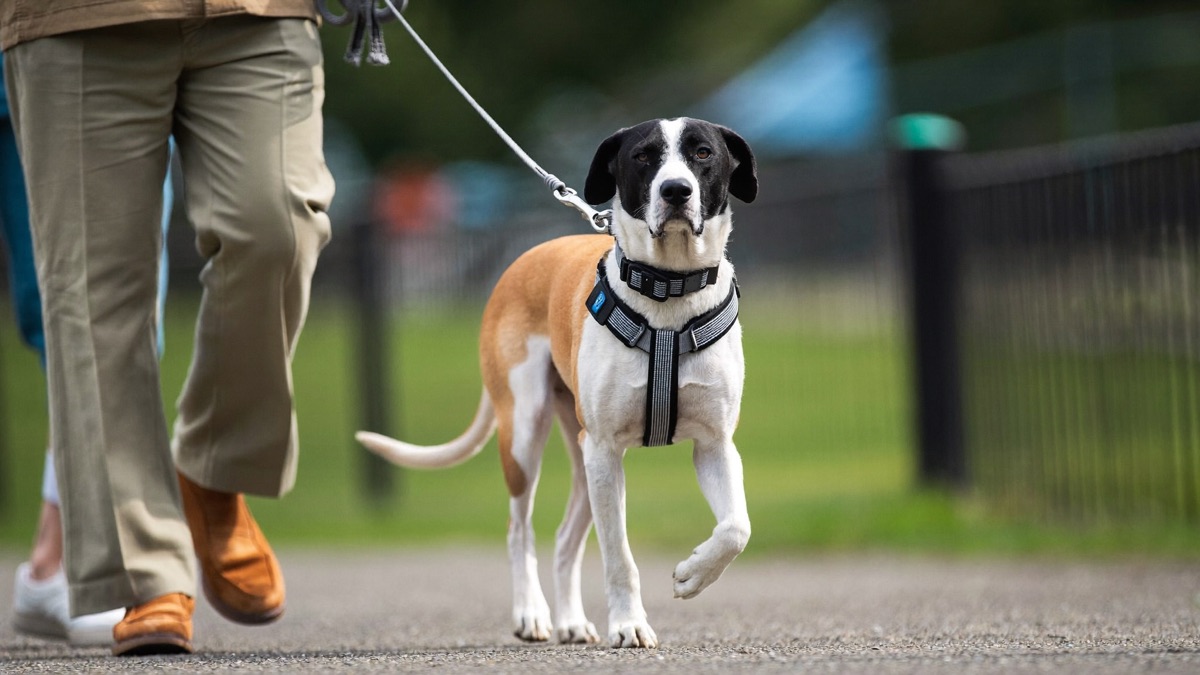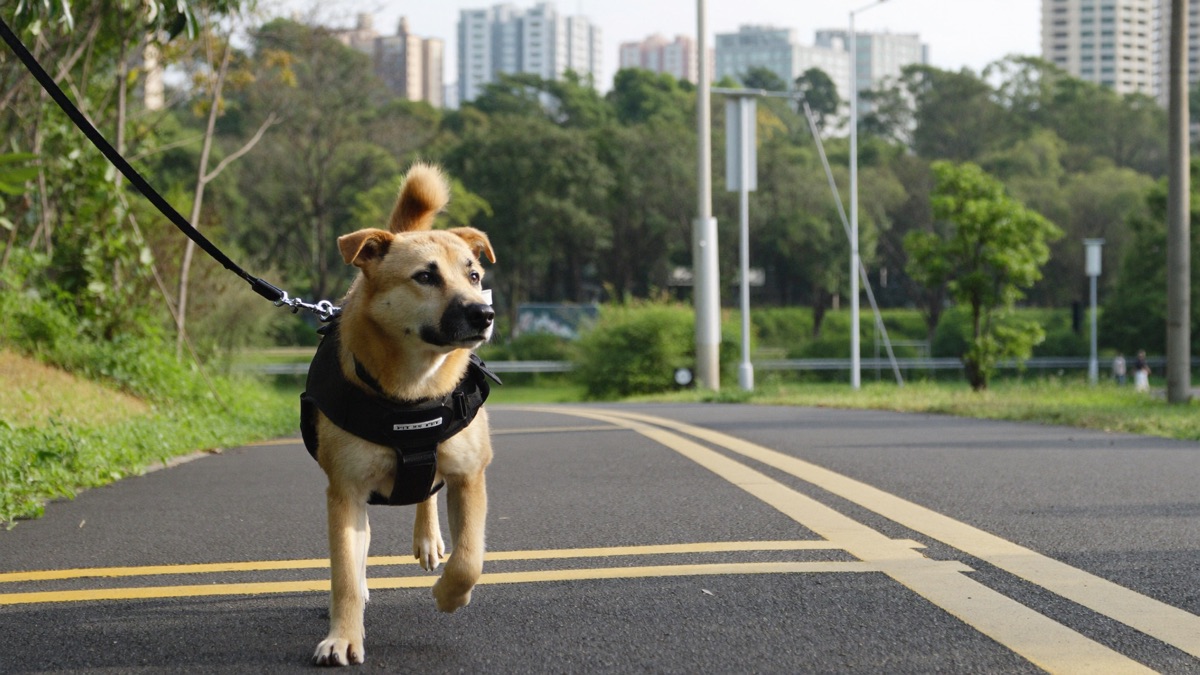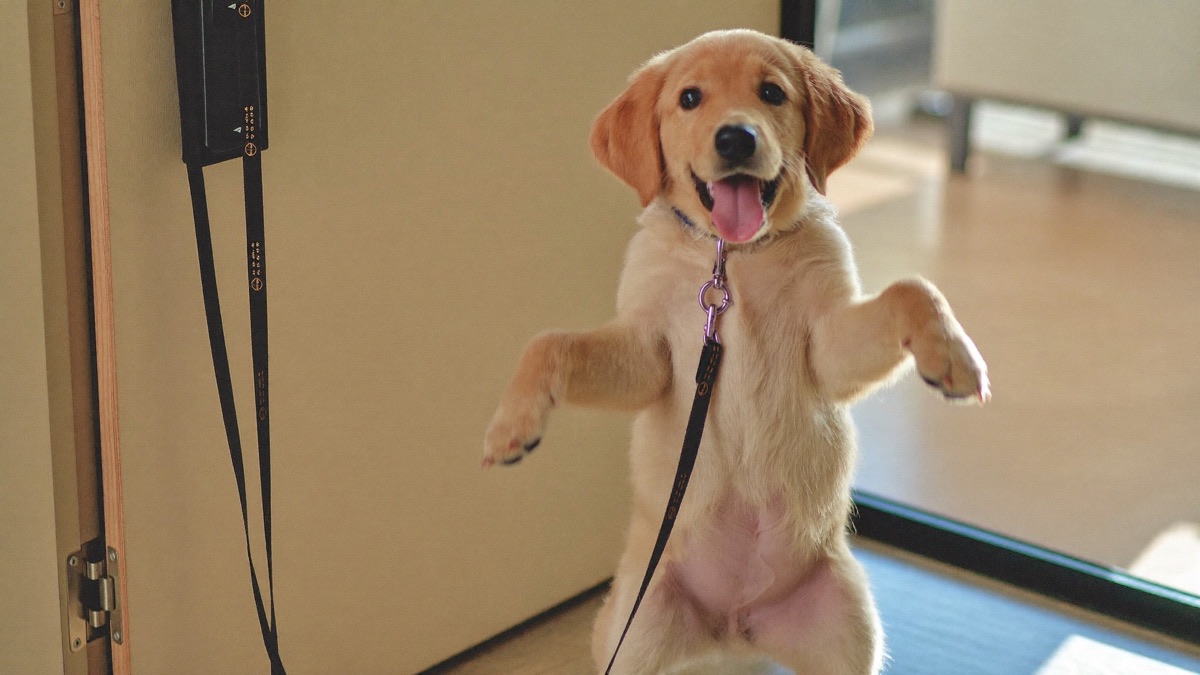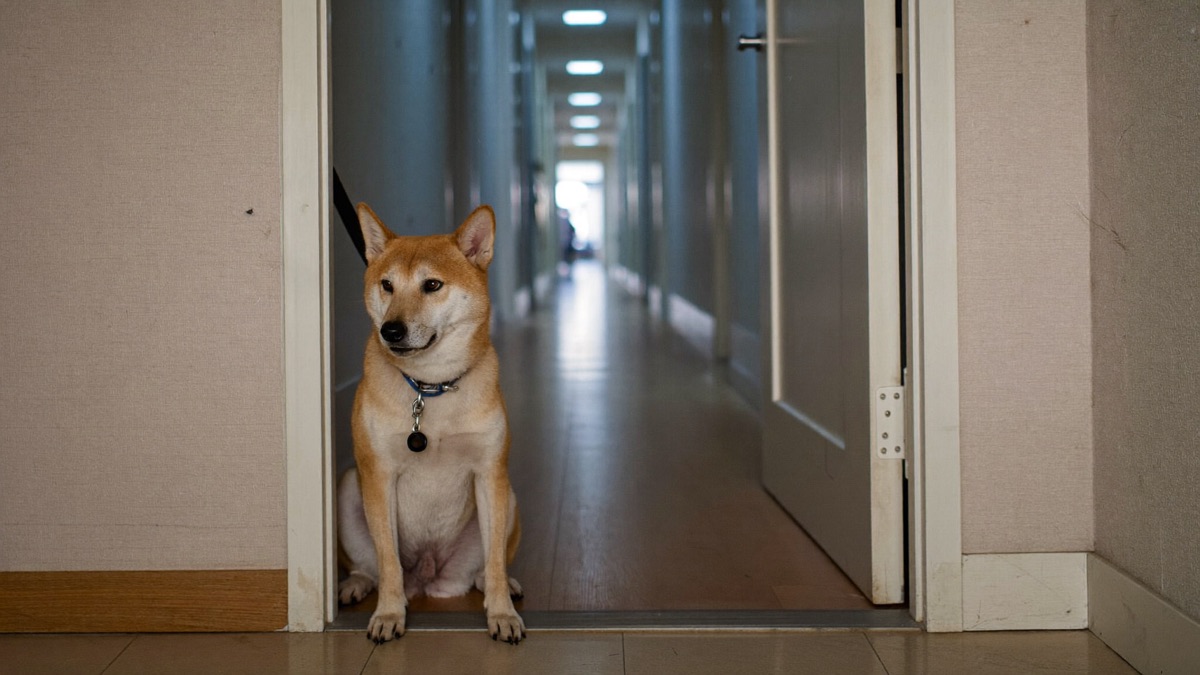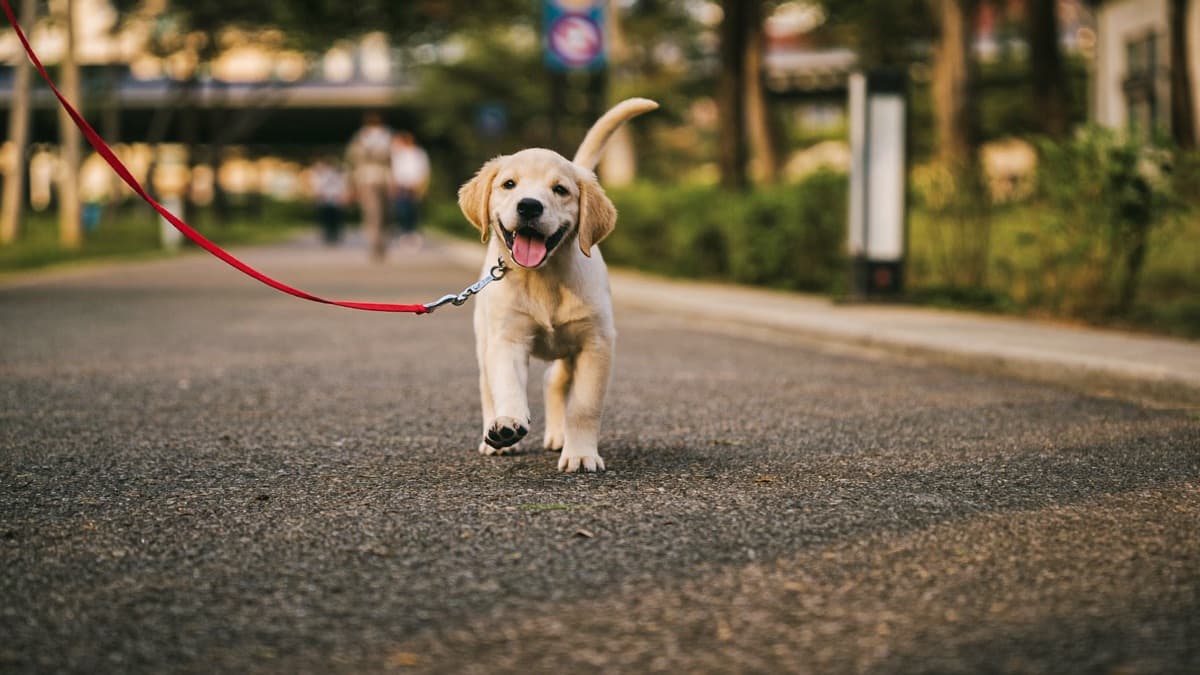
Why does my puppy bite the leash?
Because walks are the most exciting thing in a puppy's day, and the excitement has to go somewhere. Leash biting is a classic displacement behaviour — think of it as a zoomie funnelled down a strap. The clip snaps on, arousal spikes past what a young brain can regulate, and the nearest grabbable thing is a dangling, wiggling, perfectly mouth-height ribbon that's attached to you and moves when you move. Of course it gets bitten.
The same overflow logic explains the other classic flashpoints: leaving the lift lobby, arriving at the grass, meeting another dog, and the overtired end of a too-long walk. If your puppy also does laps of the sofa at 9 pm, you've seen the identical mechanism in its natural habitat — our guide to dog zoomies covers why young dogs discharge excitement through their legs and mouths. Reading leash biting as defiance gets the whole thing backwards; it's a regulation problem, and regulation is something puppies grow into and can be helped towards.
Why does pulling back make it worse?
Because the moment you pull, the game is on. Tug is one of the most reinforcing games that exists for dogs — and tug is precisely what a taut leash plus a resisting human is. Every yank-back, every "drop it!" wrestle, every attempt to lift the leash out of reach that becomes a jumping snap-fest teaches the same lesson: biting the leash makes the human play.
This is the single most common way well-meaning owners install a leash-biting habit. The puppy isn't winning a battle of wills; it's enjoying a game you don't realise you've agreed to. Which points straight at the fix: end the game by refusing to play it.
What is the go-limp and redirect protocol?
- Go limp. The instant teeth touch leash, let the leash go slack — drop your hand towards the clip, step towards the puppy if needed, kill every gram of tension. A limp leash is a dead toy; most puppies mouth it for a few seconds and lose interest, because the fun was always the resistance.
- Stay boring. No shouting, no laughing, no eye-contact drama. Any big reaction is a consolation prize.
- Redirect to the legal toy. The moment the puppy's grip loosens, present the tug toy you're carrying (next section) and make it exciting — wiggle it along the ground, let the puppy win it. You're not bribing the biting away; you're moving the game onto an object that's allowed.
- Pay the walk. A few steps of nice walking with the leash ignored earns a treat at your seam. The picture you're building: leash slack and boring, toy and treats interesting.
- If arousal is past reachable — glazed eyes, thrashing, jumping and grabbing — stop the walk. Stand on the leash with enough slack for the puppy to sit or lie, wait out the storm for a minute, then restart slowly, or head home. Nothing trainable happens over threshold.
Consistency is the whole trick. Go-limp every single time means the game never pays; go-limp four days out of five means the puppy keeps buying lottery tickets.
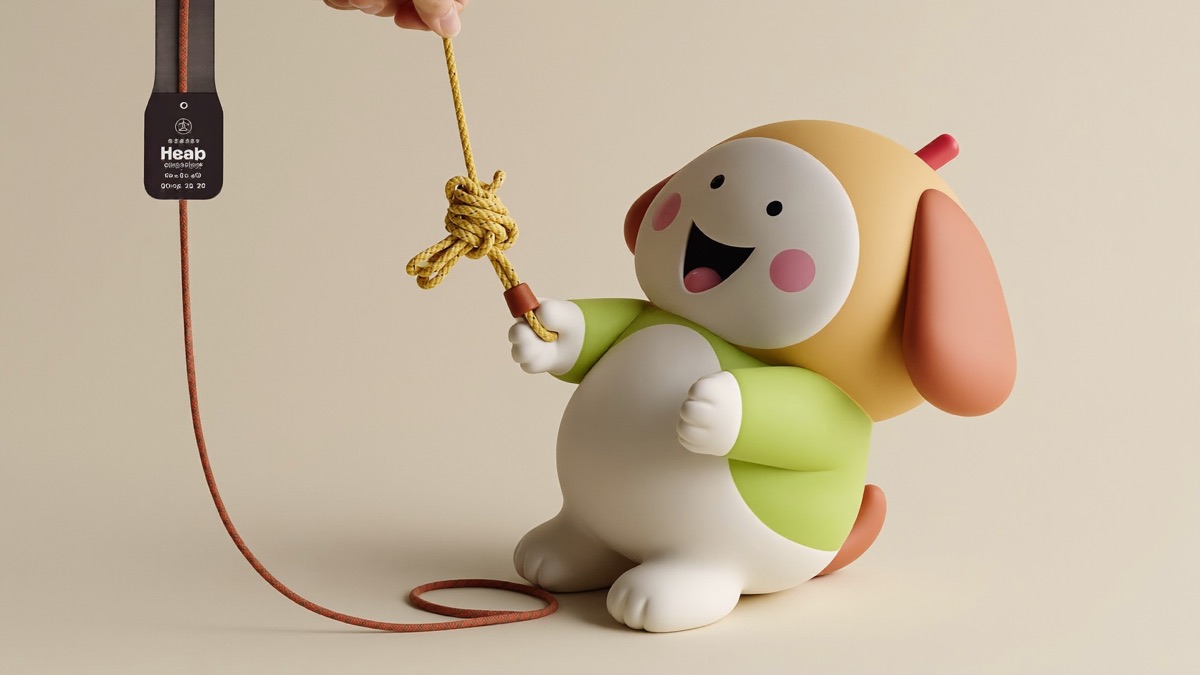
Should I carry a tug toy on walks?
Yes — make it standard kit, like poo bags. A designated walk-tug (a soft rope or fleece tug that fits in a pocket, roughly S$8-25 / RM25-75 as of 2026) does three jobs: it's the instant redirect when teeth find the leash, it's a legal outlet you can offer first at known flashpoints — clipping on, leaving the lift, arriving at the park — and it teaches the puppy that grabbing urges have an address. Offering the tug before the arousal spike, not after the biting starts, is the advanced version: thirty seconds of sanctioned tug at the void deck often buys a whole calm walk.
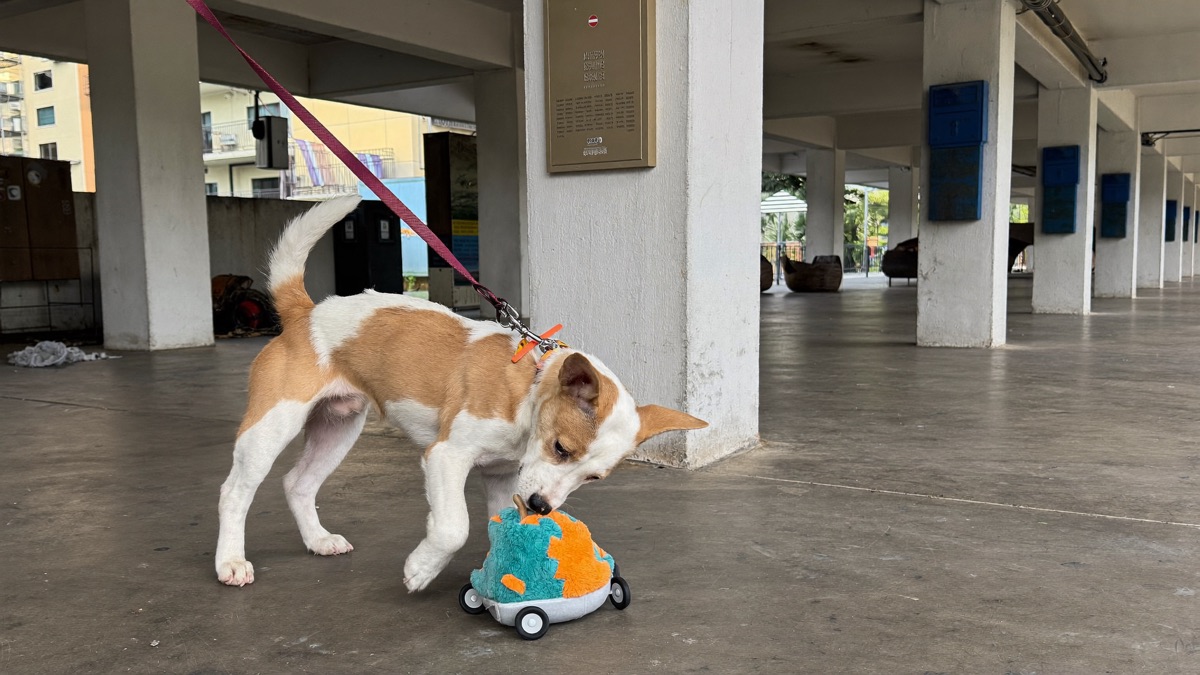
Is teething part of the picture?
Often, yes. Between roughly three and six months, puppies lose 28 baby teeth and erupt 42 adult ones, and sore gums make everything more bite-worthy — the leash included. If your leash-biter is in the teething window, run the same protocol but add proper chewing relief between walks: frozen wet cloths, chilled rubber chews, softer tug pressure. Our puppy teething guide covers the timeline and what helps. Teething explains extra intensity; it doesn't change the training.
When does leash biting mean the walk is too much?
Watch for the pattern change. Excitement biting happens at the fun flashpoints and looks bouncy. Stress biting shows up when the walk is overwhelming — heavy traffic, crowds, other dogs too close, too long a route — and looks frantic: biting mixed with panting, scanning, refusing food, thrashing at the leash rather than playing with it. That's a puppy over threshold, discharging stress through its mouth because it has no other exit, and the answer isn't better redirection — it's a smaller walk. Shorter routes, quieter hours, more sniffing time, fewer stacked triggers; our guide to trigger stacking explains how ordinary walks quietly overload young dogs. Fix the walk and this kind of leash biting usually fixes itself.