Why do dogs pull on the leash?
Two mechanisms stack on top of each other. The first is the opposition reflex: push or pull against a dog's body and they instinctively push back. A tight leash across the chest or throat doesn't read as "slow down" to a dog — it reads as resistance to lean into, which is why choking, gagging dogs keep hauling.
The second is reinforcement history, and it's the bigger one. Every walk where a tight leash still ended at the grass patch, the lamp post or the dog run taught your dog that pulling is the fastest route to everything good. Dogs walk at 6–8 km/h naturally; we stroll at 4. From your dog's perspective, you are the slow one, and dragging you along has always worked. Until that contingency flips, no equipment will train the pulling away.
What is the stop-and-go method?
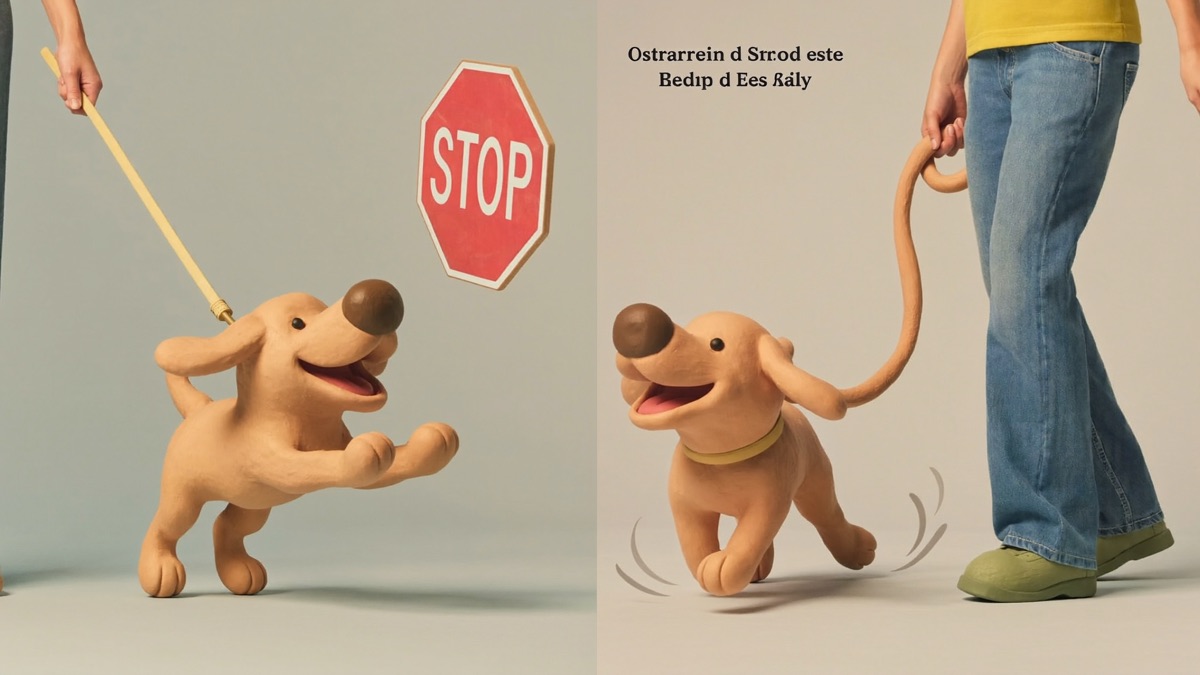
Stop-and-go (sometimes called "be a tree") removes the payoff. The rules:
- The instant the leash goes tight, stop. Completely. No leash pop, no verbal correction — just a full stop.
- Wait. The moment your dog slackens the leash — glances back, steps toward you, or the tension drops — mark ("yes!") and walk on. Forward motion is the reward.
- Reinforce position. When your dog walks near your leg on a loose leash, feed there, at your seam, every few steps at first. You're paying rent on the position you want.
Direction changes add unpredictability for committed pullers: before your dog reaches the end of the leash, cue cheerfully and turn 180 degrees. Your dog learns to keep half an eye on you because you might go anywhere. Keep it upbeat — this is a game, not a yank. Sessions should be short (5–10 minutes) and start somewhere boring like your void deck at a quiet hour, not the park entrance at 6pm.
Should I use a front-clip harness?
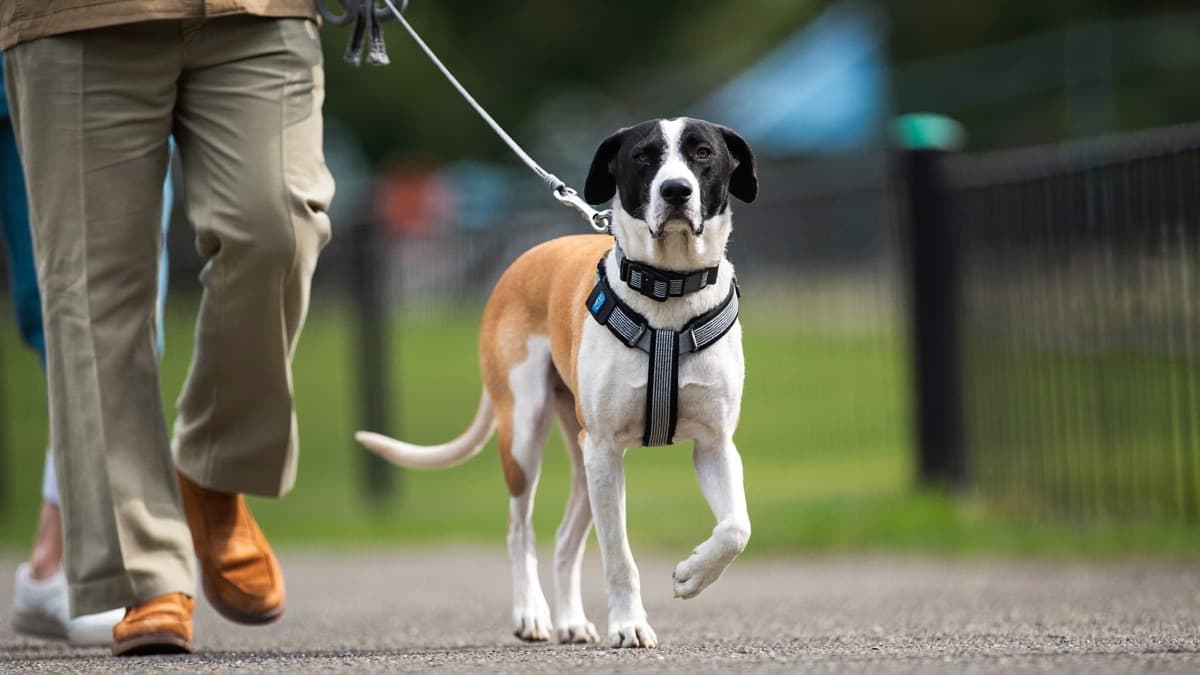
Yes, as your default kit. A harness with a chest-front attachment point converts forward lunging into a gentle sideways turn, which takes the physical strength contest out of walks immediately and protects the throat. Fit matters: the strap should sit on the breastbone without cutting across the shoulders, and you should check for chafing behind the front legs. A double-ended leash (front clip plus back clip) gives finer steering for strong dogs. Remember what the harness is: management that stops the rehearsal of pulling while training does the actual teaching.
Why not a prong or choke collar?
Because the evidence is against them. The American Veterinary Society of Animal Behavior's humane training position is that aversive tools — prong, choke and shock — are unnecessary for behaviour change and carry documented risks: increased fear, stress and aggression, damage to the trachea and neck structures, and a dog who associates pain with whatever it happens to be looking at, which on a walk is often other dogs and passers-by. They can suppress pulling in the moment while making the underlying behaviour and the dog's emotional state worse. Reward-based methods reach the same destination without the collateral, so there is no trade-off to weigh.
What counts as loose-leash walking, and how long does it take?
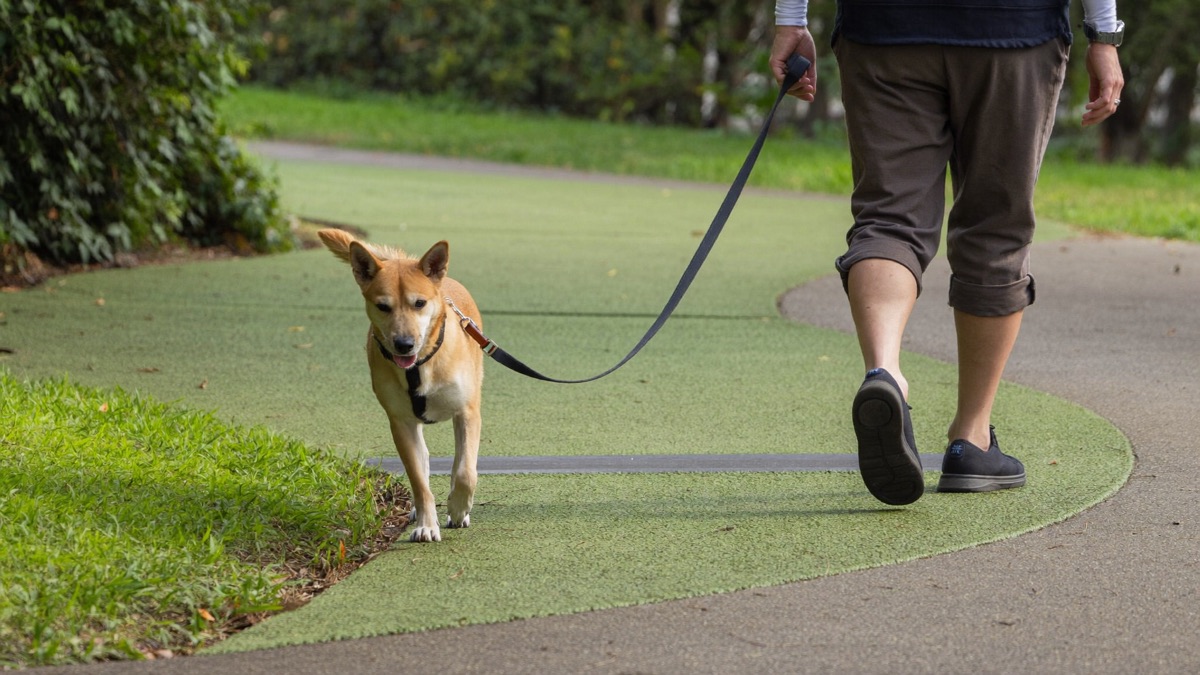
Set a concrete criterion: the leash hangs in a "J" shape for the duration of the walk, and your dog can pause, sniff and drift within the leash's length without tightening it. That's the goal — not a military heel. Realistic timeline: with daily 5–10 minute sessions, expect a visibly better walk in 1–2 weeks, reliable loose leash in low-distraction settings by 4–8 weeks, and busy-environment reliability over several months. Adolescents regress; that's normal, not failure.
How does this play out in HDB corridors and lift lobbies?
Tight shared spaces raise the stakes on a loose leash. In a narrow corridor there is no arc to give an oncoming neighbour, so teach a "with me" position for the stretch between your gate and the lift, paid generously. In the lift lobby, ask for a sit at your side while waiting and keep the leash short but slack — a strung-up dog is more reactive, not less. Step to the back of the lift, keep your dog's nose out of neighbours' space, and skip a crowded lift rather than testing a work-in-progress dog. Good leash manners in these pinch points are what keep dog-friendly goodwill alive on your floor. And if walks still feel like a tug-of-war after a few weeks of honest practice, a couple of sessions with an AVS-Accredited Certified Dog Trainer — roughly S$100–250 / RM150–400 per private session as of 2026 — will shortcut most handling mistakes.