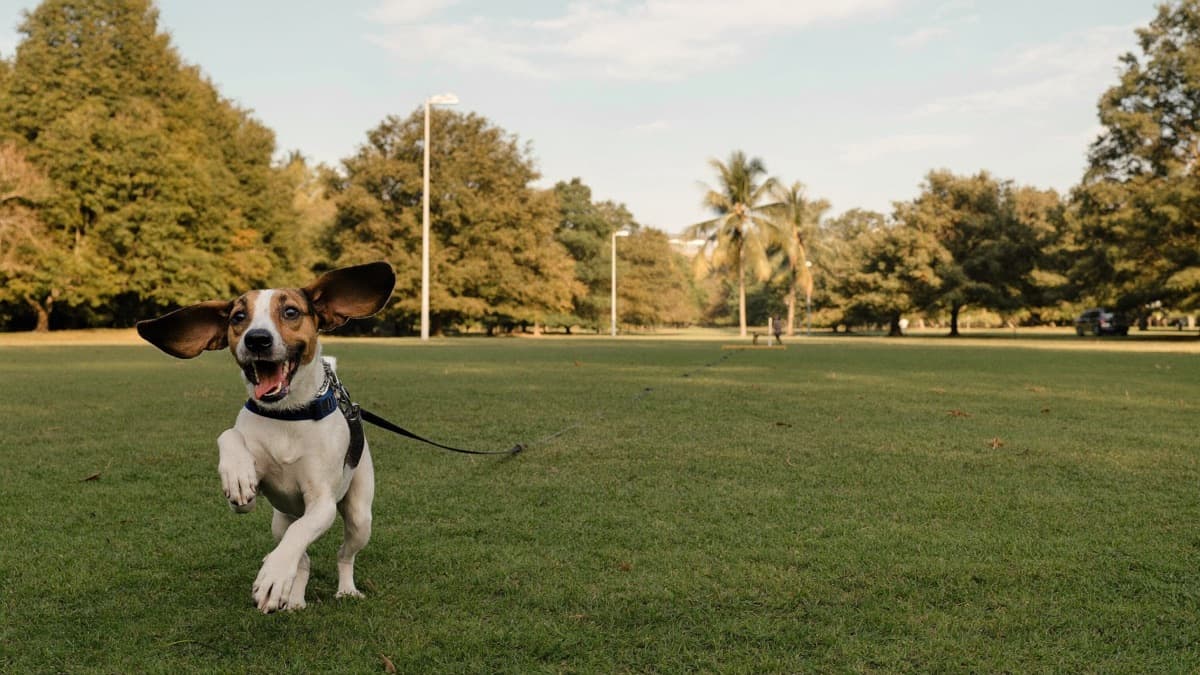
Why do most recalls fail?
Because from the dog's side of the ledger, coming when called is a terrible deal. Count what "come" has actually predicted in most households: the end of play at the dog run, being clipped back on leash, going home, a bath, a scolding for running off in the first place. Meanwhile the alternative — ignoring you and continuing to sniff, chase or play — pays instantly. Dogs repeat what works; they are not being stubborn, they are doing the arithmetic.
There's a second failure mode: the poisoned cue. If "come" has been shouted in anger often enough, the word itself starts predicting trouble and triggers avoidance. The fix is the same in both cases — either rehabilitate the word with months of good outcomes, or pick a fresh cue ("here!", a whistle) and protect it from day one.
What is the never-punish-a-recall rule?
Simple and absolute: whatever happened before your dog reached you, arriving at you is always safe and always pays. Your dog ran off for ten minutes, rolled in something foul, ignored three calls — and then came. You pay the recall anyway, warmly. Punish that arrival once and you've taught the precise opposite of what you want: that coming back is dangerous. The same logic bans the "gotcha" grab — snatching the collar the instant the dog is in range. Instead, make a habit of touching the collar, feeding, and releasing the dog back to play, so being caught doesn't mean fun is over.
How do I build the recall itself?
Start indoors with a hungry dog and a cue you'll never waste. Say the cue once, in a bright voice, when the dog is already heading toward you — then pay with something genuinely high-value. Kibble is wages; recall gets bonuses: cooked chicken, cheese, liver treats. Sprinkle in games (run away as you call — dogs love to chase) so the recall feels like an event, not an errand.
Two discipline rules protect the cue. Say it once — repeating "come, come, COME" teaches the dog that the first two don't count. And never cue a recall you'd bet against — if your dog is mid-play with a new friend, go and get them rather than burn the word on a guaranteed failure.
How does the long-line method work?
A long line — 5 to 10 metres of light webbing, roughly S$15–40 / RM25–60 as of 2026 — clipped to a harness, never a collar, is the bridge between leash and freedom. It gives the dog room to make real choices while making the wrong choice unprofitable: if the recall fails, the dog simply doesn't get to reach the distraction, and you calmly reel in the situation without any scolding. You are not yanking the dog back with it; the line is a seatbelt, not a steering wheel. Let it drag on the ground in safe, open areas so the dog forgets it exists, and step on it if you need brakes. Every successful long-line recall is banked evidence that the cue works at distance.
What does the proofing ladder look like?
Distraction is the exam, so raise it one rung at a time. Master each level — roughly nine out of ten successful recalls — before moving up.
| Rung | Environment | What you're proofing against |
|---|---|---|
| 1 | Home, room to room | Nothing — building the cue |
| 2 | HDB corridor / void deck, quiet hour | Mild novelty, smells |
| 3 | Park connector on a long line | Joggers, bikes, other dogs at distance |
| 4 | Quiet corner of a dog run, long line dragging | Real dogs, real play |
| 5 | Busy dog run, off leash | Everything at once |
If a rung fails twice in a row, drop back one level and pay better. Adolescent dogs (6–18 months) will regress on schedule; that's development, not defiance.
Where can my dog actually run off-leash in Singapore?
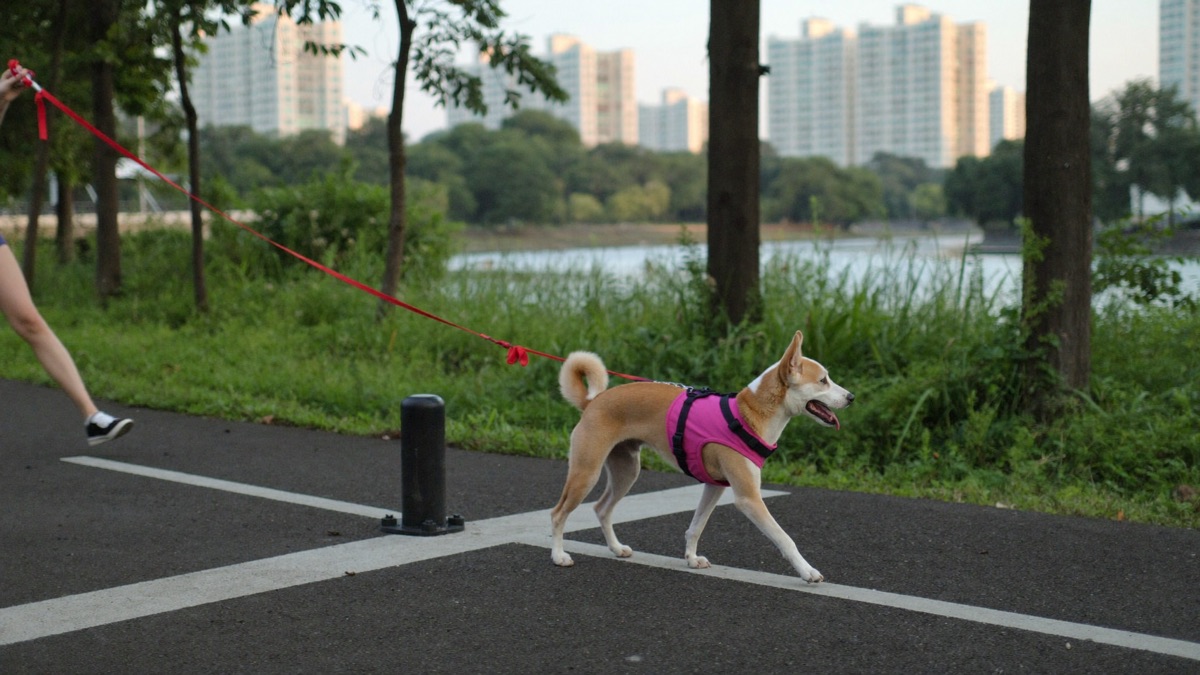
Only in designated NParks dog runs — everywhere else in public, leashing is the law, and scheduled breeds must be muzzled too. That makes the top of your proofing ladder a fenced dog run rather than an open field, which is honestly a gift: your first off-leash sessions happen inside a fence. Our guide to dog runs, parks and the leash rules lists the major runs. And if your recall stalls despite honest work, a session or two with an AVS-Accredited Certified Dog Trainer — roughly S$100–250 / RM150–400 per private session as of 2026 — is money well spent on the cue your dog's life may one day depend on.