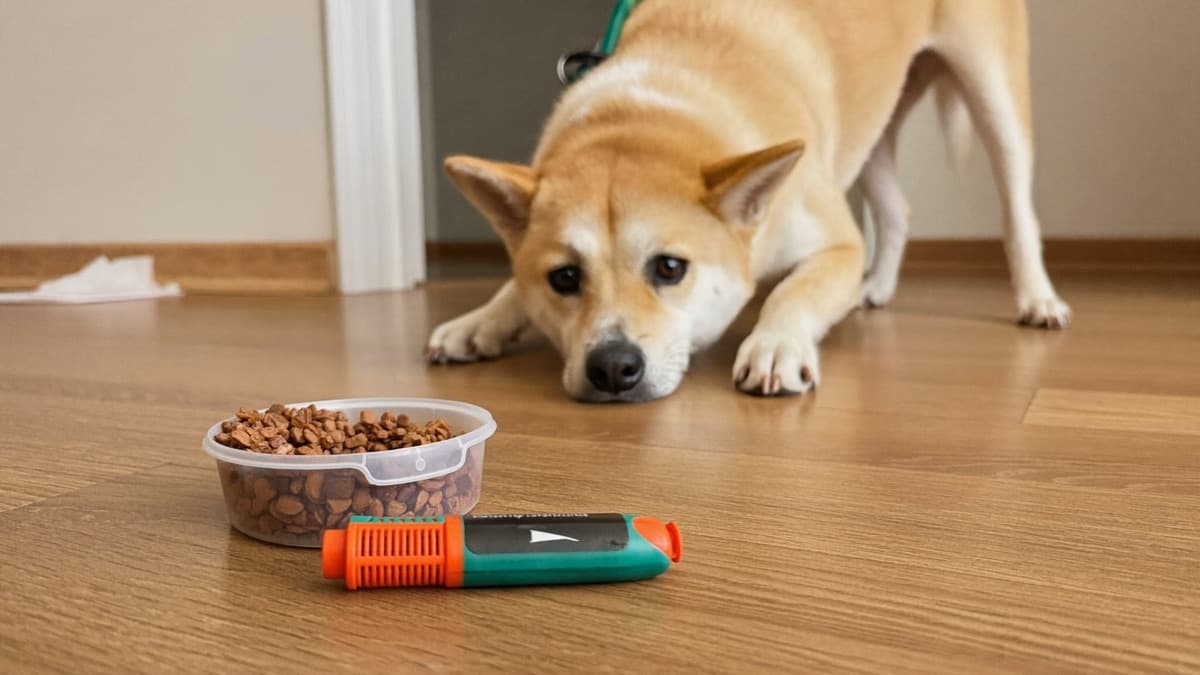
What does the click actually mean?
Rewards teach, but rewards are slow. Your dog sits; you fish out a treat; by delivery time the dog has stood up, sniffed your hand and glanced at the door — so which behaviour got paid? The click removes the ambiguity. It says: that instant, the one when the sound happened — that's what earned the treat that's coming. The dog learns to work backwards from the click to whatever they were doing when they heard it, which is why clicker-savvy dogs start experimenting to make you click. You're not commanding; the dog is solving the puzzle, and dogs solving puzzles learn faster and enjoy it more.
How do I charge the clicker?
Before the click can mean anything, it has to predict food — trainers call this "charging" or "loading" the clicker.
- Take a pot of small, good treats and your dog in a quiet room.
- Click, then immediately give a treat. The dog doesn't need to do anything at all.
- Repeat 10–15 times, twice a day for a day or two.
- Test: click when the dog is looking away. If the head whips round expecting food, it's charged.
Order matters — click then treat, never together, never treat first. And from this moment forward, honour the contract: every click gets paid, even the clicks you fumbled. A clicker that sometimes lies loses its power.
How do I get my timing sharp?
Timing is the whole game, and you can drill it without your dog:
- Ball bounce. Drop a tennis ball and click the instant it hits the floor. Ten reps; you'll feel your lag shrink.
- TV drill. Pick an action — a character blinking, a ball being kicked — and click each occurrence.
- Partner drill. A friend raises a finger at random; you click the moment it moves.
With the dog, decide before the session exactly what earns a click — "bottom touches floor", not "sort of sitting". If you click late, pay anyway (the contract), then tighten up on the next rep. A useful habit: keep your clicker hand still and behind your back, because dogs read your twitching thumb as information.
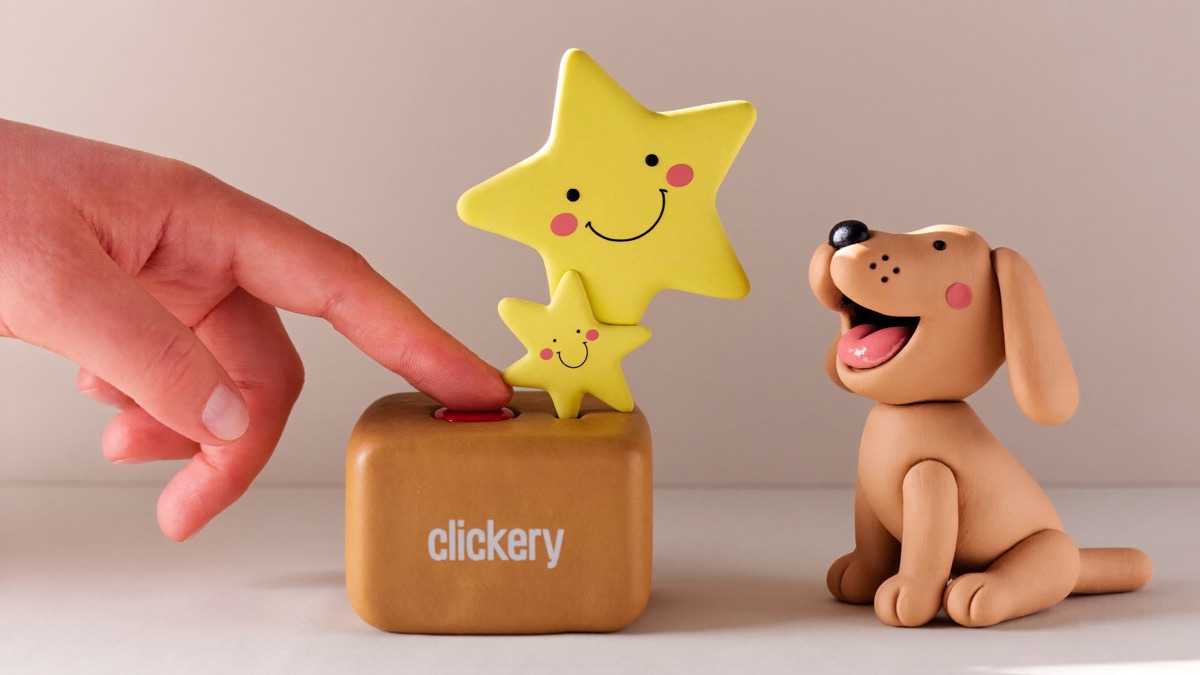
Clicker or marker word — which should I use?
| Clicker | Marker word ("yes!") | |
|---|---|---|
| Precision | Excellent — identical every time | Good — varies with mood and speed |
| Hands needed | One, plus treat hand | None |
| Always with you | Only if you carry it | Always |
| Emotional noise | None | Some — your frustration leaks |
| Best for | Teaching new or precise behaviours | Everyday life, walks, spontaneous wins |
This isn't a war; use both. Teach new behaviours with the clicker (about S$3–10 / RM5–15 as of 2026), and keep a charged marker word for the hundred small moments a day when the clicker is in the other room. Charge the word exactly the same way — "yes!", then treat, repeated until the word turns the dog's head.
How do I fade the clicker?
The clicker's job ends when the behaviour is learned. Once your dog performs the cue promptly, nine times out of ten, in several locations, stop clicking that behaviour — just cue, then reward, and gradually shift to variable rewards: sometimes food, sometimes praise, sometimes the real-life payoff like the leash going on. The clicker comes back out for the next new thing. What you never fade is reinforcement itself; behaviour that stops paying eventually stops happening, in dogs as in employees.
What are the most common clicker mistakes?
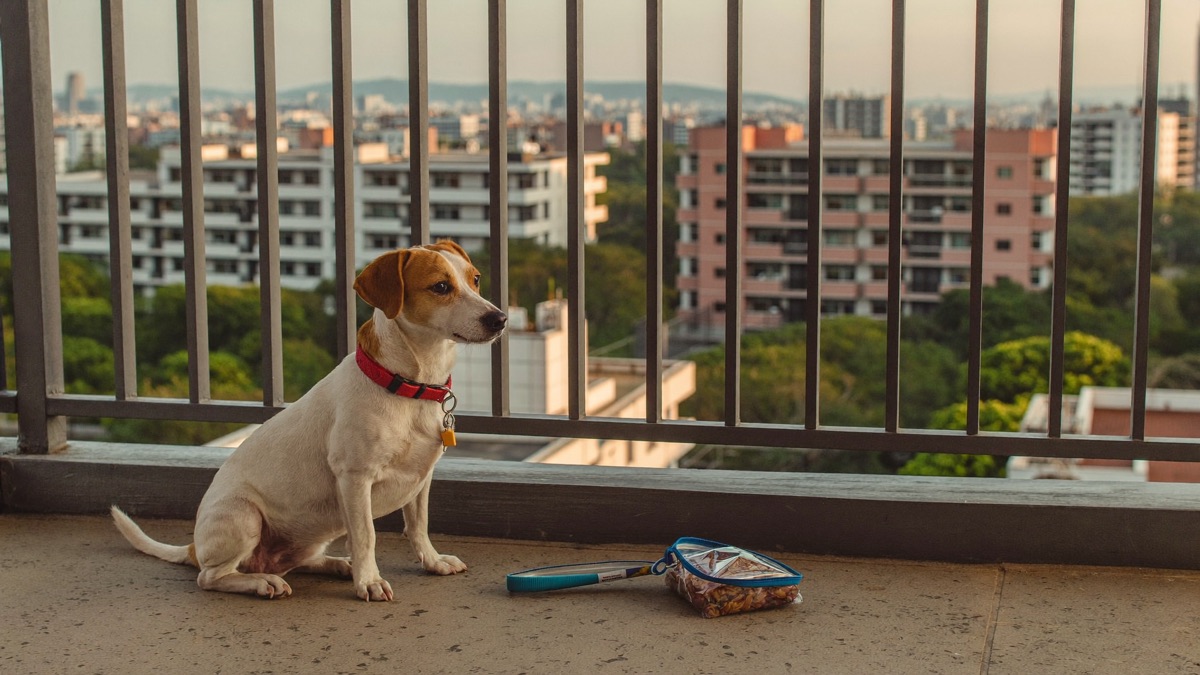
Clicking to get attention. The click is a mark, not a summons — clicking at a dog to make it look at you burns the meaning. Clicking without paying. Every click is an IOU; unpaid IOUs devalue the currency. Marking the wrong moment. Clicking as the dog bounces out of the sit pays the bounce, which is why the drills matter. Clicking multiple times for one behaviour. One behaviour, one click, one treat — enthusiasm goes in the treats, not extra clicks. Marker training pairs beautifully with everything else on your list: it's the engine behind teaching sit, down, stay and leave-it and the precision tool that makes recall training crisp.