| Quick facts | |
|---|---|
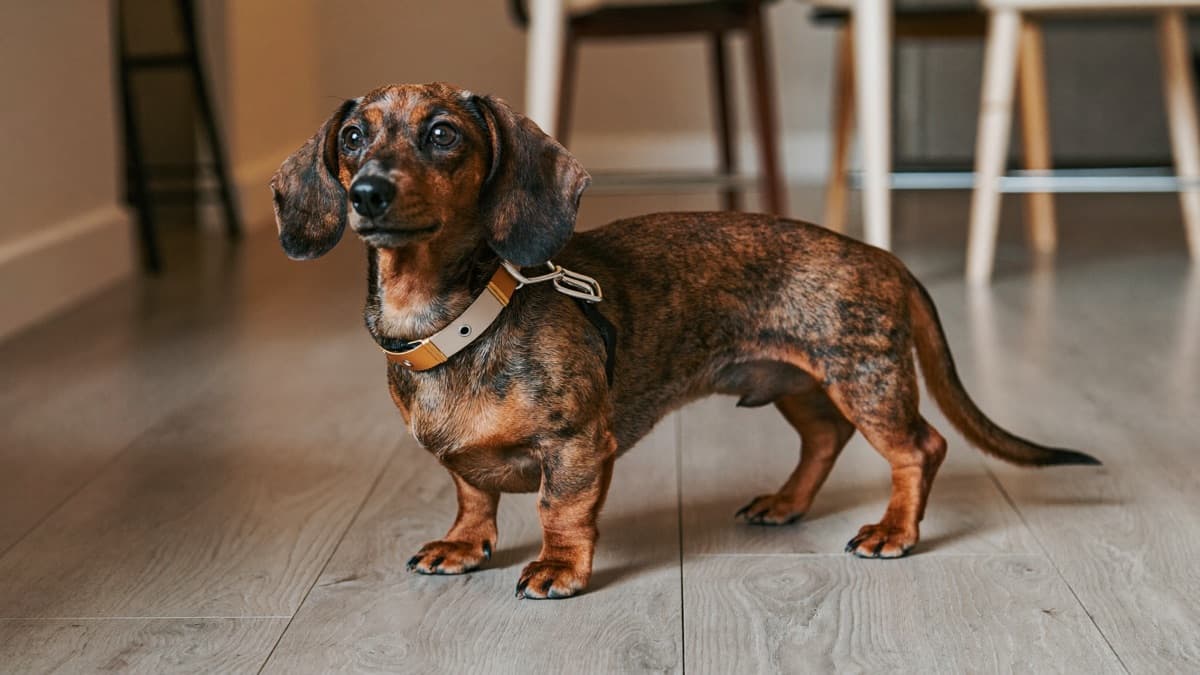
| Size | Standard 20–23 cm; miniature 13–18 cm at the shoulder |
| Weight | Standard 7–14 kg; miniature under 5 kg |
| Lifespan | 12–16 years |
| Coat | Smooth, long-haired, or wire-haired; light to moderate shedding |
| Exercise | Moderate — 30–60 minutes daily on the flat |
| HDB-approved | Yes (standard and miniature) — verify the current AVS/HDB list |
Do dachshunds have back problems?
Yes, and this is the single most important thing to understand before buying one. Dachshunds are chondrodystrophic — the same gene that gives them short legs also causes their spinal discs to harden and degenerate early. The result is intervertebral disc disease (IVDD): roughly one in four dachshunds is affected at some point, typically between ages three and seven. A disc rupture can go from a yelp to dragging back legs within hours, and severe cases need MRI and surgery costing thousands of dollars, with no guarantee of full recovery.
You cannot eliminate the risk, but you can meaningfully reduce it:
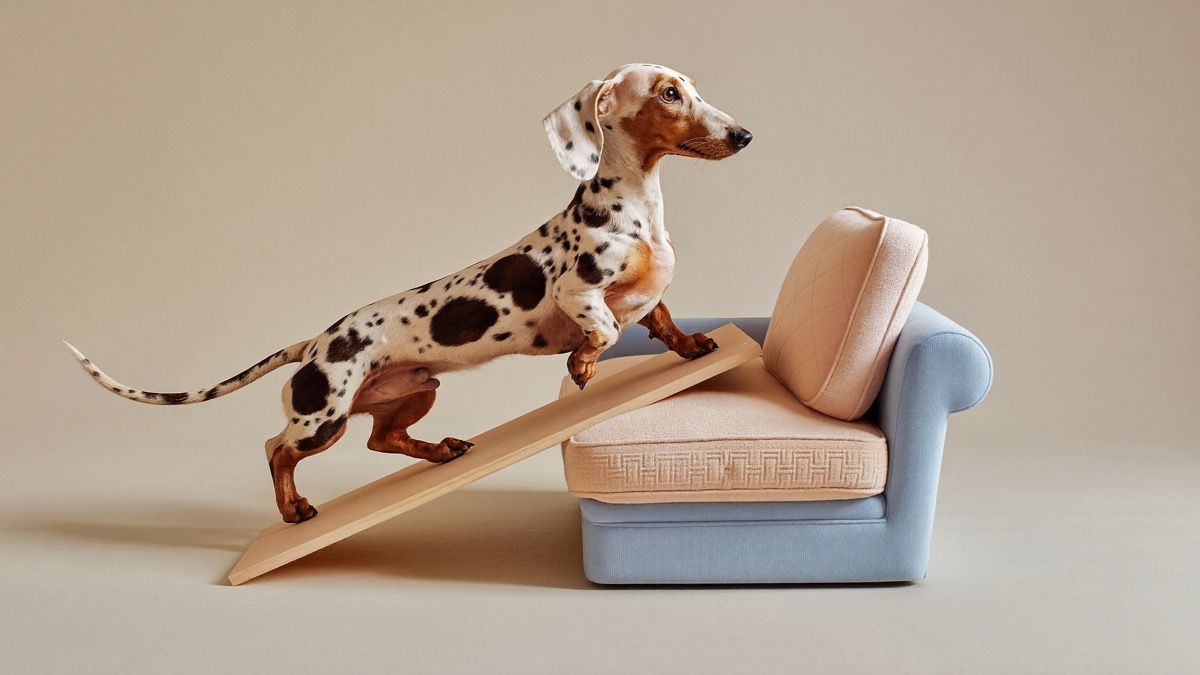
- No stairs, no jumping. Carry your dachshund up and down stairs, use ramps to sofas and beds, and block access when you're out. Repeated jumping on and off furniture is the classic trigger.
- Keep it lean. Excess weight loads a long spine on short legs. You should feel ribs easily under light pressure. Weight control is the cheapest back insurance available.
- Harness, not collar, and no tug-of-war or high-impact games with twisting landings.
- Know the emergency signs. Yelping when picked up, reluctance to move, a hunched back, or wobbly hind legs mean a vet visit that day, not next week.
Pet insurance taken out young, before any symptoms, is worth serious consideration with this breed.
What is a dachshund's temperament really like?
Delightful and infuriating in equal measure. Dachshunds are affectionate, funny, and devoted to their people — many are true one-person dogs. They were bred to follow badgers underground and make their own decisions, and that independence never left. Expect stubbornness, selective deafness, and house-training that takes months longer than average. They are also surprisingly loud: a dachshund's bark is deep, persistent, and aimed at anything passing the door.
Reward-based training in short sessions works; repetition and scolding produce a dog that simply stops listening. Many dachshunds are wary of strangers and scrappy with unfamiliar dogs, so early socialisation matters. With children they can be good, provided the children are taught never to pick the dog up awkwardly — a wriggling escape from a child's arms is exactly the kind of fall a dachshund spine cannot afford.
One more temperament note that surprises new owners: dachshunds are hounds, and their noses run their brains. On walks, expect a dog magnetically pulled to every smell, and treat recall as a lifelong work in progress rather than a solved problem. Scent games at home — treats hidden around the flat, snuffle mats, cardboard-box searches — are the cheapest way to tire a dachshund without loading its spine, and a mentally worked dachshund barks noticeably less.
How much grooming does a dachshund need?
Little, which is a relief given everything above. Smooth coats need a weekly rub-down; long-haired coats need brushing two or three times a week to prevent tangles behind the ears and legs; wire coats need occasional hand-stripping or a tidy-up at the groomer. Nails, ears, and teeth are the usual small-dog maintenance — dental disease is common, so brush teeth regularly.

Can a dachshund live happily in Singapore or Malaysia?
Yes — arguably better than in a multi-storey house, because a single-level flat removes the stairs problem entirely.
Apartment fit. Both standard and miniature dachshunds are on the HDB approved-breeds list; check the current AVS/HDB list yourself before committing. Exercise needs are modest and met with flat-ground walks. The main flat challenges are barking at corridor noise and the furniture-jumping habit — ramps and consistent rules solve the second, training helps the first.
Heat. Dachshunds handle tropical warmth reasonably well with sensible timing: walk before 9 am or after sunset, provide water and shade, and never leave any dog in a hot space. Their short coats shed heat better than double-coated breeds, though dark smooth coats absorb sun quickly at midday.
Who should not get a dachshund?
Skip this breed if you live with unavoidable stairs, want a reliably obedient dog, or would struggle to fund emergency spinal surgery or insurance. If you can keep one lean, grounded, and trained with patience and humour, a dachshund will repay you with fifteen years of comedy and devotion.