| Quick facts | |
|---|---|
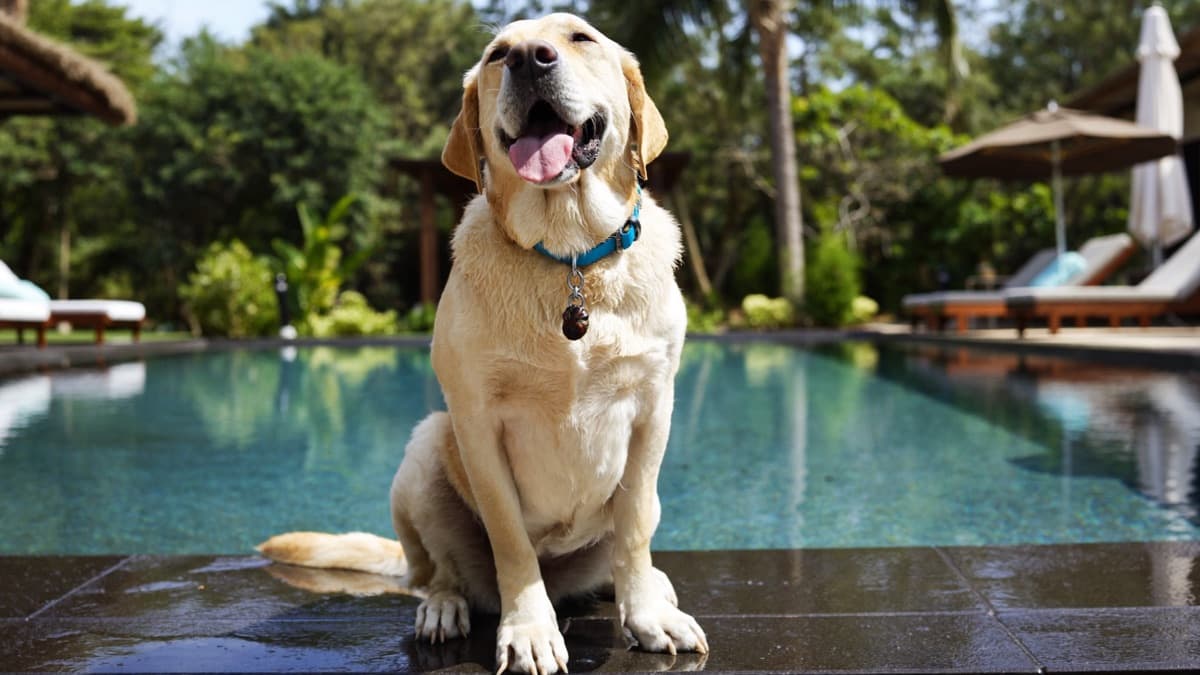
| Size | Large (55–62 cm at the shoulder) |
| Weight | 25–36 kg (lean — many pets run heavier than they should) |
| Lifespan | 11–13 years |
| Coat | Short, dense double coat; sheds more than people expect |
| Exercise | High — 60–90 minutes daily, ideally including swimming or retrieving |
| HDB-approved | No — private housing only |
What is a Labrador's temperament really like?
Adult Labradors are the easy, sunny dogs of legend: tolerant, food-motivated, quick to train, and happy to meet everyone. The breed's genuine love of people makes it a poor guard dog and a superb companion for busy family households — provided someone is actually home. Labs are social animals and do not do well left alone all day, every day.
The honest part is the first two years. Labrador puppies and adolescents are mouthy — bred to carry things, they express excitement through their mouths, and a 25 kg teenager who greets your toddler by grabbing a sleeve is not being aggressive, but it is a real management problem. They also jump, counter-surf, chew skirting boards, and hit peak strength before peak brain. Expect this, train through it with consistency and outlets for the mouth (retrieve games, chew items), and you get the famous family dog on the other side. Buy a Lab expecting an instant Andrex puppy and the adolescence will flatten you.
Why obesity is the Labrador's number-one health problem
Labradors top obesity statistics almost everywhere, and it is not just soft-hearted owners. Research at the University of Cambridge found that roughly a quarter of Labradors carry a deletion in the POMC gene, part of the brain's satiety pathway — carriers feel less full after eating and pester harder for food. Your Lab may be genuinely, neurologically hungrier than other dogs.
That makes weight management a hard discipline, not a suggestion: weigh meals on a scale, take treats out of the daily ration rather than adding them, ban table scraps household-wide, and learn to body-condition score — you should feel ribs easily under a light fat cover. Obesity in this breed compounds everything else: it accelerates joint disease, worsens heat tolerance in the tropics, and shortens lifespan by a documented margin. A lean Lab is the single cheapest health intervention you will ever make.
What else goes wrong: hips, elbows, and ears
Hip and elbow dysplasia are the breed's structural weaknesses. Buy only from parents with formal hip and elbow scores under the BVA/FCI or OFA schemes, keep the puppy lean, and avoid repetitive high-impact exercise (stairs marathons, forced jogging) before the growth plates close around 14–18 months. Cruciate ligament ruptures are also common, and excess weight is the biggest modifiable risk factor.
Ears are the tropical tax. Labs love water, and here that means pools, beaches, canals, and daily thunderstorm soakings. A floppy ear over a warm, wet canal in equatorial humidity is an incubator for yeast and bacteria, and recurrent otitis is one of the most common Labrador vet visits in Singapore and Malaysia. The routine that prevents it: dry the ears after every swim, bath, or rain-soaked walk, use a drying ear cleaner as your vet directs, and treat head-shaking or odour early — chronic untreated otitis leads to thickened canals and sometimes surgery. Also on the list: skin allergies (which flare in humidity), exercise-induced collapse in some lines (DNA-testable), and progressive retinal atrophy (also DNA-testable).

Can a Labrador live happily in Singapore or Malaysia?
Yes — Labs are one of the more climate-sensible large breeds, but housing rules decide the question first.
Housing. The Labrador is not on the HDB approved-breeds list; in Singapore this is a private-housing breed, full stop. Verify the current list on the HDB website before you fall in love with a puppy. In Malaysia, landed homes suit the breed well; condo dwellers should check management by-laws, which vary widely.
Heat and exercise. The short double coat copes better than a spitz coat, but a Lab will still overheat if you let its enthusiasm set the pace — this is a breed that will retrieve until it collapses. Walk early and late, carry water, and use swimming as the perfect tropical outlet: it exercises the dog hard without heat load. Then dry the ears.
Shedding. Short hair, enormous volume. Twice-weekly brushing with a rubber curry or deshedding tool keeps it survivable.
Who should not get a Labrador?
Skip the breed if you live in an HDB flat, if nobody can supervise a boisterous adolescent for the first two years, if you cannot commit to strict food discipline for thirteen years, or if you want a small, tidy, low-shedding dog. If you have the space, the time, and a family that wants a dog in the middle of everything, the Labrador remains the default choice for good reason.