When is blood in dog urine a same-day emergency?
- Straining with little or nothing coming out. Especially in male dogs, whose long, narrow urethra traps stones and crystals. A blocked dog postures repeatedly, cries, may vomit, and fades into lethargy as toxins build — untreated, it kills within a day or two. Our dog UTI guide covers this blocked-male emergency in detail; if you haven't seen a proper stream in 12 hours, drive now, not tomorrow. The SVA vet centre directory lists clinics if your usual one is closed.
- Blood plus a sick dog. Lethargy, fever, vomiting, pale gums, a painful belly, or free-flowing red urine rather than a tinge. In this region that combination can also point to tick fever or leptospirosis affecting clotting — not a bladder problem at all, and not one that waits.
A bright, comfortable dog peeing normal volumes with a pink tint can book the next available regular appointment — this week, not this quarter.
What causes blood in a dog's urine?
Four culprits cover most cases, and each favours a different dog:
| Cause | Who it favours | The tell |
|---|---|---|
| Urinary tract infection | Females of any age | Frequent small pees, straining, licking, accidents |
| Bladder stones / crystals | Either sex; blockage risk in males | Intermittent blood, straining, sometimes a "gravelly" history of repeat UTIs |
| Prostate disease | Intact (unneutered) older males | Blood dripping between pees, flat-ribbon stools, stiff hind-end gait |
| Bladder or urethral tumour | Seniors; Scotties, Westies, Beagles, Shelties over-represented | Blood that keeps returning after antibiotics "worked" |
The prostate row is why vets always ask whether a male is neutered: benign prostate enlargement is near-universal in intact older males and bleeds readily, while it's rare in neutered dogs. And the tumour row is why "the antibiotics fixed it, then it came back" is a sentence that should trigger imaging, not a third antibiotic course — in a senior dog, recurring blood is a bladder mass until proven otherwise.
Could it be something my dog ate instead?
Occasionally, yes — pigment can impersonate blood. The classic local example is red-fleshed dragon fruit: its betacyanin pigment passes through largely unchanged and can tint urine (and stool) pink for a day, exactly like beetroot does in people. A happy dog, a dragon fruit snack yesterday, and pink pee today is covered in our dragon fruit guide — harmless and gone within a day or two.
Two lookalikes that are not harmless: dark tea-coloured or red-brown urine after heavy exertion in the heat can be muscle pigment from heatstroke-level injury (emergency), and orange-brown urine with yellow gums points at red blood cell destruction (also emergency). The rule of thumb: pigment arrives in a happy dog with an obvious food explanation. Anything else gets tested.
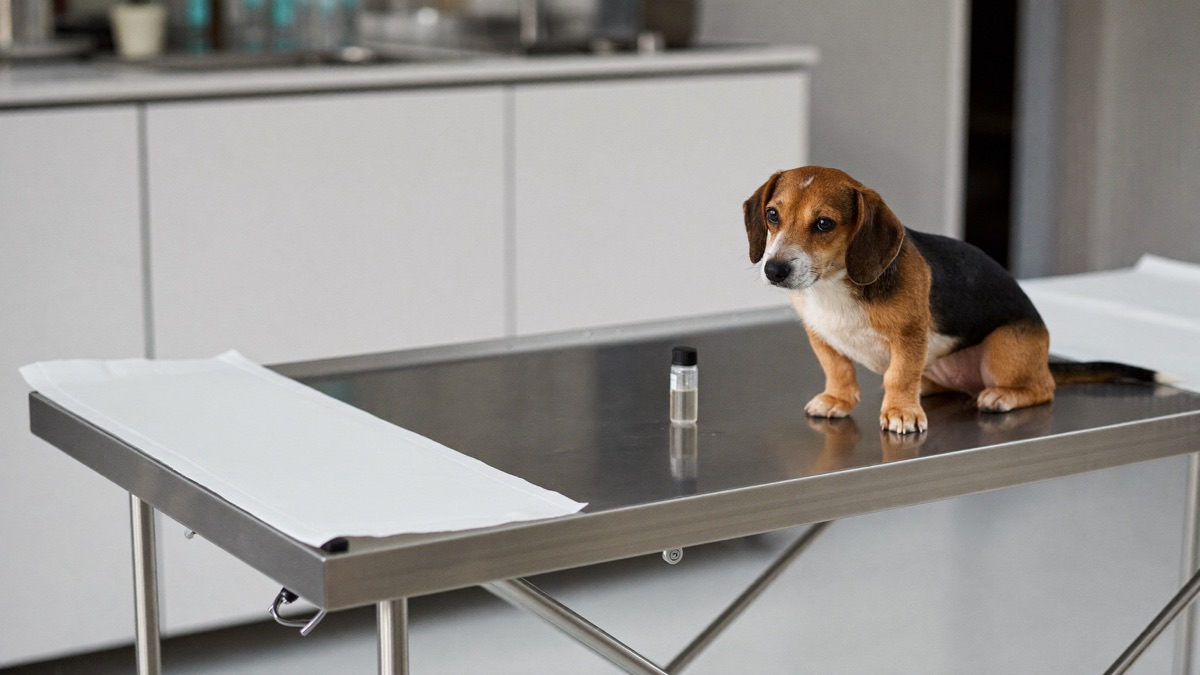
What will the vet actually do?
The workup is refreshingly straightforward. A urinalysis looks for blood cells, bacteria, crystals, and abnormal cells; a culture identifies the bug and the right antibiotic; and if stones, prostate, or a mass are on the list, X-rays or ultrasound find them. Bring a fresh sample if you can catch one — mid-stream, in a clean container, refrigerated, ideally under two hours old — though for cultures the vet may prefer to draw urine directly from the bladder with a fine needle (quick, safe, and sterile). As of 2026, a consult plus urinalysis typically runs about S$80–180 in Singapore or RM80–250 in Malaysia, with imaging adding to that — cheap certainty against a differential list that includes cancer.
Why you shouldn't wait even when the dog seems fine
Every cause on the table gets worse with time. UTIs climb toward the kidneys. Stones grow, and in males they eventually block. Prostate disease progresses until pee and poop both struggle past it. And bladder tumours are far more treatable found early than after months of on-off bleeding was shrugged off. One pink puddle is your cheap early warning — the dogs that do badly are almost always the ones whose warning was ignored because it faded by the weekend.