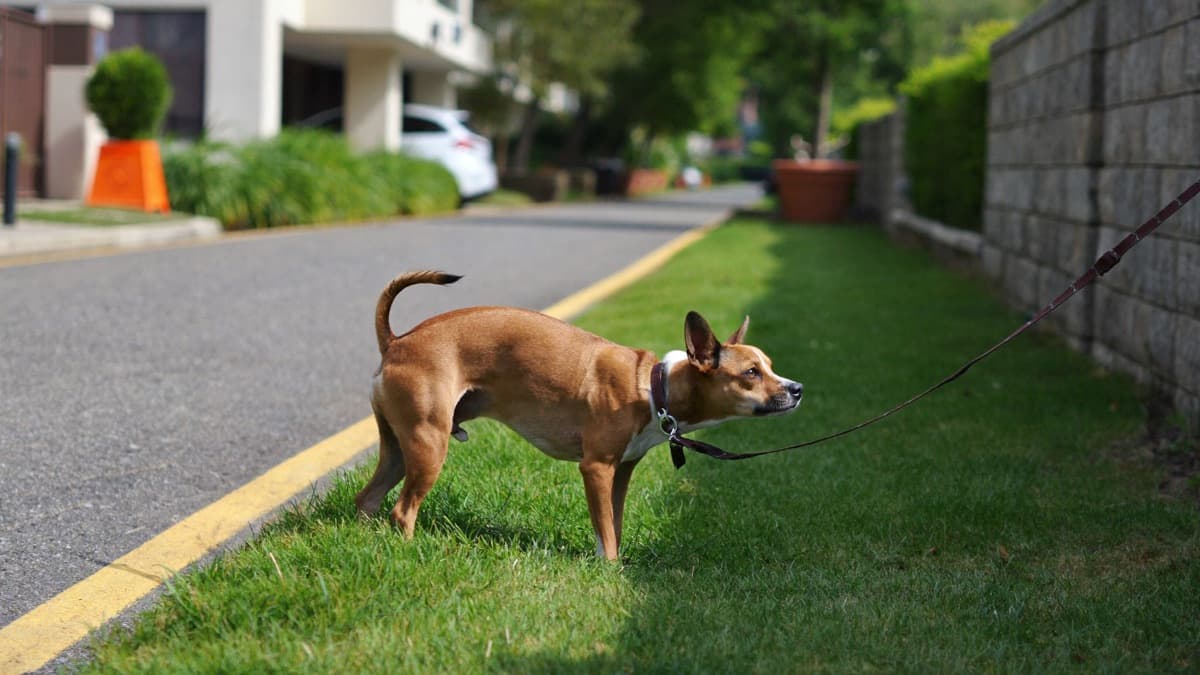
What are the signs of a UTI in dogs?
- Frequent, small pees — asking to go out constantly, then producing a trickle.
- Straining or dribbling, sometimes with a whimper.
- Licking the genital area more than usual, especially right after peeing.
- Accidents indoors in a reliably house-trained dog — often the first thing owners actually notice.
- Cloudy or unusually strong-smelling urine.
- Pink-tinged or bloody urine. Any visible blood moves this from "book an appointment" to "book it this week" — and combined with lethargy or fever, sooner.
Puppies still learning and unspayed females in season can mimic some of this, but in an adult dog a cluster of these signs means a urine test, not a wait.
Go to a vet now if your dog is straining and producing nothing
Straining with nothing coming out at all is a different disease. In male dogs especially, bladder stones or crystals can lodge in the narrow urethra and block it completely. A blocked dog strains repeatedly, cries, may vomit, and becomes lethargic as toxins build — it's fatal within a day or two untreated. If you haven't seen actual urine come out in 12 hours or more, this is an emergency trip, not tomorrow's appointment; the SVA vet centre directory lists clinics if your usual one is closed.
Why do female dogs get more UTIs?
Anatomy. A female's urethra is shorter and wider, and its opening sits closer to the ground and to the anus — a much easier climb for bacteria than the long male urethra. That's why routine UTIs skew heavily female, while complete blockages skew heavily male: the same long, narrow male urethra that resists bacteria also traps stones. Recurrent infections in either sex are a flag for something underneath — bladder stones, diabetes, Cushing's disease, or an anatomical fold that traps moisture.
How does the vet diagnose and treat it?
The test is a urinalysis — checking the urine for bacteria, white cells, blood, crystals, and glucose. Vets often collect the sample by cystocentesis (a quick needle draw straight from the bladder), which sounds dramatic but is fast, well tolerated, and gives an uncontaminated sample. For recurrent cases, a culture identifies the exact bacterium and which antibiotic actually kills it.
Treatment is a course of antibiotics matched to the bug, usually with relief visible in a day or two. Finish the course, and never recycle leftover antibiotics from a previous illness — wrong drug, wrong dose, and a head start for resistant bacteria. As of 2026, expect roughly S$80–180 / RM100–300 for a consult plus urinalysis, more if culture or imaging is needed.
Does water intake matter in the tropics?
More than almost anywhere else. Dilute urine physically flushes bacteria out of the bladder before they colonise; concentrated urine gives them time to stick. A dog that's sweating out the day (through panting) and under-drinking makes concentrated urine by default. Check your dog against a real target — see how much water a dog should drink — and stack the deck: multiple bowls, fresh refills, wet food, and never rationing water to reduce accidents. Restricting water on a UTI dog makes the infection worse, not the puddles fewer.
Can you prevent UTIs?
Mostly by removing the bacteria's advantages. Don't make your dog hold urine through a full work day — long retention gives bacteria hours of still, warm bladder to multiply in, so a midday toilet break (or a helper's visit) genuinely counts as prevention. Keep the rear trimmed and clean on long-coated females, since a soiled coat around the vulva is a standing bacterial reservoir. And after swims or heavy rain walks, dry the underside — chronic damp skin around the genitals feeds the same problem.
When are accidents not a UTI?
If the urinalysis comes back clean, the differential list matters: diabetes and kidney disease both cause large-volume peeing (big puddles, big thirst — the opposite of the UTI's small-and-frequent pattern), spayed females can develop hormone-responsive incontinence (damp bedding after sleep, no straining), and anxiety can cause marking. Pattern is the clue you can give your vet: small and frequent points at the bladder; large and thirsty points at the body behind it. And a dog on its second or third UTI in a year needs imaging for stones, not just another antibiotic course.