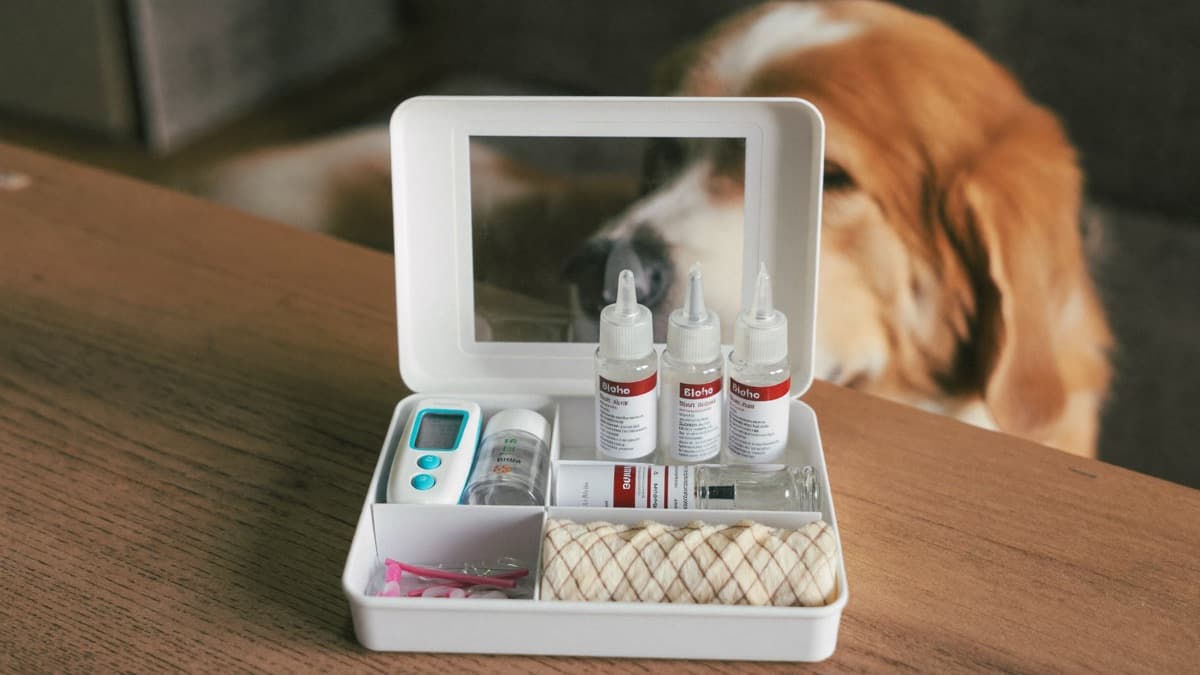
What should a dog first aid kit contain?
| Item | What it's for |
|---|---|
| Sterile saline (bottles or pods) | Flushing wounds, eyes, and paws — the default cleaning fluid |
| Non-stick gauze pads and a gauze roll | Covering wounds, applying pressure to bleeding |
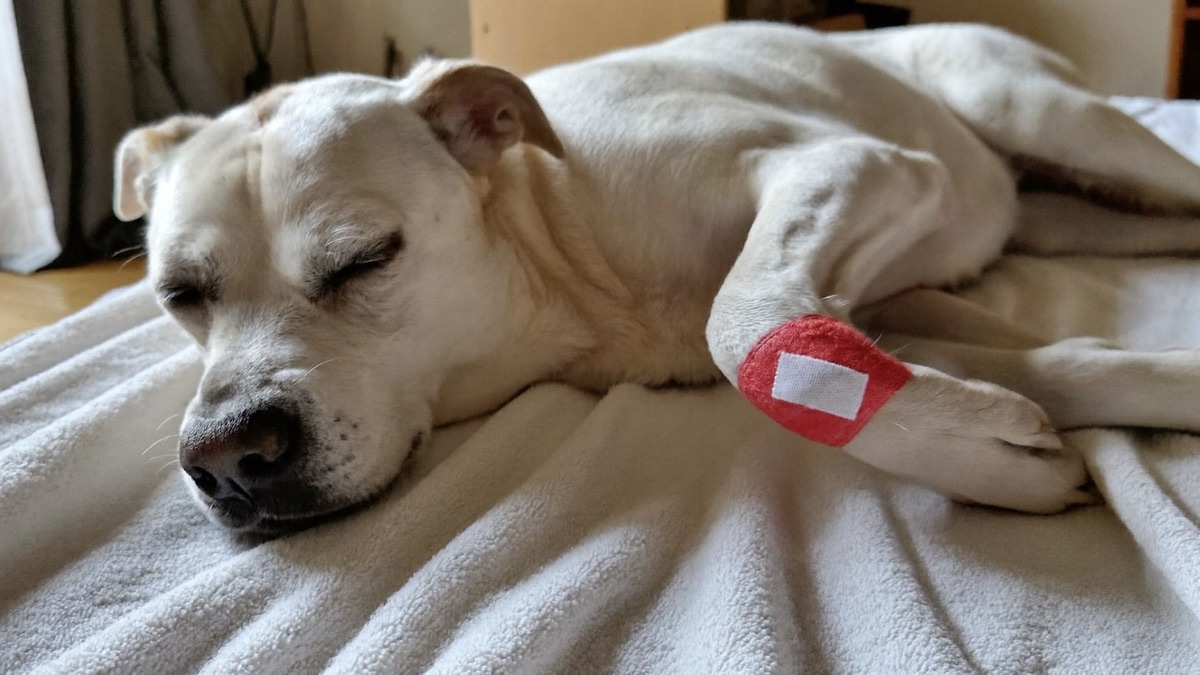
| Self-adhesive bandage wrap | Holding dressings on without tape sticking to fur |
| Blunt-tip scissors and disposable gloves | Cutting dressings and fur; keeping wounds clean |
| Styptic powder | Stopping bleeding from a nail trimmed too short |
| Digital thermometer + water-based lubricant | Rectal temperature; normal for dogs is roughly 38.3–39.2°C |
| Tick tweezers or a tick-removal tool | Removing ticks whole — essential here, see our tick fever guide |
| Soft cone (E-collar) in your dog's size | Stopping licking of any wound or sting |
| Large towel | Restraint wrap, stretcher, drying, shade |
| 3% hydrogen peroxide, sealed and dated | ONLY to induce vomiting on a vet's phone instruction, at their stated dose — never on wounds |
| Oral syringe (no needle) | Measuring and giving liquids by mouth |
| Emergency numbers card | Your vet, two 24-hour clinics, taped inside the lid |
Add a copy of your dog's vaccination record and a recent photo (useful if a frightened dog bolts). Check the kit every six months — saline and peroxide expire, and humidity here degrades adhesives faster than the packaging suggests.
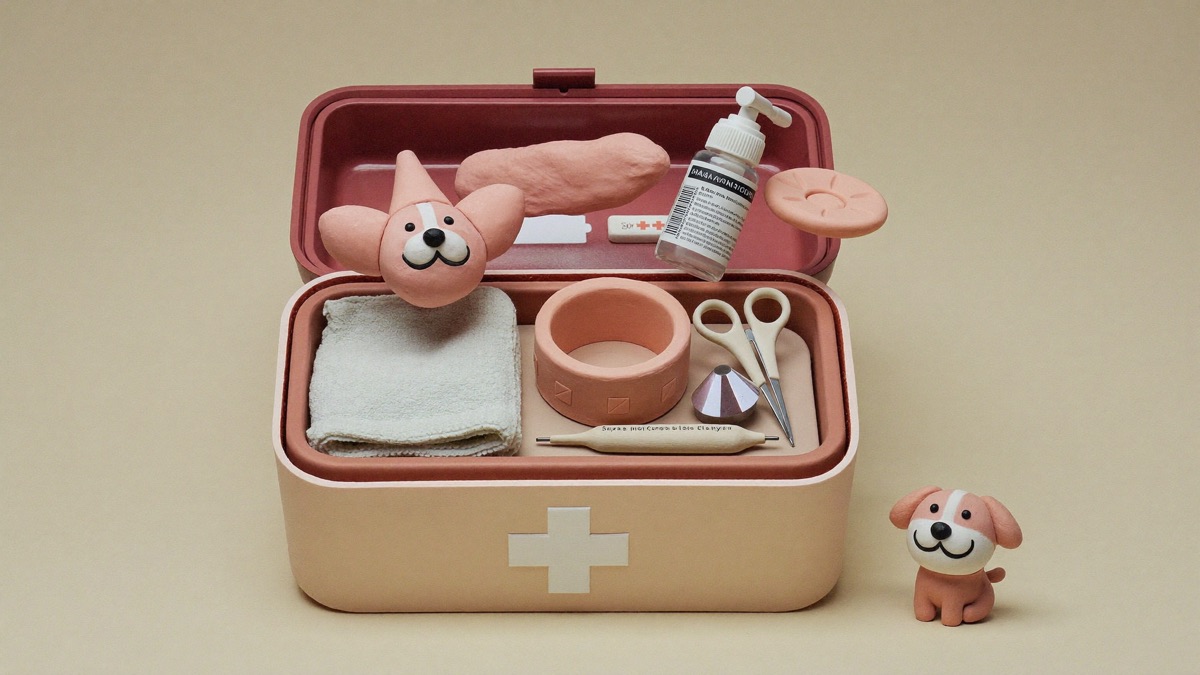
What should I NOT put in a dog first aid kit?
The most dangerous items in most households' "pet kit" came out of the human medicine cabinet:
- Paracetamol (Panadol), ibuprofen, aspirin, and other human painkillers — toxic to dogs, and pain relief that masks symptoms delays diagnosis. There is no safe home dosing.
- Dettol and other phenol-based antiseptics — phenols are poisonous to dogs, who lick treated skin. Our wound care guide covers what to use instead.
- Alcohol and iodine at full strength — painful on open tissue and damaging to healing cells.
- Human cold, flu, and anti-diarrhoea medicines — several contain ingredients dangerous to dogs.
- Leftover prescription medications, human or veterinary — doses and drugs are case-specific.
The rule that keeps dogs safe: nothing goes in your dog's mouth or on a wound unless a vet has said so for this dog, this time. When in doubt, phone the clinic — a call is free and irreversible mistakes are not.

What goes in a grab-bag for hikes and outings?
Trail emergencies at MacRitchie, Bukit Timah, or the Malaysian hills happen far from the car. A slim pouch covers the realistic scenarios:
- Water for the dog plus a collapsible bowl — heat is the number-one trail risk; know the signs in our heatstroke guide
- A few saline pods, gauze, and self-adhesive wrap for cut pads
- Tick tool — check the dog after every trail walk
- A spare sock and vet wrap as an emergency paw bootie
- Compact towel, and a spare leash
- Your emergency numbers card, and offline knowledge of the nearest vet to the trailhead
Carry the dog out rather than walking them on a badly cut pad, and treat any snake encounter by leaving, not investigating — our snake bite guide explains why the first aid for bites is mostly "travel fast, do nothing folkloric".
When is first aid not enough?
First aid ends and the vet begins whenever you see: bleeding that doesn't stop within about five minutes of firm pressure, any snake or suspected toad contact, breathing difficulty, collapse, seizures, suspected heatstroke, bloated or hard belly, an eye injury, or a bite wound from another animal (punctures are always deeper than they look). For these, the kit's job is only to make the journey safer — cover the wound, keep the dog cool and still, and go. Programme those emergency numbers today, while nothing is wrong; that card is the single highest-value item in the box.