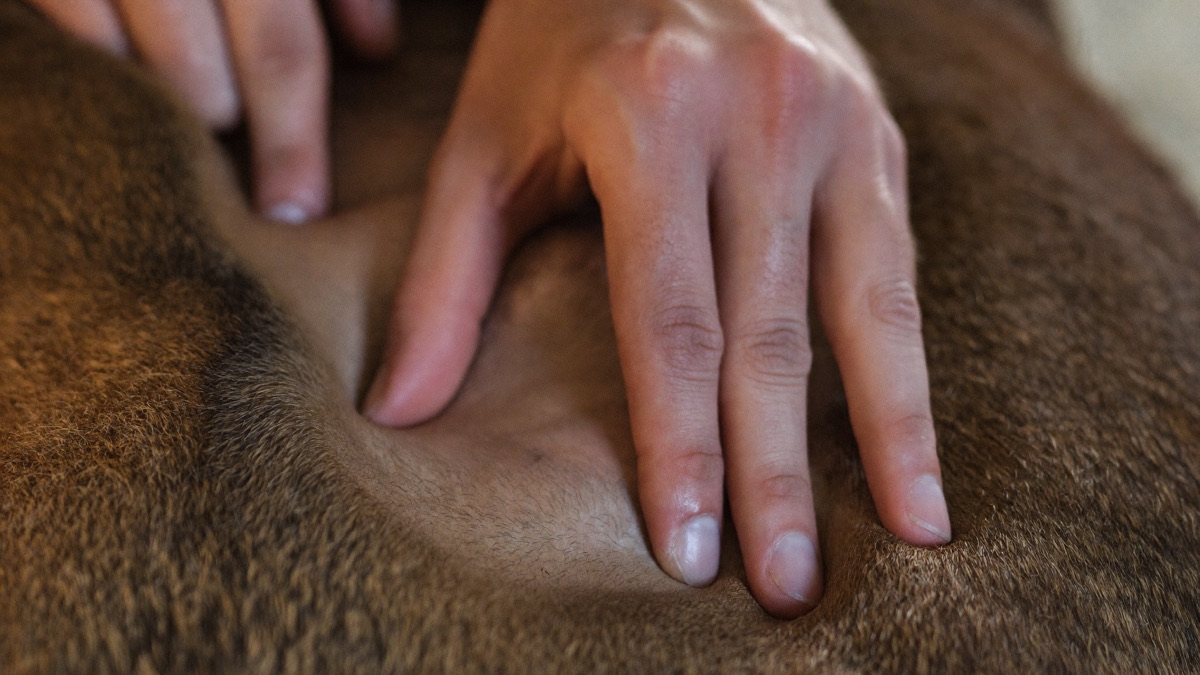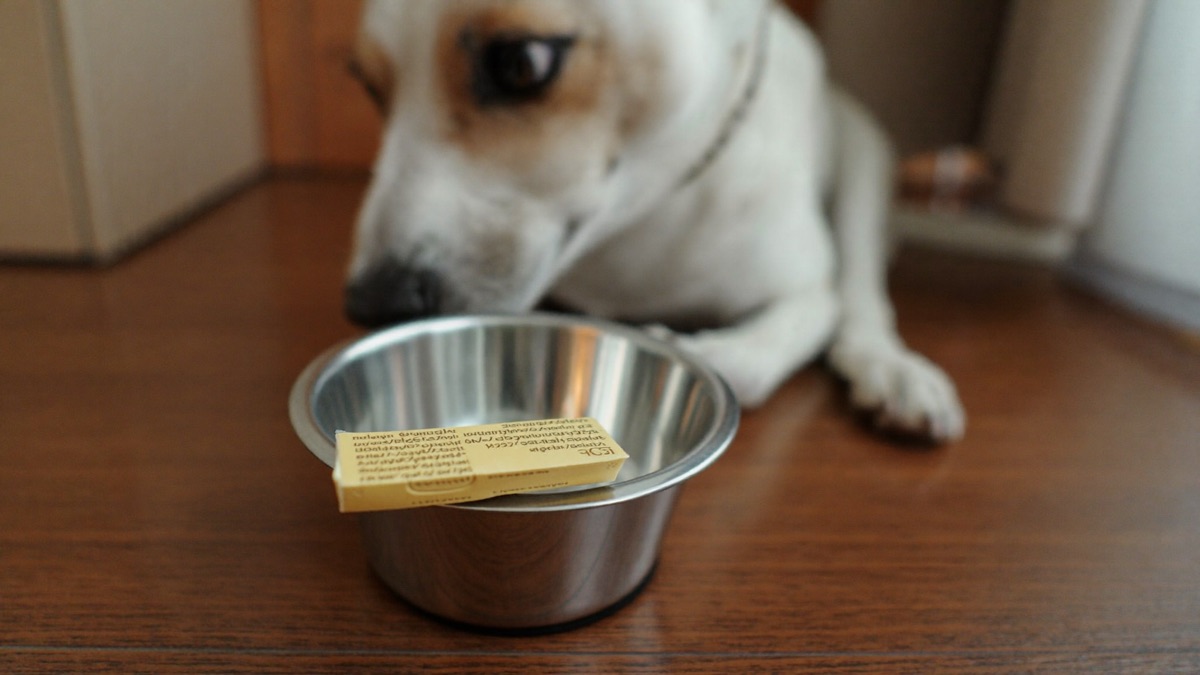
Why is the warm-dry-nose test a myth?
A dog's nose changes temperature and moisture all day for reasons that have nothing to do with illness: it dries during sleep, in air-conditioning, and in the afternoon heat; it moistens outdoors and after licking. Plenty of feverish dogs have cool, wet noses, and nearly every healthy dog wakes from a nap with a warm, dry one. The nose test fails in both directions — retire it.
The hand-on-body test fails for a related reason: dogs are simply warmer than people. At 38.8°C, a perfectly healthy dog will always feel feverish to a 37°C human.
How do I actually check my dog's temperature?
A rectal reading with a digital thermometer is the standard — it's the method your vet uses, and the numbers below only mean anything measured this way.
- Use a digital thermometer with a flexible tip, kept exclusively for the dog.
- Lubricate the tip (petroleum jelly or a water-based lubricant).
- With a helper gently holding the dog's head, lift the tail and insert the tip about 2–3 cm into the rectum.
- Hold until it beeps — usually under a minute — then read, clean, and reward the dog generously.
Ear thermometers made for pets are a tolerable second choice but run less accurate; human forehead strips and infrared "no-touch" readings on fur are not reliable.
| Rectal temperature | What it means |
|---|---|
| 37.5–38.2°C | Slightly low — fine if the dog is well; recheck |
| 38.3–39.2°C | Normal for a dog |
| 39.3–39.4°C | Borderline — recheck in an hour, watch for other signs |
| 39.5–40.9°C | Fever — vet same day |
| 41°C and above | Emergency — organ damage territory, go now |
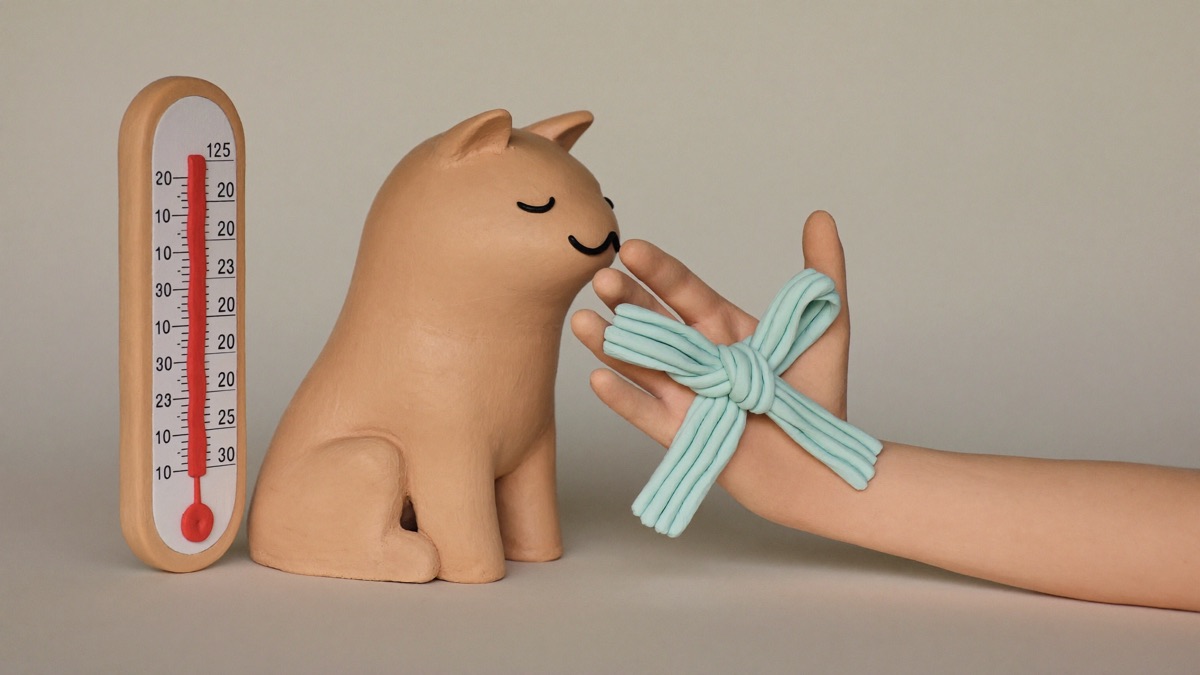
What are the real signs of fever in a dog?
No thermometer handy? Fever rarely travels alone. Suspect it when several of these cluster together:
- Lethargy — the flat, withdrawn dog that declines a walk it normally begs for
- Shivering or trembling despite the tropical heat
- Hot ears and a hot belly — ears are one of the more honest surfaces, though still only a hint
- Loss of appetite, sometimes with increased thirst
- Red or glassy eyes, a dull coat, and general misery
- Nasal discharge or coughing when infection is the cause
Any one of these alone is vague. Three together in a dog that feels hot is a "take the temperature or go to the vet" situation.
Fever or overheating? The tropical caveat
In Singapore and Malaysia, a high reading has two very different explanations. Fever is the body deliberately raising its own thermostat to fight something — infection, inflammation, tick-borne disease. Overheating (heatstroke) is heat pouring in faster than the dog can dump it — after a midday walk, a parked car, or a garden session with no shade. The dog's recent history tells them apart: a hot dog straight after exertion in the sun needs immediate active cooling and an emergency vet — see our heatstroke in dogs guide. A hot dog that has been resting indoors all day has a fever, and cooling it with wet towels won't fix the cause.
The distinction matters because tick fever — a leading cause of unexplained fever in this region — looks exactly like this: a resting dog, a climbing temperature, and no sun in the story. Our tick fever guide covers why that diagnosis moves fast here.
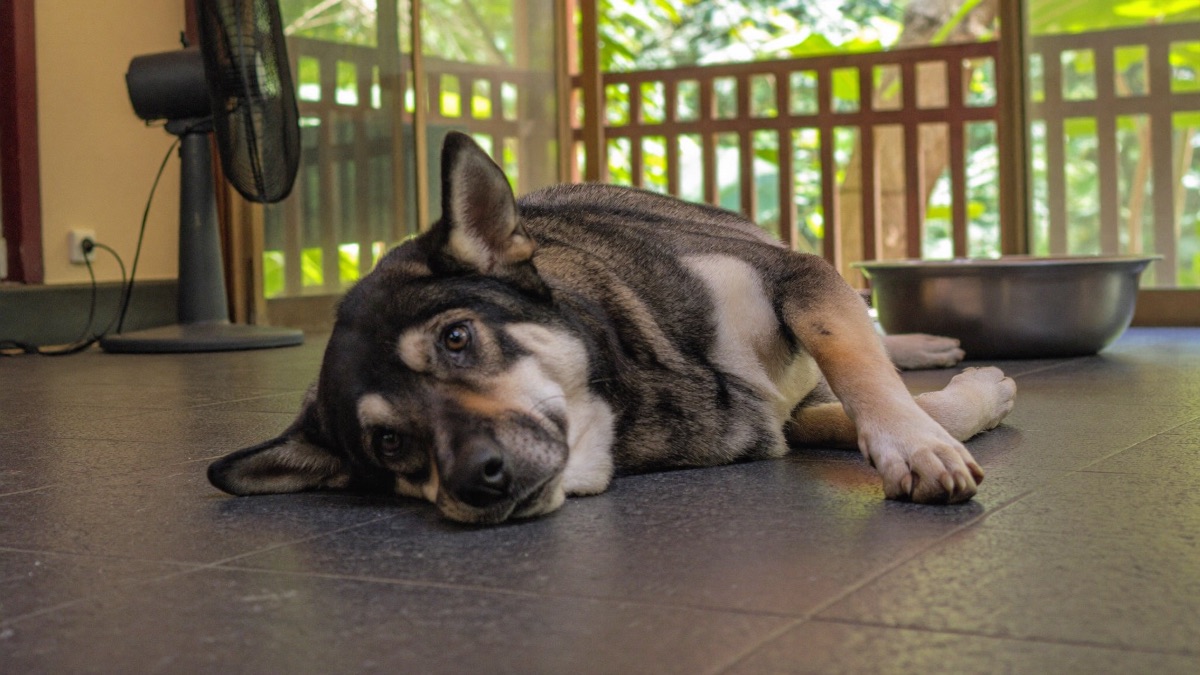
When does a fever mean the vet today?
A confirmed temperature above 39.5°C is a same-day vet visit in this region — full stop. The local list of fever causes (tick fever, leptospirosis, infections that thrive in heat and humidity) rewards early treatment and punishes waiting. Go immediately, rather than same-day, if the fever comes with collapse, vomiting or diarrhoea, laboured breathing, a painful belly, yellow gums, or a temperature at or above 41°C.
And the rule that saves lives every year: never give human painkillers. Ibuprofen is toxic to dogs at any useful dose, and paracetamol's safety margin is narrow enough that well-meaning owners cause liver failure trying to help. If you've already given some, tell your vet exactly what and how much — it changes what they do next. Fever is a symptom; the job is finding its cause, and that job belongs in a clinic.