Go to a vet now if any of these are true
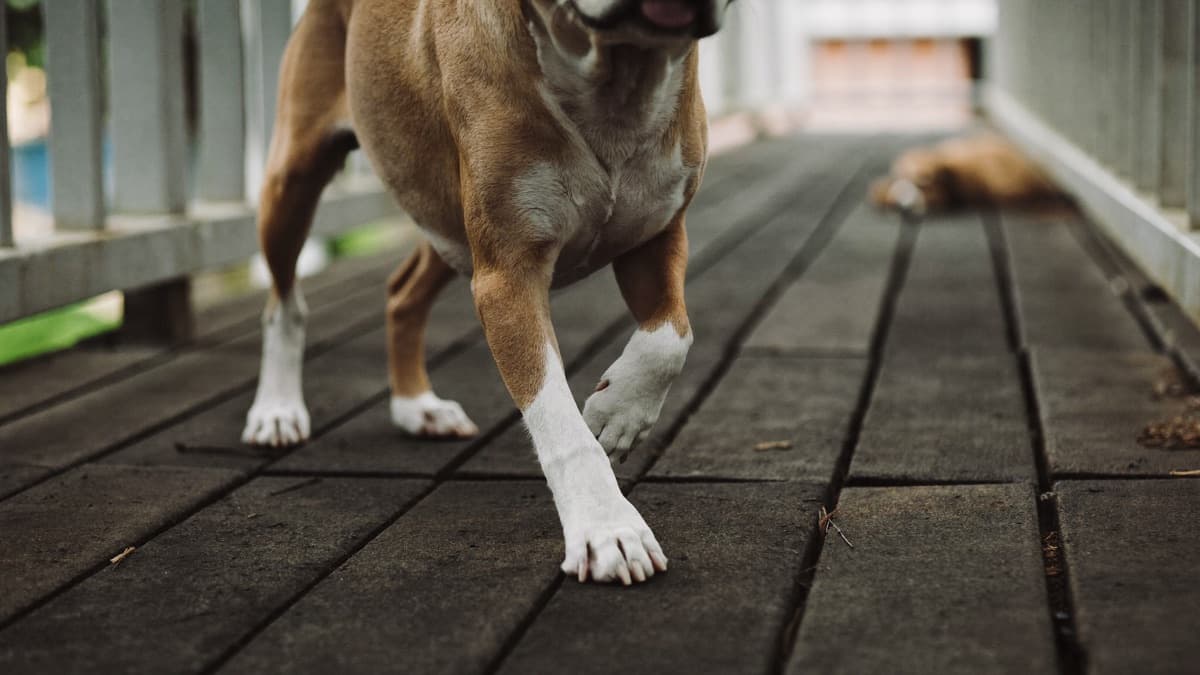
- Non-weight-bearing — the leg is held completely off the ground, especially if it started suddenly.
- Obvious deformity, dangling, or grinding — or rapid swelling after a fall, a jump off furniture, a road accident, or a dog fight. Treat as a possible fracture or dislocation.
- Back-end weakness rather than a true limp — wobbling, crossing back legs, dragging paw tops, a hunched back, or yelping when picked up. In long-backed breeds like the Dachshund, this points to intervertebral disc disease (IVDD), where hours matter for the spinal cord.
- A hot, swollen joint plus fever or lethargy — possible joint infection, or in this region, tick fever affecting the joints.
- Any limp with pale gums, collapse, or a swollen belly.
If you're in Singapore or Malaysia and it's after hours, the Singapore Veterinary Association's vet centre directory helps you find the nearest open clinic fast.
Why should you check the paw first?
Most sudden, mild limps in a dog that still bears some weight live in the paw. Before anything else, in good light:
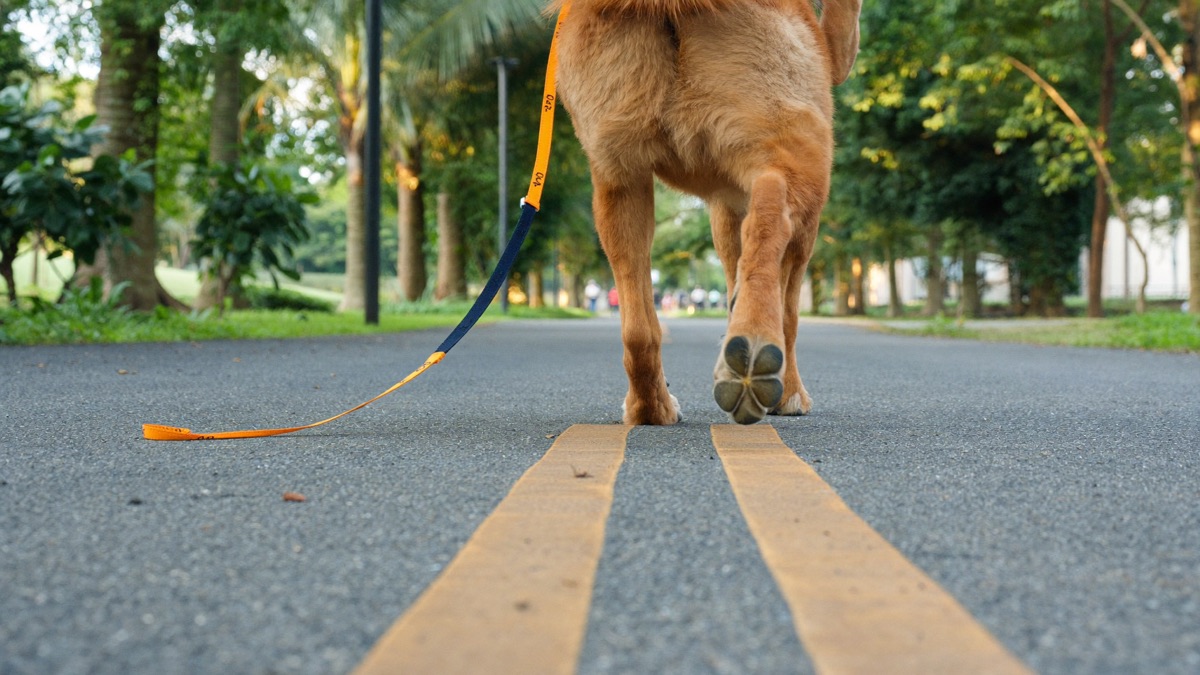
- Pads: look for burns and blisters — afternoon pavement here gets hot enough to scald pads, one of the most common causes of a sudden limp after a midday walk (see our dog paw care guide). Also check for cuts and embedded glass or grit.
- Between the toes: ticks love this spot, and so do grass seeds and interdigital cysts.
- Nails: a torn or split nail is agonising and easy to miss.
A minor pad cut can be rinsed and lightly covered; a tick can be removed with tweezers close to the skin. If the limp persists past 48 hours anyway, something else is going on.
What does the onset pattern tell you?
| Pattern | Most likely | What to do |
|---|---|---|
| Sudden + non-weight-bearing | Fracture, dislocation, complete cruciate tear | Vet same day |
| Sudden but toe-touching | Sprain, pad injury, partial cruciate tear | Paw check, strict rest 48h |
| Intermittent, worse after rest, "warms out of it" | Arthritis | Vet appointment (not urgent) |
| Intermittent, worse after exercise | Partial cruciate tear, hip/elbow disease | Vet appointment soon |
Is it a sprain, a cruciate tear, or a back problem?
Sprains and muscle strains are the most common diagnosis — they improve visibly within days of genuine rest.
Cruciate ligament (CCL) tears are the classic hind-leg limp in medium and large dogs. Tell-tale signs: the dog sits with the affected leg stuck out to the side, and the limp improves with rest but keeps coming back — because the partially torn ligament keeps fraying. Most tears eventually need surgery; as of 2026, cruciate surgery in Singapore and Malaysia commonly runs S$3,500–8,000 / RM5,000–12,000 depending on technique and dog size, which is why catching a partial tear early matters.
IVDD isn't a leg problem at all — a slipped disc pressing on the spinal cord can look like hind-limb lameness before it becomes weakness. Reluctance to jump, a tense tucked belly, and pain on being lifted are the early flags, and back breeds are heavily overrepresented.
Why is "walking it off" the wrong move?
Adrenaline and excitement mask pain, so a dog will run on an injury it should be resting — dogs don't self-regulate the way an athlete with a pulled muscle does. Forcing exercise turns strains into tears and partial cruciate tears into complete ones. The correct version of "wait and see" is strict rest: no stairs, no sofa, lead-only toilet breaks, for 48 hours. Improvement should be obvious in that window; if it isn't, book the vet.
My young large-breed dog is limping — is it growing pains?
Sometimes, but never assume. Growing large breeds get panosteitis ("growing pains" that shift from leg to leg), but they also get hip and elbow dysplasia (watch for bunny-hopping and reluctance on stairs) and OCD — cartilage defects in the shoulder. Any limp in a growing large-breed dog that lasts more than a week or two deserves X-rays, because early diagnosis genuinely changes the surgical and lifestyle options.
When does an occasional limp become a pattern?
A dog that's stiff after naps and loosens up with movement isn't unlucky — that's the signature of arthritis, and it's treatable. Whatever the pattern, video the limp on your phone before the visit; dogs famously walk perfectly in the consult room, and the video is often the most useful diagnostic your vet gets.