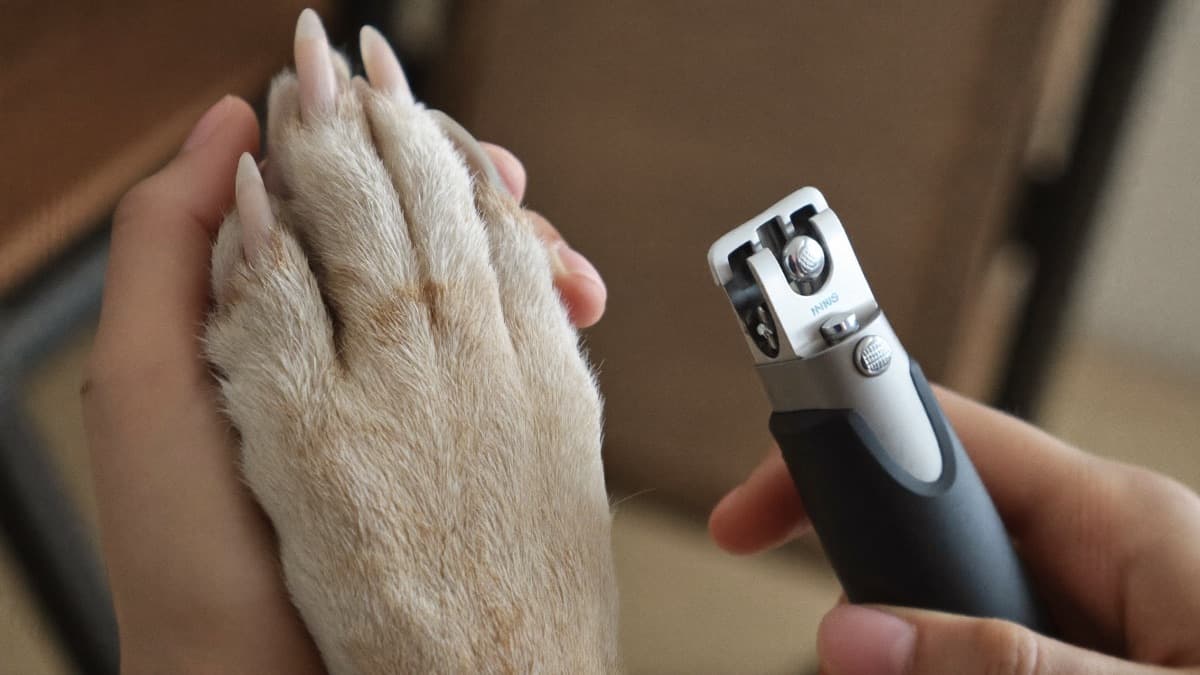
What is the quick?
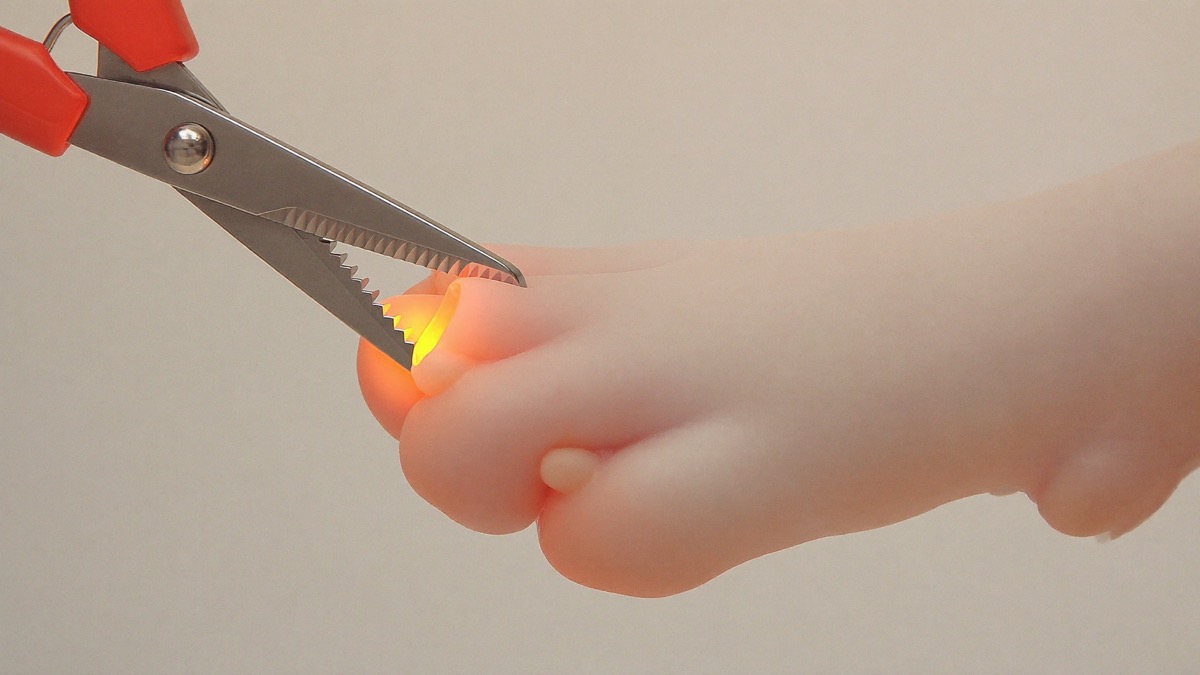
The quick is the living core of the nail — blood vessels and nerve running partway down from the toe. Cut into it and the nail bleeds and hurts; cut short of it and the dog feels nothing. In white or clear nails it's visible as a pink centre, and your target is to cut roughly 2-3 mm beyond where the pink ends. Two useful facts: the quick grows longer as nails stay long, and it recedes when nails are trimmed frequently. So a dog with overgrown nails can't be fixed in one session — it takes weekly small trims over a couple of months to walk the quick back.
Which clippers should I use?
| Type | Best for | Watch out for |
|---|---|---|
| Scissor-style (pliers) | Medium and large dogs; the default choice | Buy quality — cheap ones crush rather than cut |
| Guillotine | Small to medium dogs with thin nails | Blade dulls fast; awkward on thick or curled nails |
| Grinder (rotary file) | Black nails, smoothing edges, clipper-phobic dogs | Noise and vibration need gradual introduction; heat builds if held too long |
Whatever you choose, keep blades sharp. Dull blades squeeze the nail before cutting it, which is uncomfortable and teaches the dog that trims hurt even when you never touch the quick.
How do I trim the nails, step by step?
- Set up calm. After a walk, dog relaxed, good lighting, styptic powder within reach before you start.
- Hold the paw firmly but low. Don't yank the leg up or out — hold the paw at its natural height and press the toe pad gently to extend the nail.
- Position the clipper across the nail's underside angle, cutting from underneath upward or side-on, never crushing top-to-bottom on thick nails.
- Take a thin slice off the tip. For white nails, work toward 2-3 mm from the pink. For black nails, see below.
- Check the cut surface between slices.
- Don't forget the dewclaws — the thumbs partway up the inner leg. They never touch the ground, never wear, and are the nails most likely to curl full-circle into flesh.
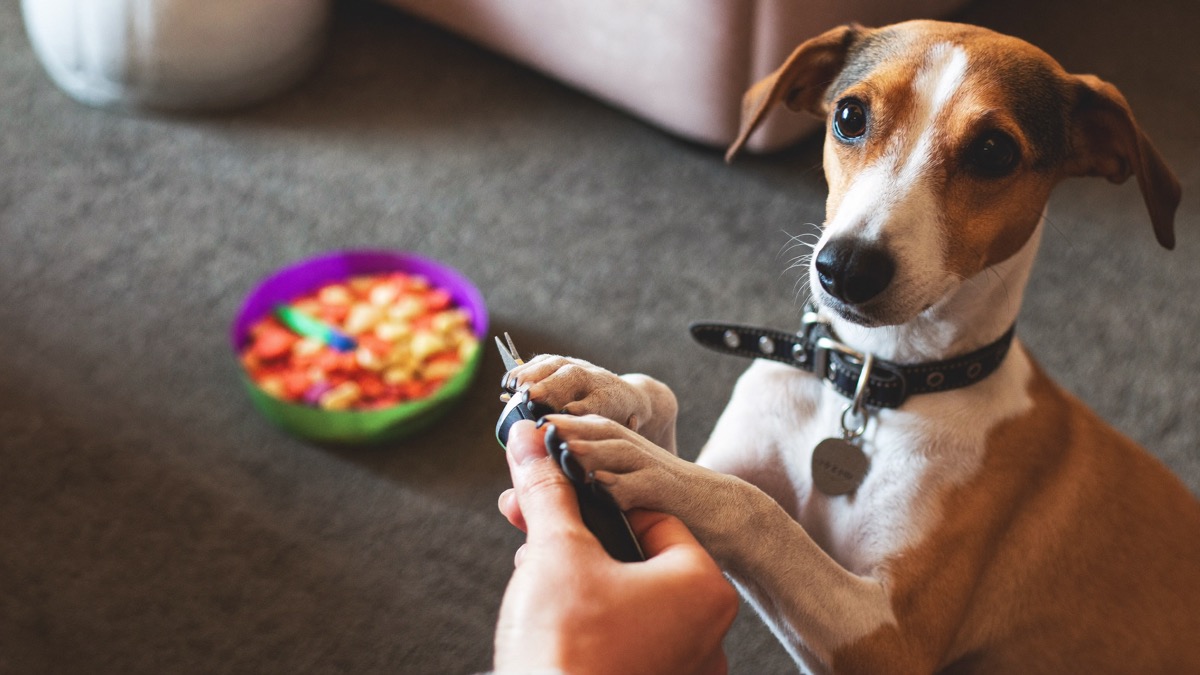
- Reward after every paw, not just at the end. One paw per session is a perfectly respectable pace for a nervous dog.
What if I cut the quick?
It happens to everyone eventually, including groomers and vets. Stay calm — your reaction teaches the dog more than the pinch did. Press a pinch of styptic powder firmly onto the bleeding tip for several seconds; repeat if needed. Cornflour or soap pressed into the nail end are the standard household substitutes. Bleeding beyond 15-20 minutes despite pressure is a vet call, but that's rare. Give the dog something pleasant, end the session, and come back another day with thinner slices.
How do I handle black nails?
You can't see the quick from outside, so read the cut surface instead. Slice off a few millimetres: the exposed centre will look dry, pale, and crumbly. Keep taking thin slices, and stop the moment a glossy, dark dot appears at the centre — that's the quick's leading edge, one slice away. A grinder is genuinely easier here, shaving gradually with no single decisive cut. A torch held behind the nail occasionally reveals the quick's shadow in not-quite-black nails, worth a try before you start.
How often should nails be trimmed?
Every 3-4 weeks suits most dogs; some pavement-pounders self-file and need less, while indoor and lightweight dogs may need more. The floor test settles it — nails shouldn't touch the ground on a standing dog, and clicking on tile means overdue. In apartment-living Singapore and Malaysia, where many dogs walk mostly on smooth surfaces at cooler hours, expect to trim more often than temperate-country guides suggest.
If it's genuinely not working — some dogs have real handling fear — stop wrestling and delegate. A groomer's trim costs S$10-25 / RM10-30 as of 2026, most vet clinics will do it during any consult, and a monthly standing appointment is cheaper than a broken trust bond. Ask your clinic about cooperative-care training if the fear is severe; many practices listed in the Singapore Veterinary Association directory offer low-stress handling appointments.