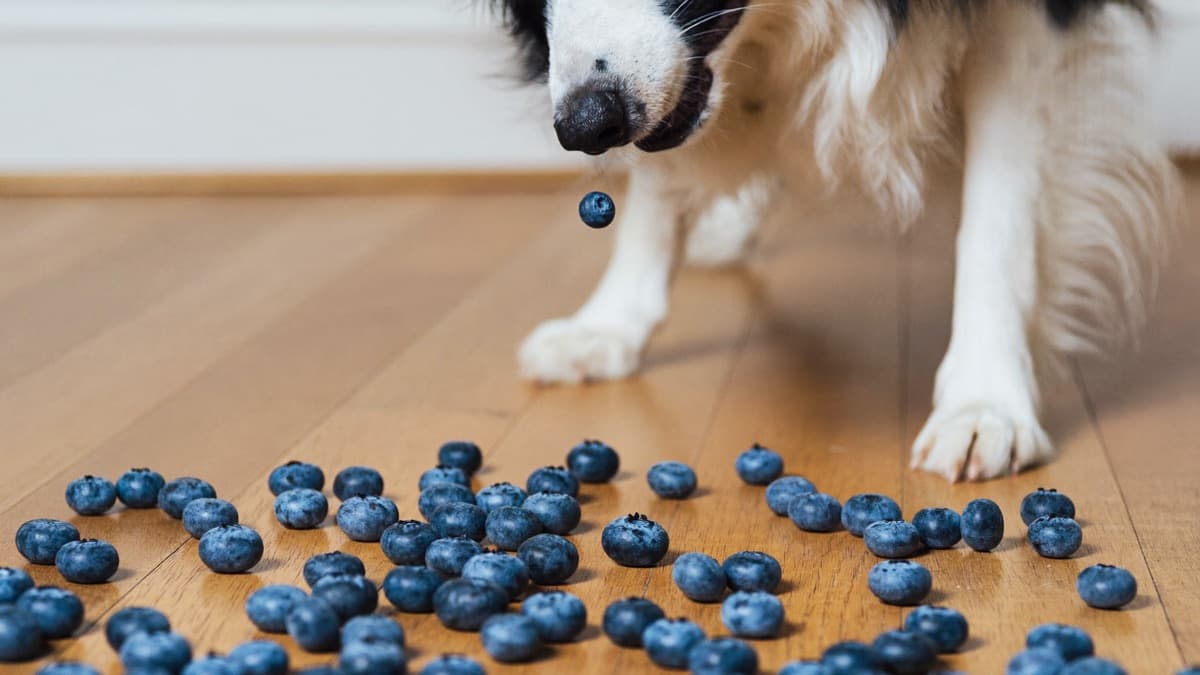
Are blueberries actually good for dogs?
Blueberries earn their reputation. They're low in sugar compared with most fruit, high in fibre and vitamin C, and rich in antioxidants — the same compounds that make them a "superfood" for humans. They're also tiny and soft, which makes them a convenient training treat that won't blow your dog's calorie budget: a single blueberry is roughly one calorie.
As always, the caveat: your dog's complete diet already supplies everything essential. Blueberries are a healthy extra, not a requirement, and dogs with diabetes or weight problems should get the green light from a vet before adding any fruit.
In Malaysia and Singapore, blueberries are a supermarket import and not cheap — the good news is your dog only needs a few. Rinse them well before serving.

How many blueberries can my dog eat?
Treats — including fruit — should stay under 10% of your dog's daily calorie intake. Blueberries are small, so counting them out is easy.
| Dog size | Example breeds | Safe amount (occasional) |
|---|---|---|
| Small (under 10 kg) | Chihuahua, Toy Poodle, Shih Tzu | 2–3 blueberries |
| Medium (10–25 kg) | Singapore Special, Beagle, Cocker Spaniel | 4–6 blueberries |
| Large (over 25 kg) | Labrador, Golden Retriever, Rottweiler | 8–10 blueberries |
A few times a week is plenty. Start with one or two berries the first time — too many at once, or a dog with a sensitive stomach, can mean diarrhoea. For toy breeds and puppies, squash the berries or cut them in half; even a small fruit can catch in a small airway.
What are the risks of feeding blueberries?
Blueberries sit at the low-risk end of the spectrum, but three things deserve attention:
- Choking — mainly for small dogs gulping frozen berries. Thaw slightly or crush them.
- Stomach upset — the fibre that makes blueberries healthy causes loose stools in excess. Portion control solves this.
- Blueberry-flavoured products — muffins, pancakes, jams, yogurts and "blueberry" snacks add sugar and fat, and some sugar-free versions contain xylitol, which is highly toxic to dogs. Flavoured almost never means dog-safe. Feed the berry, not the bakery.
Are other berries and fruits safe too?
Some are, some emphatically are not. Strawberries and cranberries are dog-safe in moderation. But grapes and raisins cause kidney failure in dogs and no safe dose is known — a berry-bowl mix that includes grapes is off-limits. Cherries are a problem because of their pits. And if your dog raids the table rather than the fruit bowl, remember that onions and garlic in everyday local dishes are toxic, and chocolate desserts are too. Safe fruit habits work best when the unsafe list is just as clear.
When should I call the vet?
Serious reactions to blueberries are rare. Call your vet if you see:
- Vomiting or diarrhoea lasting more than 24 hours
- Choking, gagging or persistent coughing after eating
- Hives, facial swelling or intense itching — rare allergic reactions are possible with any food
- Unusual lethargy or loss of appetite
Seek emergency care immediately if your dog ate grapes, raisins, chocolate or anything containing xylitol — with these, act on the ingestion itself, not on whether symptoms have appeared yet. No regular clinic yet? The Singapore Veterinary Association maintains a directory of member clinics worth bookmarking before you need it.
What's the best way to serve blueberries?
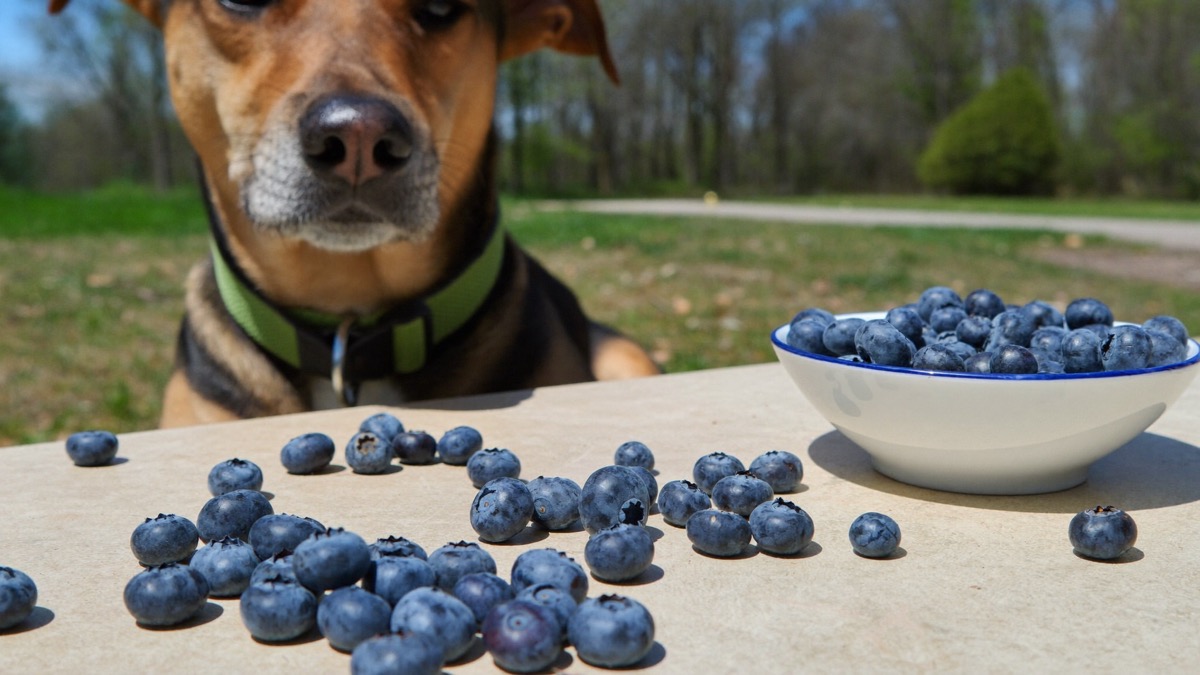
Rinse and serve — fresh blueberries need no preparation for medium and large dogs. Frozen berries are a brilliant hot-afternoon treat in this climate; scatter a few in a bowl, drop them into a puzzle feeder, or mix them into plain, xylitol-free yogurt if your dog handles dairy. Mashed blueberries also work as a food topper for fussy eaters.
Small, cheap to portion and genuinely healthy — as shared snacks go, blueberries are about as easy a yes as dog treats get. If your dog has an ongoing health condition, run any new treat past your vet first.