Is kiwi good for dogs?
As an occasional treat, yes. Kiwi is rich in vitamin C and vitamin K, carries a decent dose of fibre, and is lower in sugar than tropical heavyweights like mango or durian. One thing worth knowing: unlike humans, dogs make their own vitamin C, so kiwi is a pleasant snack rather than a supplement. A complete, balanced dog food already covers the nutrition — kiwi is for variety and enrichment, not health claims.
Kiwi is also fairly acidic and high in fibre, which is exactly why portions should stay small. Too much at once is a reliable way to produce loose stool.
How much kiwi is safe for my dog?
A kiwi is a small fruit, so portions are small too. Offer it occasionally — a couple of times a week at most — and always peeled and sliced.
| Dog size | Example weight | Safe amount per serving |
|---|---|---|
| Small (Chihuahua, toy poodle, shih tzu) | Under 10 kg | 1–2 thin slices |
| Medium (beagle, Singapore Special, corgi) | 10–25 kg | 2–3 slices |
| Large (golden retriever, labrador, GSD) | Over 25 kg | Up to half a kiwi |
Start with one small piece the first time and watch for 24 hours. If your dog gets soft stool, gas or an unsettled stomach, kiwi is simply not their fruit.
Can dogs eat kiwi skin and seeds?
- Seeds: yes. The tiny black seeds are harmless in the quantities found in a few slices of flesh. No deseeding required.
- Skin: peel it off. The fuzzy skin is not toxic, and it is technically edible, but it is tough, fibrous and much harder for a dog to digest than the flesh. In small dogs especially, swallowed skin can irritate the gut or contribute to a blockage. Peeling takes ten seconds and removes the risk.
- Whole kiwi: never. A whole kiwi is exactly the size a medium or large dog can gulp in one go, and a swallowed whole fruit is a choking and obstruction hazard. Always slice before sharing.
What is the best way to serve kiwi to a dog?
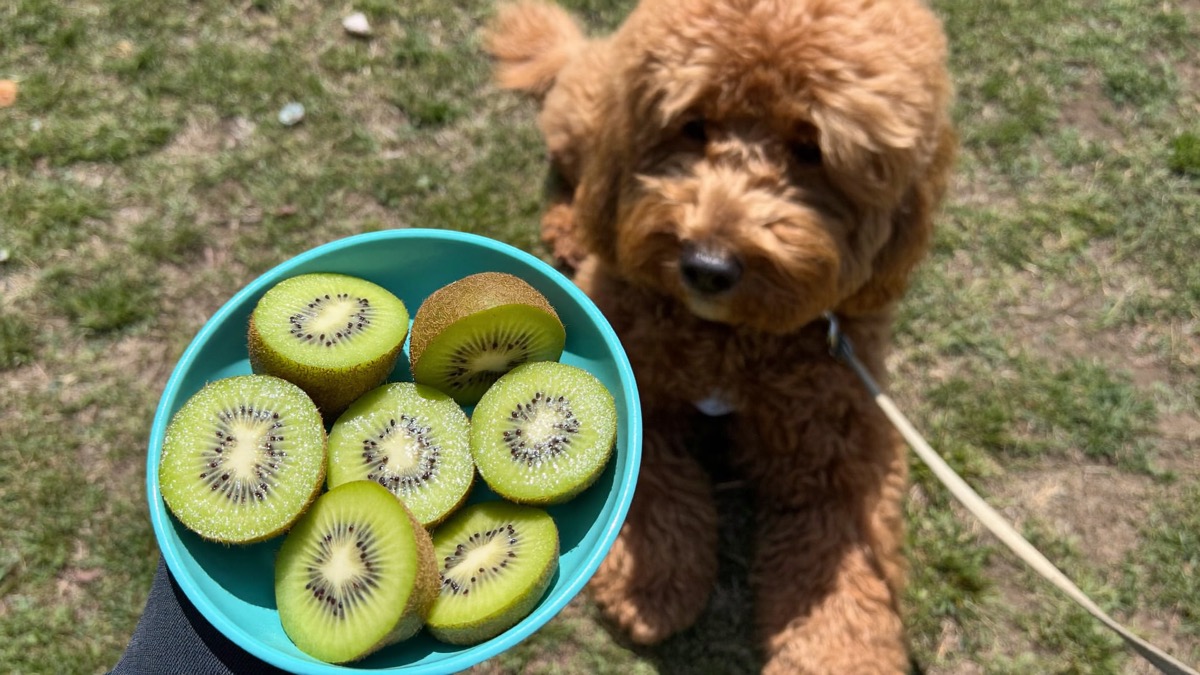
Peel, slice into pieces sized for your dog's mouth, and serve plain — on its own, mixed into their regular food, or frozen as a cooling treat in our year-round heat. Kiwi from the fruit stall or supermarket is fine once washed and peeled.
Skip anything beyond plain fruit: kiwi in fruit salads dressed with syrup, kiwi desserts, or juices sweetened with sugar or — worse — xylitol. And if your dog raids a fruit platter, check what else was on it: grapes are the real emergency, not the kiwi.
When should I call the vet?
Kiwi problems are rare, but call your vet if:
- Your dog swallowed a whole kiwi or a large amount of skin and shows gagging, vomiting, a painful belly, poor appetite, or straining without passing stool.
- Vomiting or diarrhoea lasts more than 24 hours after eating kiwi.
- You see signs of an allergic reaction — facial swelling, hives, intense itching — which is rare but possible with any new food.
- The kiwi came from a fruit salad that also contained grapes or raisins — treat that as urgent and call immediately.
If you are ever unsure, ring your clinic and describe exactly what was eaten. New to dog ownership in Singapore? The Animal & Veterinary Service is the main touch-point for pet-care guidance and animal matters.
Which fruits are actually toxic to dogs?
Kiwi being safe does not generalise to the whole fruit bowl. These are the ones that cause real emergencies:
- Grapes and raisins — can cause acute kidney failure; there is no established safe amount.
- Cherries — the pits, stems and leaves contain cyanide compounds, and pits can block the gut.
- Xylitol — not a fruit, but a sweetener hiding in sugar-free products and desserts; it is life-threatening to dogs.
If your dog eats any of these, contact your vet or an emergency animal clinic immediately.