Is bread good for dogs?
Not really — it is simply not bad in small doses. Plain bread is refined carbohydrate: calories with little protein and few nutrients a dog's complete diet does not already supply. A corner of toast will not hurt a healthy dog, but regular bread habits add up quickly on the waistline, and dogs with diabetes or weight problems should skip it entirely. Dogs with wheat allergies (less common than owners think, but real) will show itchy skin or tummy upsets.
If you share bread, share it plain — no butter, no spreads, no fillings.
How much bread is safe for my dog?
Occasional only, and always plain.
| Dog size | Example weight | Safe amount per serving |
|---|---|---|
| Small (Chihuahua, toy poodle, shih tzu) | Under 10 kg | A bite-sized corner |
| Medium (beagle, Singapore Special, border collie) | 10–25 kg | Up to a quarter slice |
| Large (golden retriever, GSD, labrador) | Over 25 kg | Up to half a slice |
Raw yeast dough is a genuine emergency
Baked bread is boring; unbaked dough is dangerous, and home baking's popularity means more dogs meet it. Two things happen when a dog swallows rising yeast dough:
- It keeps expanding. A dog's stomach is warm and moist — ideal proofing conditions. The dough continues to rise inside, stretching the stomach painfully and, in bad cases, contributing to bloat (GDV), which is life-threatening.
- It brews alcohol. Fermenting yeast produces ethanol, which absorbs into the bloodstream. Dogs get drunk, then poisoned: stumbling, disorientation, vomiting or retching, a swollen belly, weakness, slowed breathing, collapse.
Both problems escalate over hours. If your dog steals dough from the counter or a proofing bowl, do not wait for symptoms and do not try home remedies — go to a vet immediately. If you bake, proof your dough inside the oven or microwave, out of counter-surfing range.

Kaya toast and other kopitiam bread
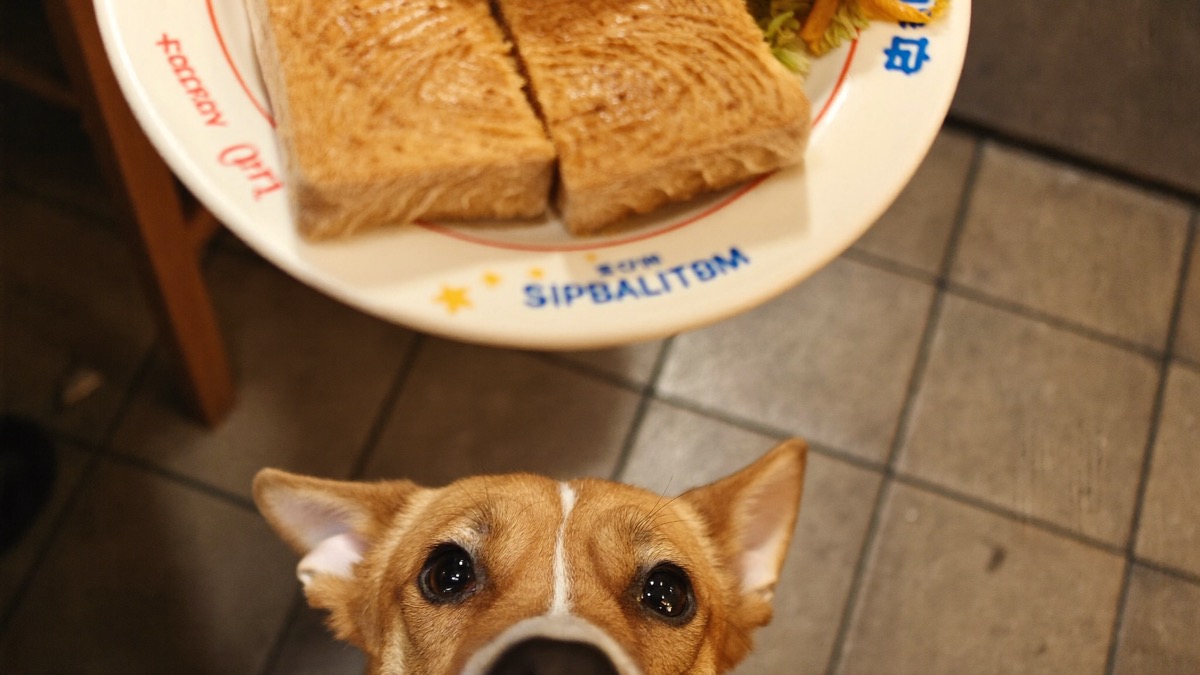
Kaya toast is a national treasure and a terrible dog treat. Kaya is coconut milk, eggs and a lot of sugar; the traditional cold slab of butter is nearly pure fat. Neither is toxic, but together they are a rich, sugary hit that can cause vomiting or diarrhoea, and fatty windfalls are a classic trigger for pancreatitis in susceptible dogs. The same logic applies to butter sugar toast, condensed-milk bread and French toast. Chocolate spreads are worse — chocolate is genuinely toxic — and any "sugar-free" spread may contain xylitol, which is life-threatening to dogs.
Raisin bread is a poisoning risk, not a snack
Raisin bread, fruit loaf, hot cross buns and many festive bakes carry a real toxin. Grapes and raisins can cause acute kidney failure in dogs, sensitivity varies unpredictably between individuals, and there is no established safe dose. A few raisins picked out of a slice have been enough to harm some dogs. If your dog eats any amount of raisin bread, call your vet straight away — early treatment protects the kidneys, and waiting for symptoms wastes the window.
When should I call the vet?
Plain baked bread rarely needs a vet. Call immediately if:
- Your dog ate raw yeast dough — treat as an emergency, especially with retching, a swelling belly, drooling or wobbliness.
- Your dog ate raisin bread or fruit loaf, in any amount.
- The bread carried chocolate spread or a xylitol-sweetened spread.
- Your dog ate a large amount of any bread and shows vomiting, bloating or discomfort, or any tummy upset lasts more than 24 hours.
In Singapore, the Animal & Veterinary Service is the national authority on animal health — but for dough or raisin ingestion, ring your nearest 24-hour emergency clinic first.
Which bakery items are actually toxic to dogs?
Plain bread is the safe end of a dangerous shelf:
- Grapes and raisins — in fruit loaves, buns and pastries; capable of causing kidney failure in small amounts.
- Xylitol — in sugar-free baked goods and spreads, sometimes labelled "birch sugar"; it causes severe low blood sugar and liver damage.
- Chocolate — croissants, doughnuts and spreads; toxic to dogs at surprisingly small doses.
If your dog eats any of these, contact your vet or an emergency animal clinic straight away rather than waiting for symptoms.