Why only small amounts?
Broccoli florets contain isothiocyanates — natural compounds found in cruciferous vegetables that can irritate a dog's gastrointestinal tract. In small quantities they are harmless. In larger quantities they cause gas, bloating, and stomach upset, and in very large quantities the irritation can become genuinely severe.
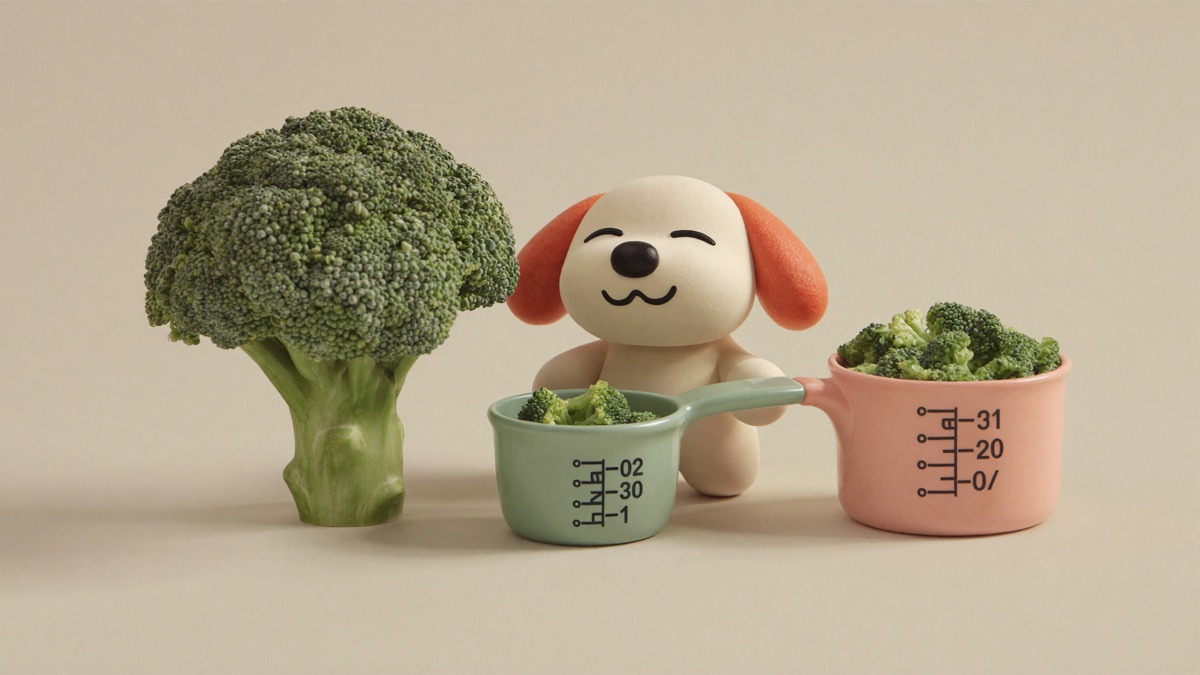
The working rule vets and the AKC use: broccoli should stay under 10% of your dog's daily food intake. Somewhere past the 25% mark, the isothiocyanate load is considered a real toxicity concern. No one measures their dog's diet in percentage points at the fridge door, so translate it simply — a floret or two is a treat; a bowl of broccoli is a mistake.
If your dog does overdo it, the most common outcome is a spectacularly gassy evening. If clearing the room after dinner is already a theme in your house, our guide to why dogs fart covers which foods are the usual suspects.
How much broccoli is safe for my dog?
| Dog size | Example breeds | Safe portion per day |
|---|---|---|
| Small (under 10 kg) | Chihuahua, Toy Poodle, Shih Tzu | One small floret, chopped |
| Medium (10–25 kg) | Beagle, Singapore Special, Border Collie | 1–2 florets, cut into bite-sized pieces |
| Large (over 25 kg) | Labrador, Golden Retriever, GSD | 2–3 florets |
Start with less the first time. Every dog's gut handles cruciferous vegetables differently, and you want to find out your dog's tolerance with one floret, not five.
What does broccoli actually offer a dog?
Used within limits, broccoli is a nutritious choice. It is low in calories and fat, high in fibre, and rich in vitamin C and vitamin K, with useful amounts of folate and potassium. The fibre supports regular digestion, and the crunch of a raw or lightly steamed piece gives dogs the chewing satisfaction that makes vegetables work as treats in the first place.
It is a supplement to a complete diet, not a health intervention — your dog's regular food already covers these nutrients. Think of broccoli as a healthy way to share, not a requirement.
How should I prepare broccoli for a dog?
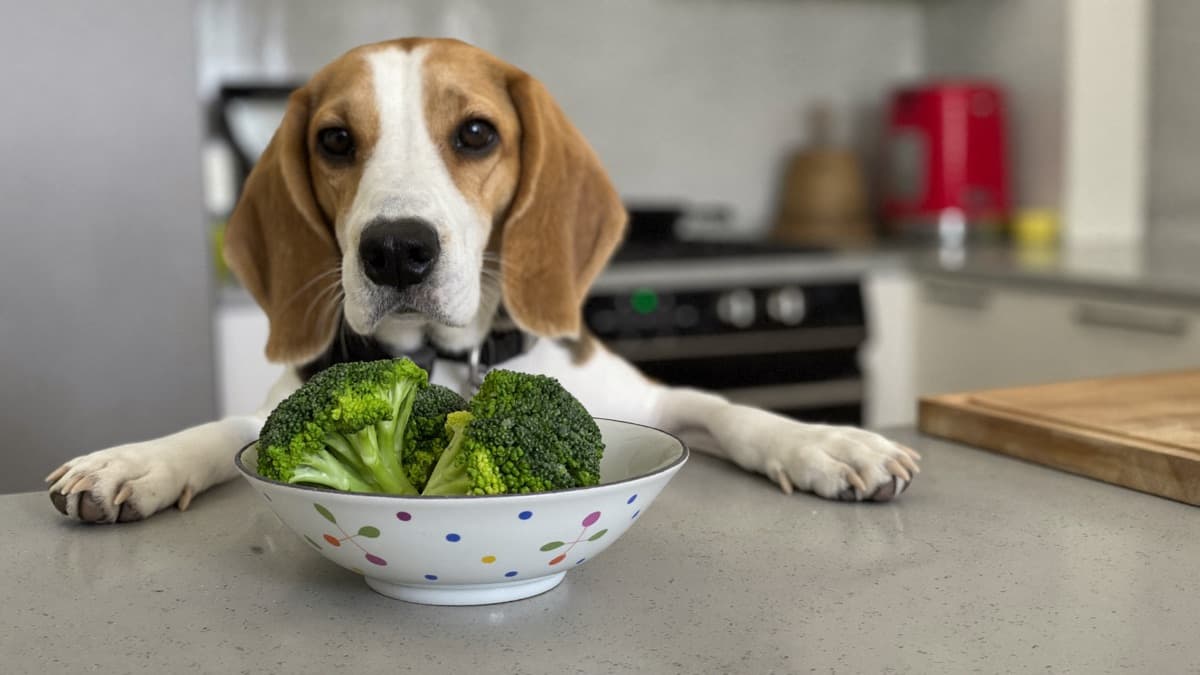
Steamed and plain is the best version: soft enough to digest easily, nutrients intact, nothing added. Boiled plain is fine too. Raw works in small, well-chopped amounts but is more likely to cause gas.
What disqualifies broccoli instantly is the way most of us actually cook it. Stir-fried broccoli arrives coated in garlic and oil; oyster-sauce and sambal versions add salt and chilli; cheese sauce adds fat a dog does not need. Garlic and onion in any form damage a dog's red blood cells, so anything from a seasoned dish stays on your plate. Cook a couple of florets plain before the sauce goes in, and everyone eats well.
Can dogs choke on broccoli stalks?
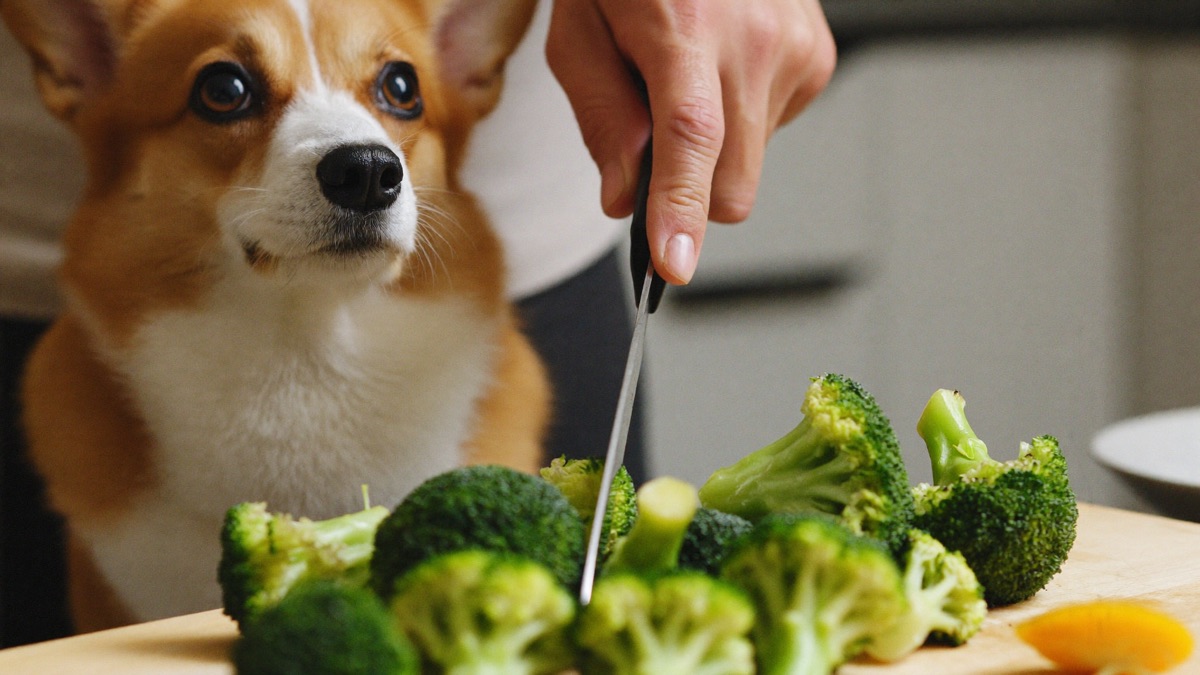
Yes — the stalk is the sneaky risk here. It is safe to eat but dense, fibrous, and cylindrical, which makes a chunk of raw stalk a classic obstruction shape, particularly for small dogs and gulpers. Cut stalks into small pieces or steam them until soft, and never let a dog trot off with a whole stalk as a chew toy. Florets are far more forgiving, but bite-sized is still the standard.
When should I call the vet?
Broccoli incidents are usually mild, but call your vet if:
- Your dog is gagging, retching, drooling heavily, or struggling to swallow after eating stalk pieces — possible choking or obstruction
- Vomiting or diarrhoea lasts beyond 24 hours, or your dog seems bloated and uncomfortable
- Your dog ate a large amount of broccoli from a seasoned dish containing garlic or onion — watch for pale gums, weakness, or dark urine over the following days and treat those as urgent
Ordinary gassiness after a bit too much broccoli resolves on its own. For anything more serious, head to your nearest 24-hour clinic — in Malaysia, the Department of Veterinary Services is the national animal-health authority for official guidance.
Which green vegetables are safer bets?
If your dog turns out to have a sensitive gut, you do not have to give up on green treats. Green beans and cucumber deliver the same low-calorie crunch with none of the isothiocyanate ceiling, and plain steamed spinach in small amounts is fine for most dogs. The genuine dangers in the vegetable drawer are elsewhere: onions, garlic, leeks, and chives are toxic in any form, raw or cooked. Broccoli, by contrast, just asks you to keep the portion honest.