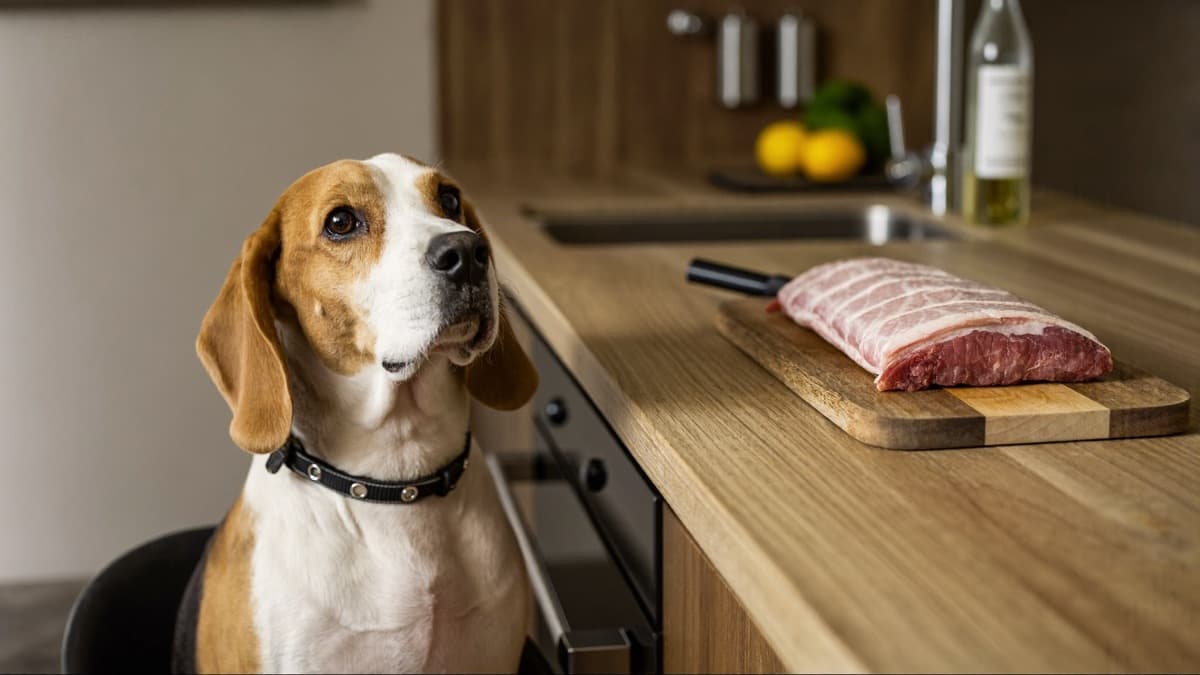
Is pork good for dogs?
Pork is a perfectly decent protein for dogs, and plenty of commercial dog foods use it. A few shreds of plain boiled or roasted pork loin make a fine treat.
The catch is fat. Pork — especially belly, crackling and trimmings — is noticeably fattier than chicken breast, and a rich fatty meal is one of the classic triggers for pancreatitis, a painful and sometimes serious inflammation of the pancreas. Dogs that are overweight, small-breed or have had pancreatitis before are most at risk. So the rule for pork is stricter than for chicken: lean cuts only, small amounts, and trim visible fat before sharing.
How much pork is safe for my dog?
Plain, cooked, lean, boneless, cut small — and counted inside the 10 percent treat allowance.
| Dog size | Example weight | Safe amount per serving |
|---|---|---|
| Small (Chihuahua, toy poodle, shih tzu) | Under 10 kg | 1 tablespoon, shredded |
| Medium (beagle, Singapore Special, border collie) | 10–25 kg | 2–3 tablespoons |
| Large (golden retriever, GSD, labrador) | Over 25 kg | Up to 4 tablespoons |
Note the portions run smaller than for chicken — that is the fat talking.
Why can't dogs eat char siu, bak kwa or other seasoned pork?
Because almost nothing about them except the pig is dog-safe. Char siu is glazed with sugar, soy and five-spice; bak kwa is sweet, salty and often laced with spices; sio bak comes with salty crackling and a thick cap of fat; bak chor and lu rou style dishes are cooked down in soy, garlic and sometimes shallots. Garlic and onion damage a dog's red blood cells, the salt load is far beyond what a dog should get in a day, and the sugar and fat together are a pancreatitis invitation.
Cured pork is the same story in a different form: bacon, ham and luncheon meat are extremely salty and fatty, and a slice here and there adds up fast. If you want to share during a zi char dinner or Chinese New Year, set aside a piece of plain meat before the marinade goes on. Once it is glossy and red, it is people-only food.
Can dogs eat pork bones — and what about satay sticks?
No cooked pork bones, ever. Like chicken bones, cooked pork bones — ribs are the usual offender — dry out and splinter into shards that can pierce the mouth, throat or intestines, or jam into a blockage that needs surgery.
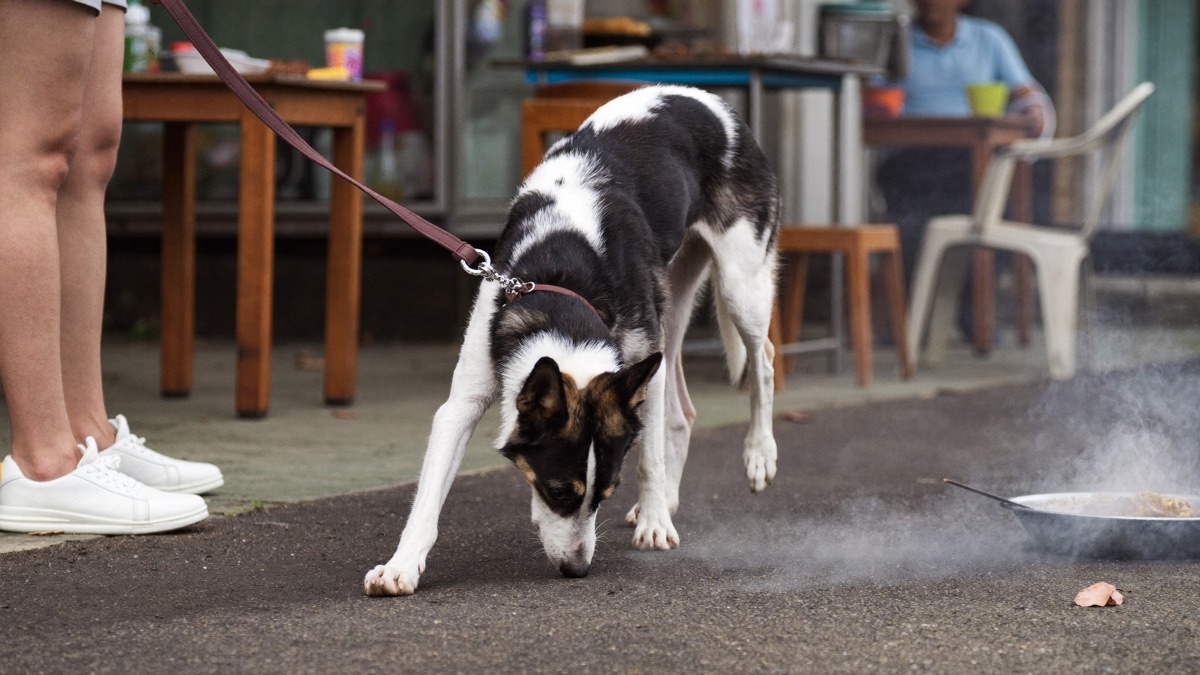
Satay deserves its own warning. A discarded satay stick smells like meat from end to end, and dogs swallow the whole skewer. A pointed wooden stick travelling through a dog's gut is one of the nastier emergencies a vet sees, because it can pierce the stomach or intestine wall. Bin skewers securely and train a solid "leave it" for the ones on the ground near hawker centres and pasar malam stalls.
Can dogs eat raw pork?
No. Raw and undercooked pork can carry Trichinella spiralis, a parasitic worm that infects dogs as readily as people. In parts of the world pigs also carry Aujeszky's disease (pseudorabies), a virus that is almost always fatal to dogs that catch it — one reason vets are blunt about raw pork in a way they are not about, say, raw beef. Commercial pork in Singapore and Malaysia is inspected, but "inspected" is not "sterile". Cook it through; that solves both problems. In Singapore, the Animal & Veterinary Service is the authority on animal health if you want the official line on feeding practices.
When should I call the vet?
Call promptly if:
- Your dog swallowed a pork bone or a satay stick — do not induce vomiting; sharp objects can cut twice.
- Your dog ate char siu, bak kwa or anything cooked with garlic, onion or heavy seasoning in more than a token amount.
- You see vomiting, a hunched or painful belly, lethargy or refusal to eat after a fatty meal — classic pancreatitis signs that need same-day attention.
- Vomiting or diarrhoea after any pork meal lasts more than 24 hours — see our guide on when dog vomiting is a worry.
The meat is workable; the recipe usually is not. When in doubt, the test is simple: if it tastes of anything, it is not for the dog.