If your dog needs to slim down, or you simply want a treat you never have to feel guilty about, cucumber is hard to beat.
Why are cucumbers good for dogs?
Three reasons, and they are all practical rather than exotic:
- Almost zero calories. You can reward generously during training without blowing the treat budget. Vets commonly suggest swapping biscuits for cucumber in overweight dogs because the dog still gets the ritual and the crunch.
- Hydration. At 96% water, cucumber doubles as a snack and a drink — genuinely useful after a hot-afternoon walk in Singapore or Malaysia, where dogs lose water fast through panting.
- A little nutrition. Cucumbers carry small amounts of vitamin K, vitamin C, potassium, and magnesium. It is a bonus, not a reason to feed them, but it beats empty calories.
Cucumber contains nothing toxic to dogs in any part of the fruit. The only real risks are choking on large chunks and stomach upset from sheer volume.
How much cucumber is safe for my dog?
Even a perfect treat obeys the 10% rule: treats of all kinds should stay under about a tenth of daily calories. With cucumber you will hit the digestive limit before the calorie limit — too much water and fibre in one sitting means soft stools.
| Dog size | Example breeds | Safe portion per day |
|---|---|---|
| Small (under 10 kg) | Chihuahua, Toy Poodle, Shih Tzu | A few thin slices |
| Medium (10–25 kg) | Beagle, Singapore Special, Border Collie | Quarter to half a cucumber, sliced |
| Large (over 25 kg) | Labrador, Golden Retriever, GSD | Up to half a large cucumber, chopped |
Start smaller than this the first time and see how your dog's stomach responds before making it a habit.
How should I prepare cucumber for a dog?
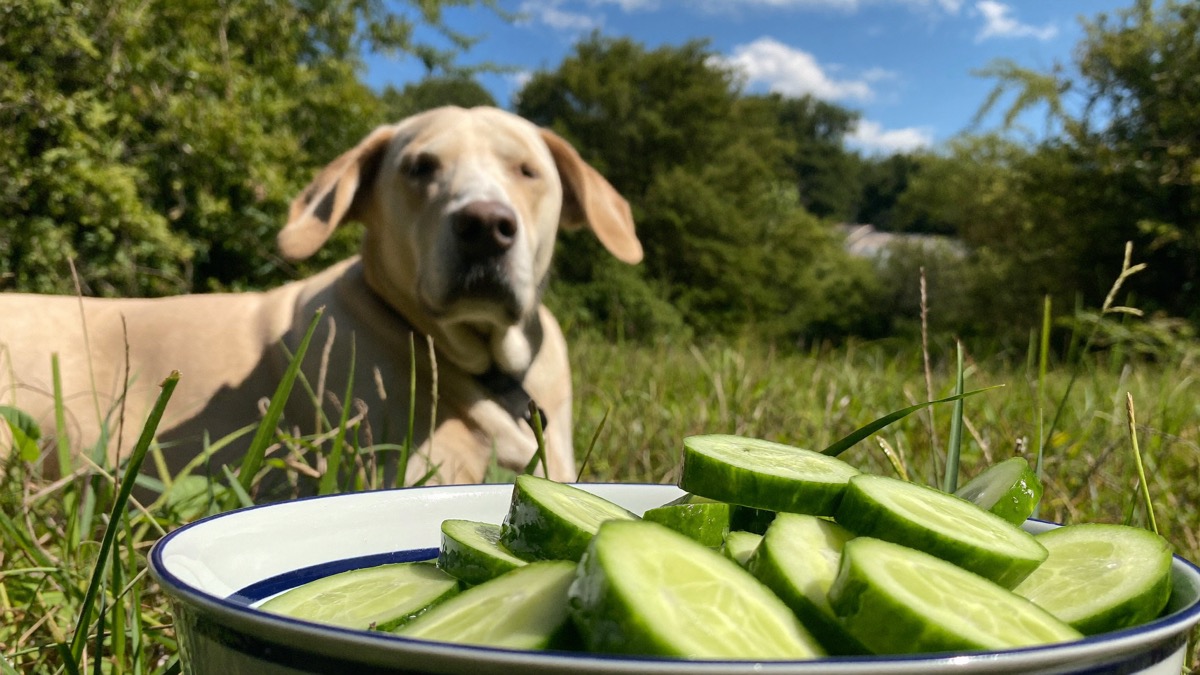
Wash it well, then slice into pieces sized for your dog — thin rounds or small batons for little dogs, thicker chunks for large ones. Never hand a whole cucumber to a gulper; a big cylindrical bite is a classic choking shape. The skin and seeds are both safe.
Two upgrades worth trying: chill slices in the fridge for a cooling treat on humid days, or freeze batons for a longer-lasting chew. Skip anything from the salad bowl that has been dressed — vinaigrettes and creamy dressings often carry onion, garlic, or excess salt.
Can dogs eat pickles or seasoned cucumber?
No. Pickling brine is heavy with salt and frequently includes garlic, onion, dill mixes, or chilli. Garlic and onion damage a dog's red blood cells, and high salt intake is its own problem, particularly for dogs with heart or kidney conditions. The same caution applies to smacked-cucumber salads and achar-style pickles — delicious for you, wrong for the dog. Fresh and plain is the only way to serve it.
When should I call the vet?
Cucumber problems are rare, but call your vet if:
- Your dog is gagging, retching, drooling heavily, or pawing at the mouth after swallowing a large chunk — possible choking or obstruction
- Vomiting or diarrhoea continues beyond 24 hours
- Your dog ate a large quantity of pickles or dressed salad containing onion or garlic — pale gums, weakness, or dark urine over the following days warrant an urgent visit
Mild soft stool after too much cucumber usually resolves with a normal bland meal and water. For anything more serious, head to your nearest 24-hour clinic — in Malaysia, the Department of Veterinary Services is the national animal-health authority if you need official guidance.
Which snacks look harmless but aren't?
Keep the contrast clear in your head. Cucumber, apple slices, carrot sticks, and green beans are all safe, low-calorie choices. The traps: grapes and raisins, which can cause kidney failure in dogs with no known safe dose; onion and garlic in any seasoned or pickled food; and xylitol, the sugar-free sweetener that is severely toxic to dogs and hides in some sauces and peanut butters. Fresh cucumber carries none of that baggage — which is exactly why it earns a permanent spot in the treat rotation.