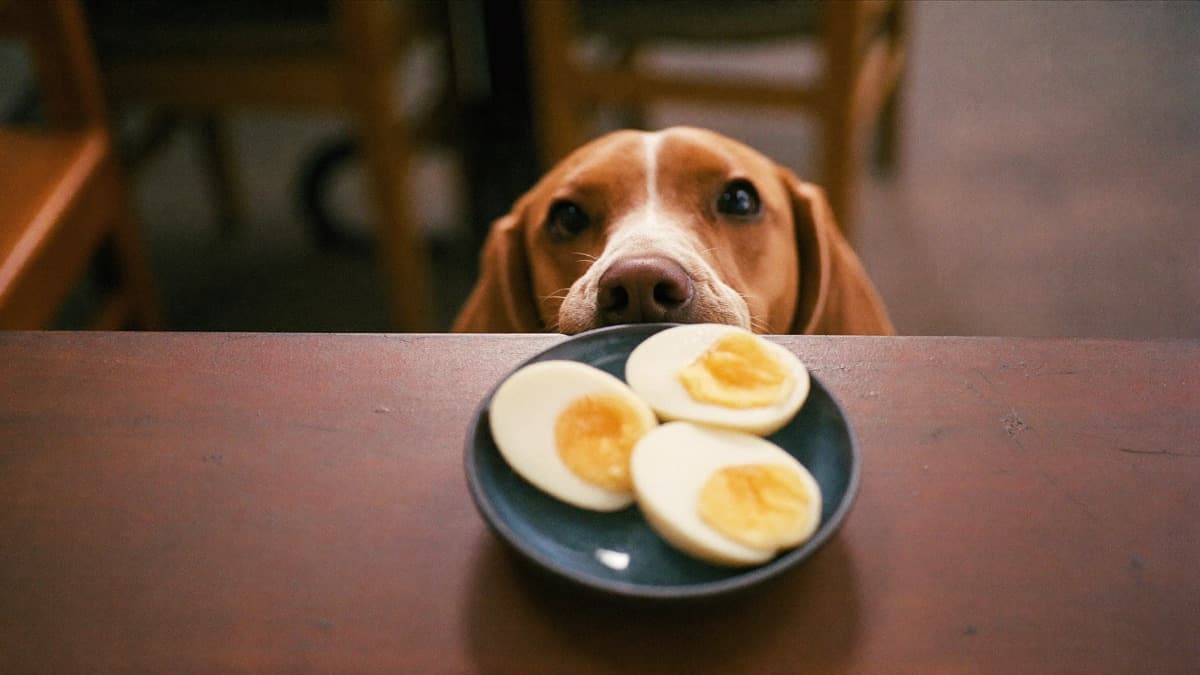
Are eggs good for dogs?
In moderation, eggs are one of the better human foods you can share. They deliver complete protein, essential fatty acids, vitamin A, vitamin B12, riboflavin and iron, which is why egg is a common ingredient in commercial dog foods. Veterinary sources such as the American Kennel Club consider cooked eggs safe for healthy dogs.
They are also calorie-dense. One large egg carries roughly 70 to 75 calories — trivial for a labrador, substantial for a chihuahua. Treats of every kind should stay under 10 percent of your dog's daily calories, and eggs count. Dogs with pancreatitis history, kidney disease or weight problems should only get eggs with your vet's blessing.
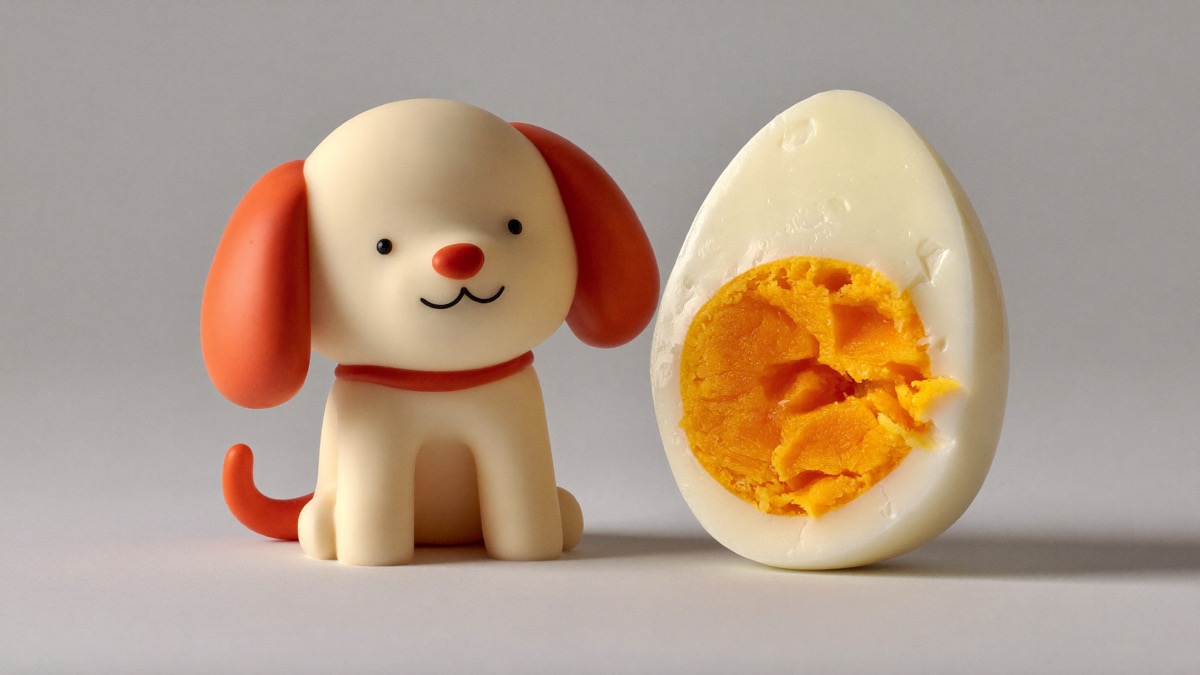
How much egg is safe for my dog?
Serve fully cooked egg, plain, a few times a week at most.
| Dog size | Example weight | Safe amount per serving |
|---|---|---|
| Small (Chihuahua, toy poodle, shih tzu) | Under 10 kg | Up to 1/4 of an egg |
| Medium (beagle, Singapore Special, border collie) | 10–25 kg | Up to 1/2 an egg |
| Large (golden retriever, GSD, labrador) | Over 25 kg | Up to 1 whole egg |
Hard-boiled and chopped is the easiest safe format. Scrambled is fine only if cooked dry in a clean pan — no butter, no oil, no salt, no onion. Introduce egg gradually and watch for a day; vomiting, loose stool or itchy skin means egg may not suit your dog.
Can dogs eat raw eggs?
This is the great egg debate, and it splits into a myth and a reality.
The myth is biotin deficiency. Raw egg white contains avidin, a protein that binds biotin, and this gets cited as a reason raw eggs are dangerous. In practice, a dog would need to eat a lot of raw egg white for a long time to develop a deficiency — and egg yolk itself is rich in biotin, which offsets much of the effect.
The reality is salmonella. Raw eggs can carry it, and contaminated eggs can make your dog ill — vomiting, diarrhoea, fever, lethargy. Just as relevant in a family home, a dog shedding salmonella can pass it to the humans who scoop the bowl and wipe the drool, with young children and elderly family members most at risk. Cooking eliminates the problem entirely, and your dog gains nothing nutritionally from the egg being raw.
Can dogs eat egg shells?
Skip them. Crushed shell is sometimes promoted online as a cheap calcium supplement, but shell fragments can be sharp on the way down, and adding calcium to a diet that is already complete and balanced can do more harm than good — especially for puppies and large breeds, where excess calcium affects bone development. If your vet decides your dog needs calcium, a measured supplement is the safe route.
What about half-boiled kopitiam eggs?
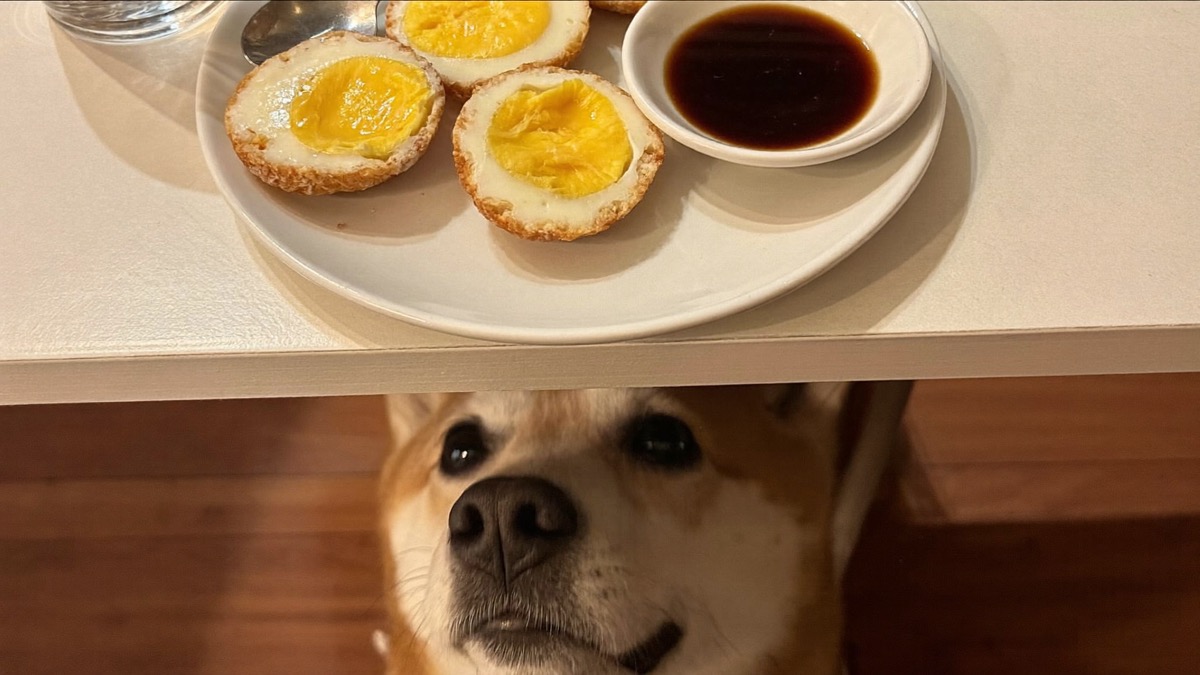
Those wobbly kopitiam eggs with soy sauce and white pepper are a breakfast institution, but they are the wrong egg for your dog twice over. Half-boiled means the egg never reaches a salmonella-killing temperature, so it carries the same risk as raw. And the toppings — soy sauce and pepper — add a heavy salt load dogs do not need. If you want to share breakfast, boil a separate egg all the way through and let it cool.
When should I call the vet?
Cooked plain egg rarely causes problems, but call your vet if:
- Your dog ate raw or half-boiled egg and develops vomiting, diarrhoea, fever or lethargy in the following days.
- You see signs of an allergic reaction — itchy skin, ear infections, facial swelling, or repeated tummy upsets after egg.
- Vomiting or diarrhoea lasts more than 24 hours, or your dog seems flat and refuses food.
- The egg came in a dish containing onion, garlic or heavy seasoning — these are genuinely toxic to dogs.
If you are in Singapore and unsure where to turn, the Singapore Veterinary Association lists member clinics — but after hours, ring your nearest 24-hour emergency clinic directly.
Which similar breakfast foods are actually toxic to dogs?
Egg being safe does not make the rest of the breakfast table safe. Keep these away from your dog:
- Onion and garlic — common in fried rice, omelettes and marinades; they damage red blood cells and can cause anaemia even cooked.
- Grapes and raisins — found in pastries and breads; they can cause acute kidney failure in small amounts.
- Xylitol — a sweetener in sugar-free spreads and baked goods; it triggers life-threatening low blood sugar in dogs.
If your dog eats any of these, contact your vet or an emergency animal clinic straight away rather than waiting for symptoms.