Why are sardines so good for dogs?
Sardines are small, oily and short-lived — the exact profile we recommend in our guide to feeding dogs fish. Being low on the food chain, they accumulate far less mercury than large predators like tuna, while packing serious levels of EPA and DHA, the omega-3 fatty acids that support skin and coat, joints, heart and brain. They also bring vitamin D, vitamin B12, calcium and quality protein.
That is the same nutritional territory as a fish oil supplement — which is why sardines have earned the "budget omega-3 hero" title. A supplement gives you precise dosing; a tin of sardines gives you most of the benefit at kopitiam prices, plus a dog that thinks you are a genius. For a dog with a diagnosed condition needing a therapeutic omega-3 dose, use the supplement; for everyday topping-up, the tin does honest work.
Are the bones in canned sardines safe?
Yes — and this is the part that surprises people, because we spend so much effort warning about fish bones. The difference is the canning process. Canned sardines are pressure-cooked inside the sealed tin at high temperature, which softens the bones until they crumble between your fingers. They are not just harmless; they are a natural calcium source.
Ordinary cooked fish bones are the opposite: steaming or frying a fish leaves its bones hard, needle-sharp and easy to swallow unnoticed, which is exactly how they end up lodged in a throat or scratching a gut lining. So the rule splits cleanly — canned sardine bones: fine. Bones from fresh cooked fish, sardines included: remove every one. If you cook fresh sardines at home, debone them like any other fish. The tin is the only place the bone rule relaxes.

Which canned sardines should I buy?
One phrase: sardines in water, no salt added if you can find them. Working down the supermarket shelf:
- In water — the right choice. Drain before serving.
- In brine — salt water; too much sodium for regular use. Rinse and drain if it is all you have, and keep portions small.
- In oil — unnecessary extra fat and calories; fatty extras are a known pancreatitis trigger in susceptible dogs. Drain thoroughly if used at all.
- In tomato sauce, curry or sambal — no. The local canned-sardine aisle leans heavily on these, and the sauces bring salt, chilli, and frequently onion and garlic, which are toxic to dogs. These tins are for mee goreng, not the dog bowl.
Then flip the tin over and do the sodium check: compare labels and pick the lowest per-100 g figure. Brands vary enormously, and "in water" does not automatically mean low-salt. A dog's complete food already contains all the sodium it needs, so every milligram from the tin is surplus.
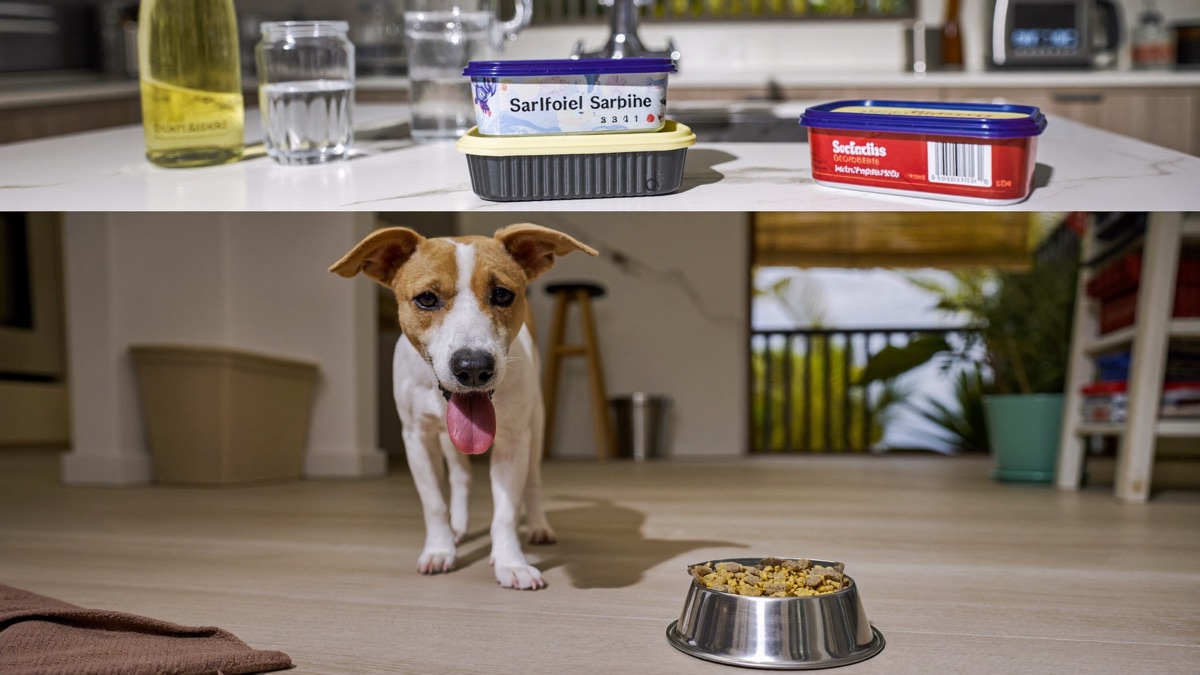
How many sardines can my dog have?
Sardines are calorie-dense (a typical canned sardine runs 20–35 kcal), so portion by size and keep them inside the 10 percent treat allowance:
| Dog size | Example weight | Serving | How often |
|---|---|---|---|
| Small (chihuahua, toy poodle, shih tzu) | Under 10 kg | ¼–½ a sardine | 2–3 times a week |
| Medium (beagle, Singapore Special, corgi) | 10–25 kg | ½–1 sardine | 2–3 times a week |
| Large (golden retriever, labrador, GSD) | Over 25 kg | 1–2 sardines | 2–3 times a week |
Mash into the regular meal or serve as a high-value training reward. Introduce gradually — oily fish in a gut that has never seen it can produce a loose stool or two — and refrigerate an opened tin, using it within a couple of days.
When should I call the vet?
Sardines in water rarely cause trouble beyond a fishy burp. Call your vet if your dog raided tins in curry, sambal or any onion-containing sauce in quantity (onion and garlic toxicity is cumulative and worth a call), if vomiting or diarrhoea persists past 24 hours, or if a dog with a history of pancreatitis got into oil-packed fish — abdominal pain, hunched posture and repeated vomiting after a fatty raid warrant same-day attention. And if your dog has kidney or heart disease on a sodium-restricted diet, ask your vet before adding sardines at all.