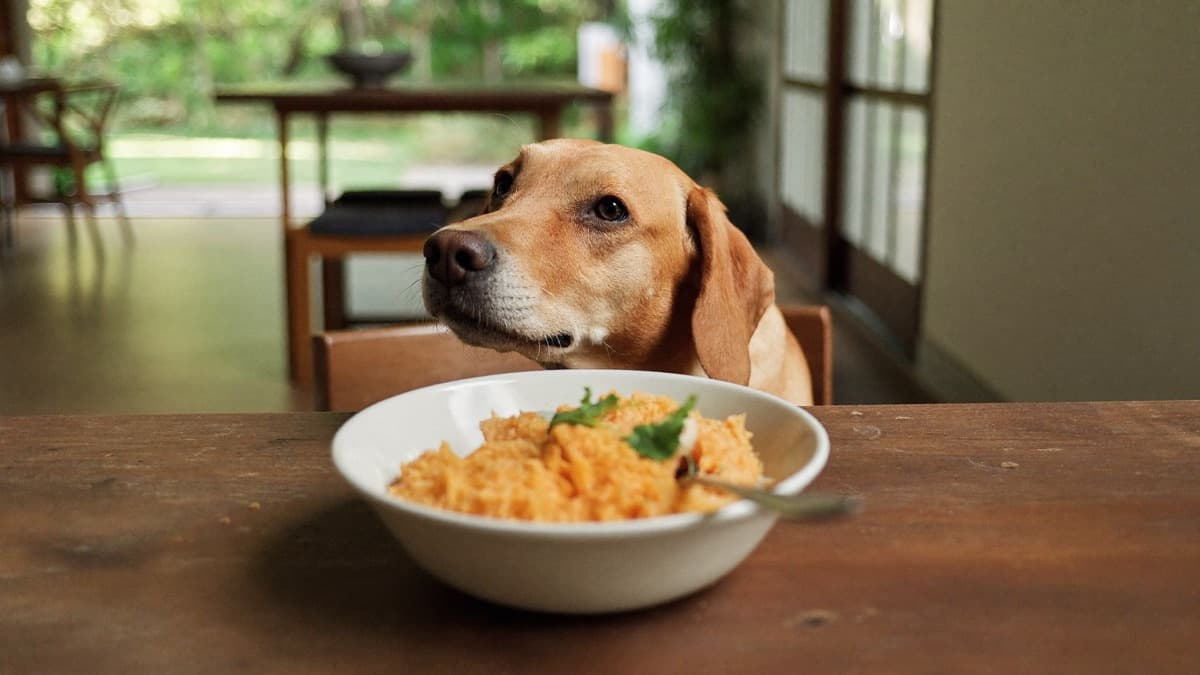
Why is sweet potato good for dogs?
Sweet potato pulls its weight nutritionally in a way most treat vegetables do not:
- Fibre. Sweet potato is high in dietary fibre, which supports regular, well-formed stools. Vets sometimes suggest a spoonful of plain cooked sweet potato or pumpkin to help settle mild digestive wobbles.
- Beta-carotene and vitamins. The orange flesh is loaded with beta-carotene, which converts to vitamin A, plus vitamin C, B6, potassium, and manganese.
- Palatability. The natural sweetness makes it an easy sell to fussy dogs, and the soft cooked texture suits puppies and seniors alike.
Commercial dog food manufacturers use it as a digestible carbohydrate source for exactly these reasons — your dog may already be eating it daily without you noticing.
Why must sweet potato be cooked?
Raw sweet potato is a poor deal for a dog on every front. The raw flesh is hard and dense, which makes chunks a choking hazard and, if swallowed, a candidate for intestinal blockage. It is also difficult to digest raw — the starches stay locked up, so the dog gets stomach upset instead of nutrition.
Cooking fixes all of it. Steam, boil, or bake until soft, and serve plain: no butter, no salt, no brown-sugar glaze, and none of the honeyed or spiced versions from festive dishes. Mash a spoonful into meals, cut soft cubes as training treats, or freeze mashed portions in an ice-cube tray for the week.
How much sweet potato is safe for my dog?
This is where sweet potato differs from cucumber-tier treats: a cup of cooked sweet potato runs to roughly 180 calories, so portions need actual discipline. Keep all treats under about 10% of daily calories.
| Dog size | Example breeds | Safe portion per day |
|---|---|---|
| Small (under 10 kg) | Chihuahua, Toy Poodle, Shih Tzu | 1–2 teaspoons, cooked and mashed |
| Medium (10–25 kg) | Beagle, Singapore Special, Border Collie | 1–2 tablespoons |
| Large (over 25 kg) | Labrador, Golden Retriever, GSD | 2–3 tablespoons |
Because it is starchy and naturally sweet, go easy with overweight or diabetic dogs, and introduce it gradually — too much fibre at once swings digestion the other way.
Are dehydrated sweet potato chews any good?
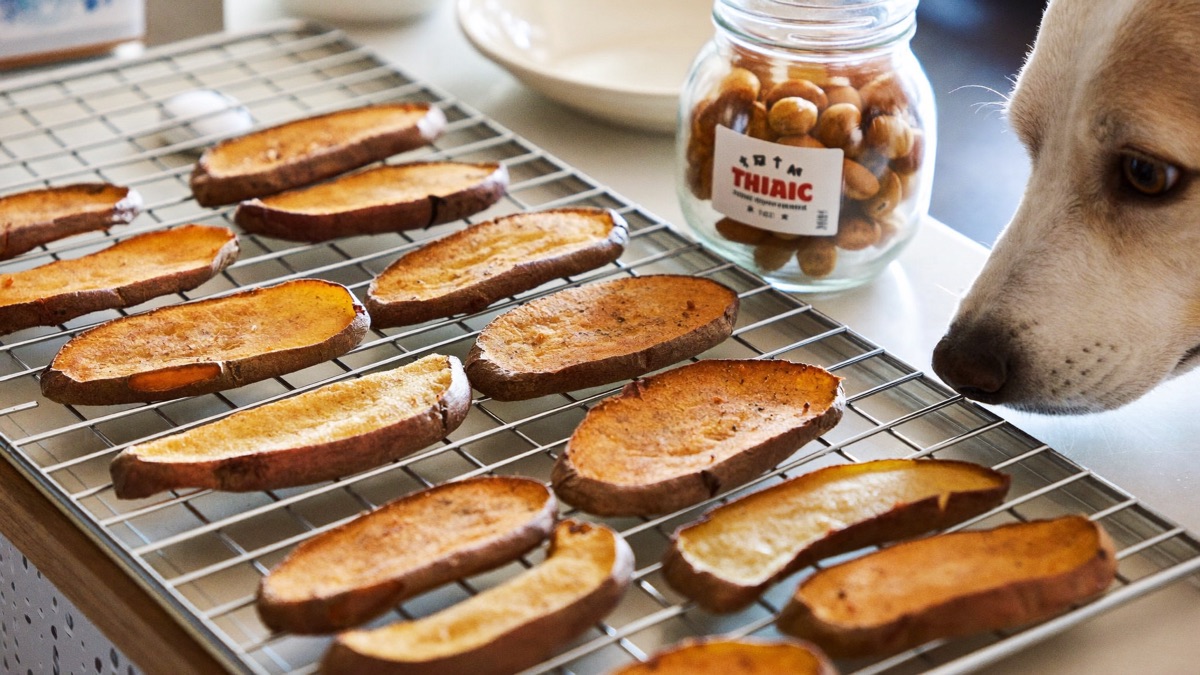
Yes — dehydrated sweet potato slices are one of the best single-ingredient chews you can offer, and one of the easiest to make yourself. Slice a sweet potato lengthwise into 5–8 mm slabs and dry them in a low oven or dehydrator until leathery. You get a chewy, rawhide-free treat with an ingredient list of exactly one item. If you enjoy making your own, our homemade dog treats guide has more recipes in the same spirit. Store-bought versions are fine too — just check that the packet says sweet potato and nothing else.
Does sweet potato mean grain-free is better?
No — and this is worth saying plainly. Sweet potato became a marketing star during the grain-free boom, where it replaced rice and corn in many boutique diets. Grain-free is not automatically healthier, and some grain-free, legume-heavy diets have been investigated for a possible association with canine dilated cardiomyopathy (DCM). Sweet potato is a good ingredient, not evidence of a superior philosophy. Judge a food by its overall formulation — our guide on how to choose dog food walks through what actually matters on the label.
When should I call the vet?
Sweet potato problems are uncommon when it is served cooked and plain, but call your vet if:
- Your dog swallowed a chunk of raw sweet potato and is gagging, retching, vomiting, or refusing food — possible obstruction
- Vomiting or diarrhoea continues beyond 24 hours
- Your dog ate a seasoned sweet potato dish — anything with onion, garlic, excess salt, or xylitol-sweetened toppings deserves a phone call
Orange-tinged stool after a sweet potato meal is normal. For anything urgent, head to your nearest 24-hour clinic — in Malaysia, the Department of Veterinary Services is the national animal-health authority for official guidance.
Which potato relatives are the real danger?
The sweet potato aisle has trickier neighbours. Raw or green-skinned regular potatoes contain solanine, which is toxic to dogs, and raw potato of any kind is off the menu. Fried versions — chips, fries, keropok — bring oil and salt loads a dog should not carry. And festive sweet potato dishes topped with marshmallow or condensed milk are desserts, not dog food. Plain, cooked, orange, and boring is exactly what you want.