Are oats good for dogs?
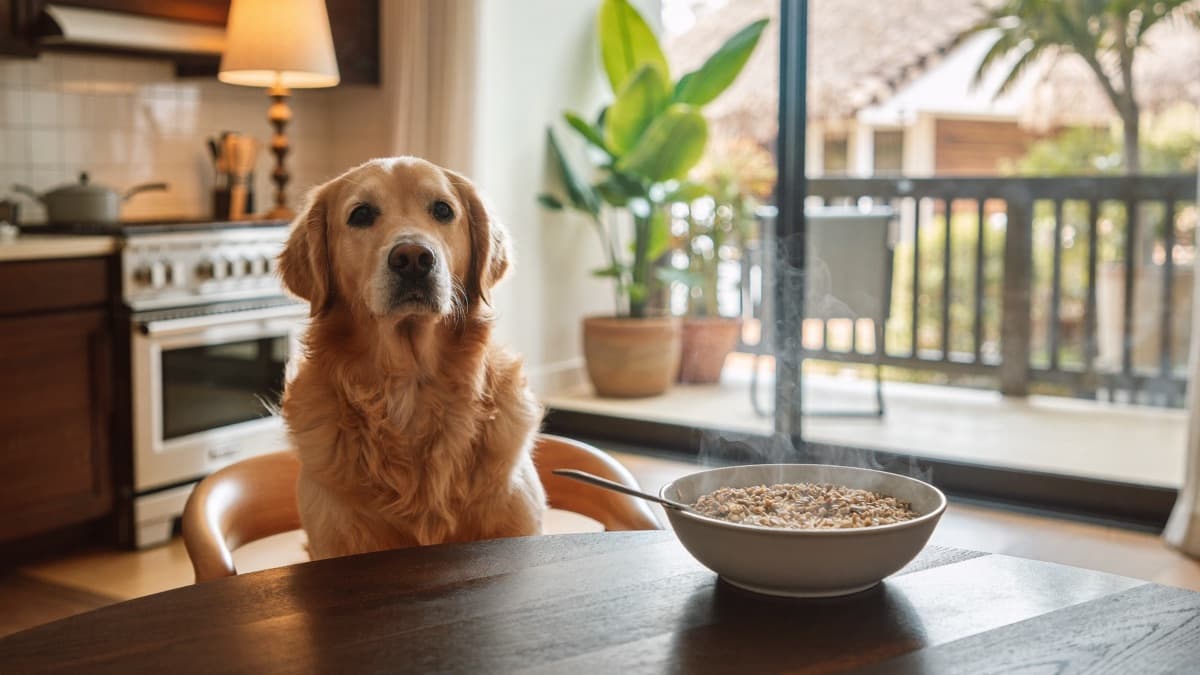
Genuinely, yes — in sensible amounts. Oats bring soluble fibre (beta-glucan) that supports digestion and helps regularity, along with B vitamins, iron, zinc and linoleic acid, which plays a role in skin and coat health. They are also naturally free of the wheat proteins that bother some sensitive dogs, which is why oats turn up as a carbohydrate base in many commercial kibbles and why oat flour is a staple in our homemade dog treats recipes.
The caveat is calories. Oatmeal is energy-dense, and a dog's complete food already covers everything it needs, so oats sit firmly in the treat budget: all extras combined should stay under 10 percent of daily calories. Oats are a topping and a treat-baking ingredient, not a meal replacement.
How should I prepare oats for a dog?
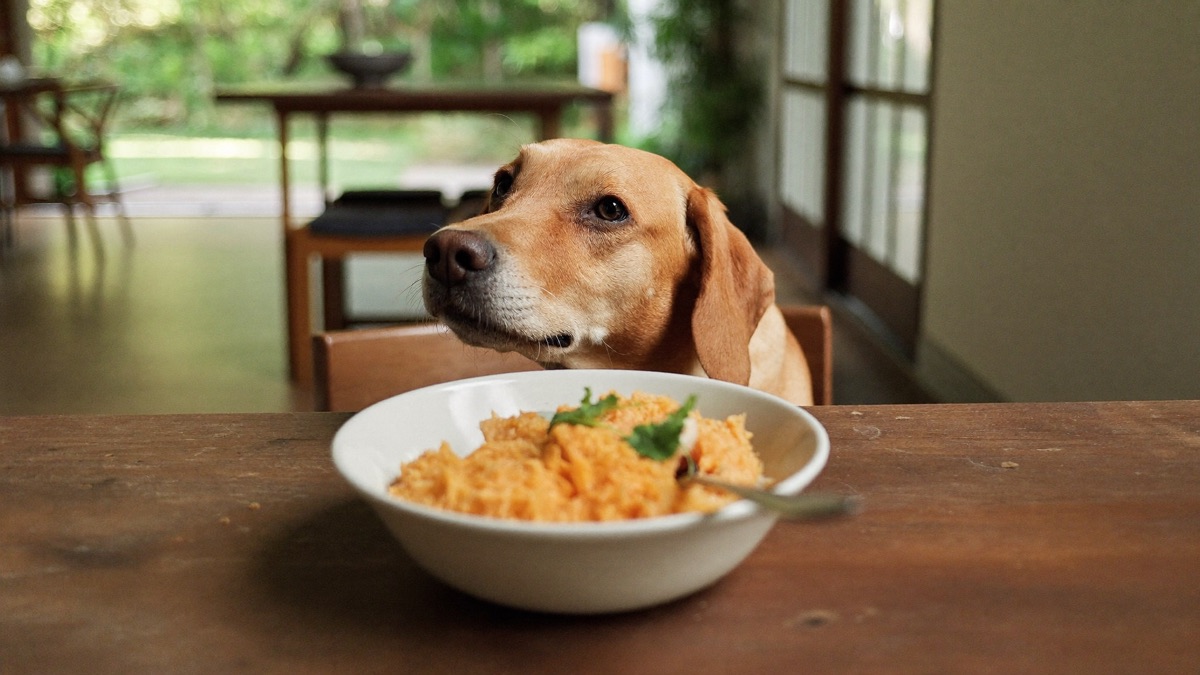
Cook rolled oats or oatmeal in plain water, and serve it cooled to room temperature. That is the entire recipe. No milk (many adult dogs digest lactose poorly), no sugar or honey, no butter, no salt. Steel-cut, rolled and instant plain oats are all fine once cooked — the differences that matter to humans barely matter to dogs, as long as the label says oats and nothing else.
A practical serving habit: cook your own breakfast oats, take the dog's spoonful out before you add your toppings, and let it cool while you eat.
How much oatmeal can my dog have?
Portion by body size, a few times a week at most.
| Dog size | Example weight | Safe amount per serving |
|---|---|---|
| Small (chihuahua, toy poodle, shih tzu) | Under 10 kg | 1–2 teaspoons, cooked |
| Medium (beagle, Singapore Special, corgi) | 10–25 kg | 1–2 tablespoons, cooked |
| Large (golden retriever, labrador, GSD) | Over 25 kg | 2–4 tablespoons, cooked |
Introduce oats the way you would any new food: a small amount once, then watch for 24 hours. Too much fibre in one sitting shows up as gas, bloating or loose stool — uncomfortable rather than dangerous, and the fix is simply a smaller portion.
Can dogs eat flavoured instant oat sachets?
No — this is where oats stop being safe. Flavoured instant sachets are built for human palates: brown sugar, honey, maple, chocolate and fruit-flavoured versions carry sugar loads a dog does not need, and some contain genuinely dangerous ingredients. Two label checks matter:
- Xylitol (sometimes listed as "birch sugar" or E967) appears in some sugar-free and "no added sugar" products. Even small amounts can trigger life-threatening low blood sugar in dogs. Any sweetened or sugar-free sachet must pass this check before a single lick.
- Dried fruit — apple-cinnamon and fruit medley sachets can include raisins or sultanas, which can cause acute kidney failure in dogs.
If the box says anything other than 100 percent oats, it is yours, not the dog's.
What about overnight oats add-ins?
Overnight oats are only as safe as what you stirred in, and the popular add-ins read like a toxin checklist. Before a dog gets a lick of your jar, rule out:
- Raisins and sultanas — kidney failure risk, even in small amounts.
- Chocolate, cocoa powder and cacao nibs — toxic to dogs at surprisingly small doses.
- Sweeteners — anything sugar-free needs the xylitol check above.
- Nuts — macadamias are toxic; other nuts are fatty enough to upset stomachs.
- Nut butters — plain peanut butter can be fine, but only after its own xylitol label check.
Safe add-ins, if you want to build the dog its own mini jar: a spoon of plain yogurt, a few blueberries, or a little mashed banana. The full danger list lives in our guide to foods dogs can't eat.
When should I call the vet?
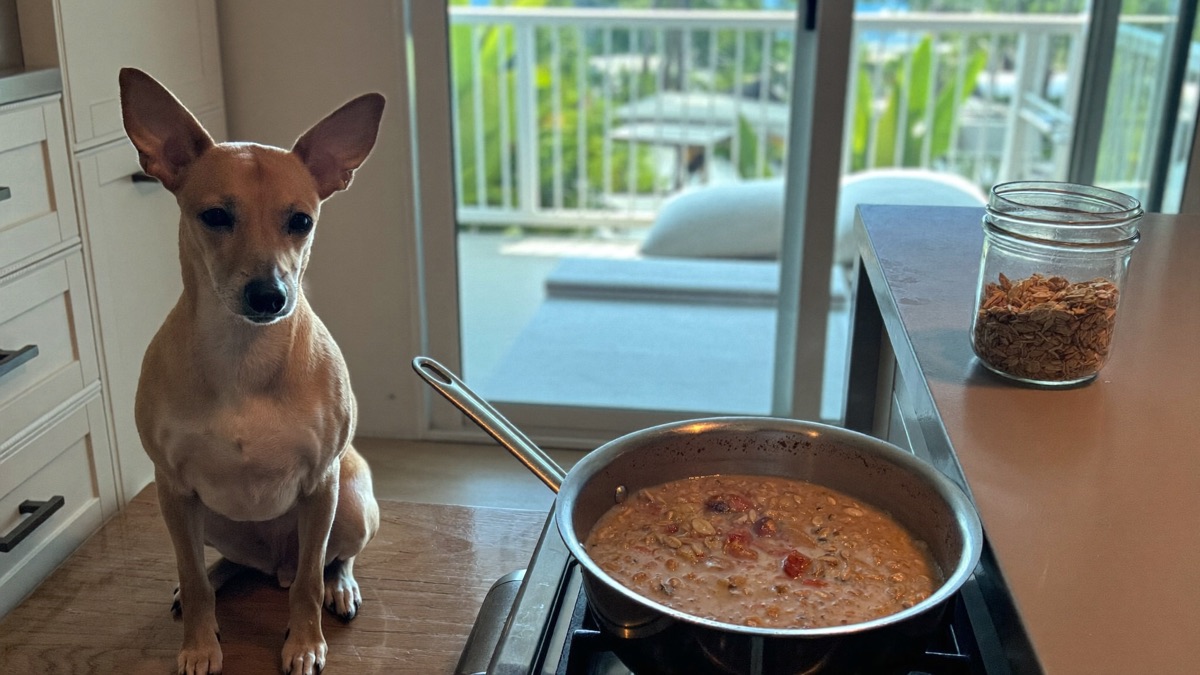
Plain oatmeal rarely causes more than a soft stool, but call your vet urgently if your dog got into a sugar-free product that may contain xylitol — weakness, wobbliness, collapse or seizures can start within an hour — or ate overnight oats containing raisins or chocolate. For those, do not wait for symptoms; call immediately. For ordinary overindulgence in plain oats, expect a gassy day, offer water, and mention it at your next visit if anything lingers past 24 hours.