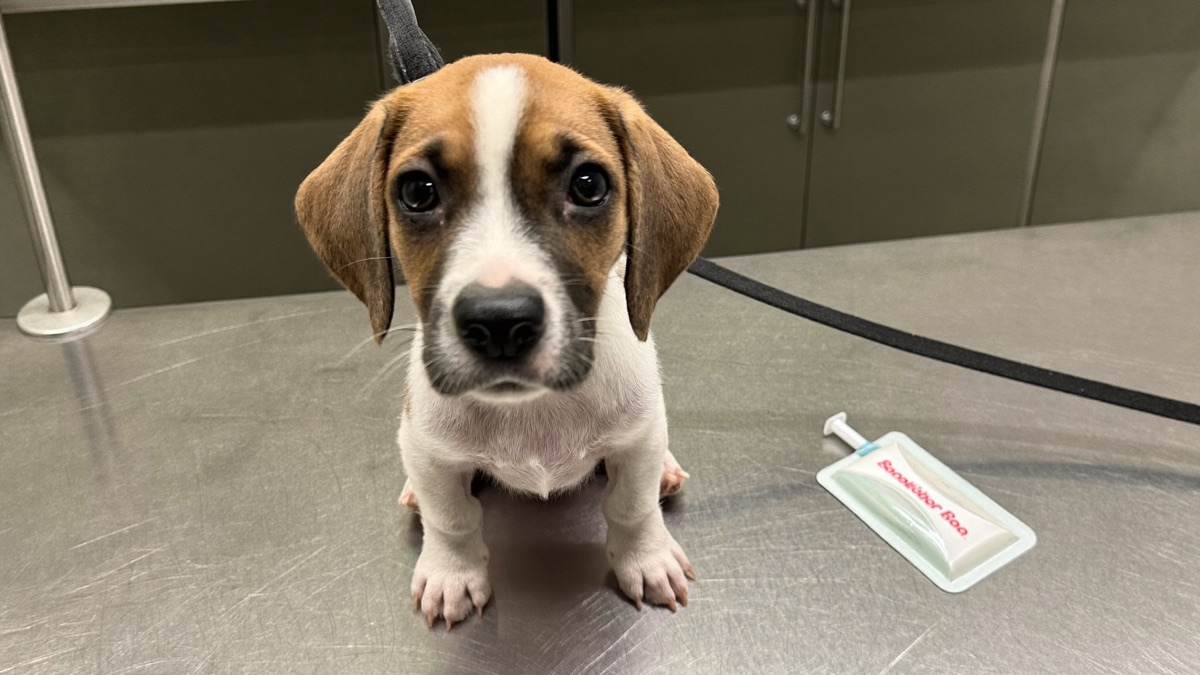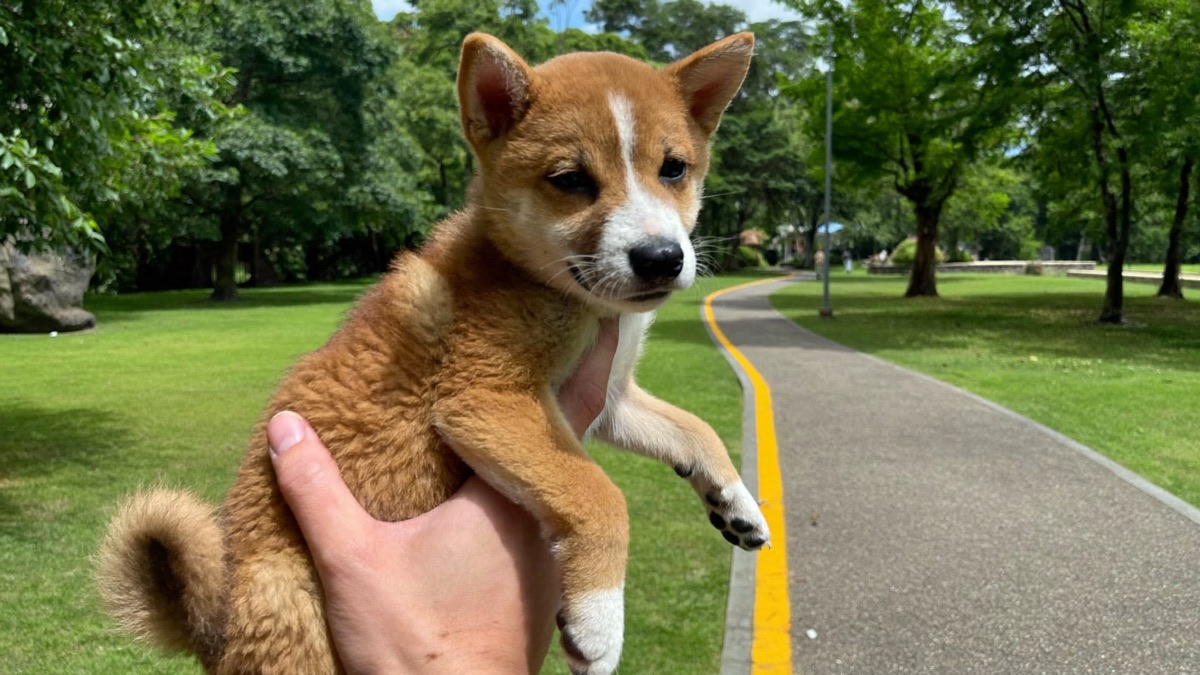
What are the puppy growth stages?
| Stage | Age | What's happening |
|---|---|---|
| Neonatal | 0–2 weeks | Eyes and ears closed; sleeping, nursing, doubling in weight |
| Transitional | 2–3 weeks | Eyes and ears open, first steps, first wobbly barks |
| Socialisation | 3–14 weeks | The brain accepts new things as normal — the window that shapes the adult dog |
| Juvenile | 3–6 months | Fastest growth, adult teeth arrive, attention span builds |
| Adolescence | 6–18 months | Hormones, testing, training regression — the "teenage phase" |
| Adulthood | 10–24 months | Growth plates close; timing depends on adult size |
What happens in the neonatal and transitional stages?
From birth to about three weeks, a puppy is essentially a heat-seeking stomach: blind, deaf, unable to regulate body temperature, completely dependent on the mother. There's nothing an adopter needs to do here — these weeks belong to the breeder or rescue — but they're worth understanding, because a puppy removed from mother and littermates too early misses lessons (bite inhibition, dog manners) that are hard to teach later. It's one reason reputable sources don't release puppies before 8 weeks.
Why is the socialisation stage the one you can't get back?
Between roughly 3 and 14 weeks, a puppy's brain treats novelty as information rather than threat. Whatever it meets calmly now — lifts, umbrellas, children, motorbikes, other dogs — gets filed as normal for life. Whatever it never meets tends to be treated as a threat later. Since most puppies come home at 8 weeks, you get about six weeks of this window, and it overlaps the vaccine series — the safe answer is carrying, not isolation, and our puppy socialisation guide covers exactly how to do it in a Singapore or Malaysia setting.
If you do only one thing well in your puppy's first year, do this stage well.
What should I expect in the juvenile stage (3–6 months)?
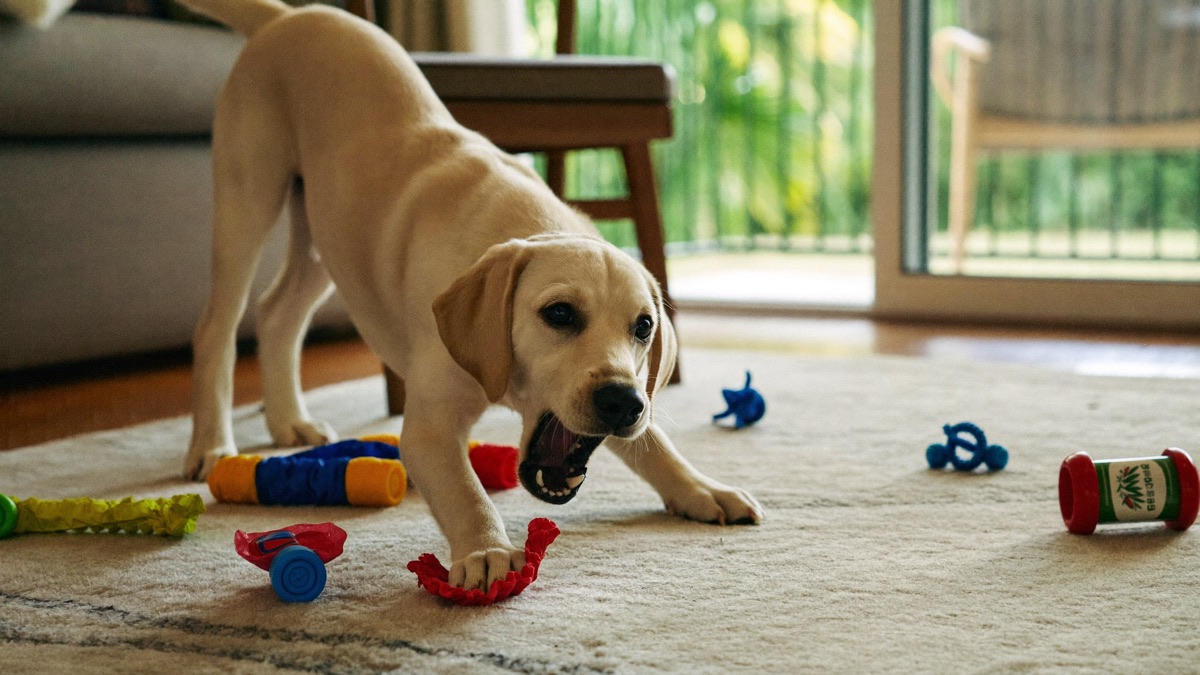
This is the steep part of the growth curve: legs outpace body, sleep is still 16+ hours a day, and all 42 adult teeth erupt — expect a serious chewing phase around 4–6 months and stock up per our puppy teething guide. Attention span improves week by week, which makes this the sweet spot for building basics: name response, sit, settle on a mat, and easy lead walking before the dog gets big enough for pulling to matter.
Keep exercise structured and modest — growth plates are open, so think short outings and free play rather than forced long walks.
Why is adolescence the stage that surrenders dogs?
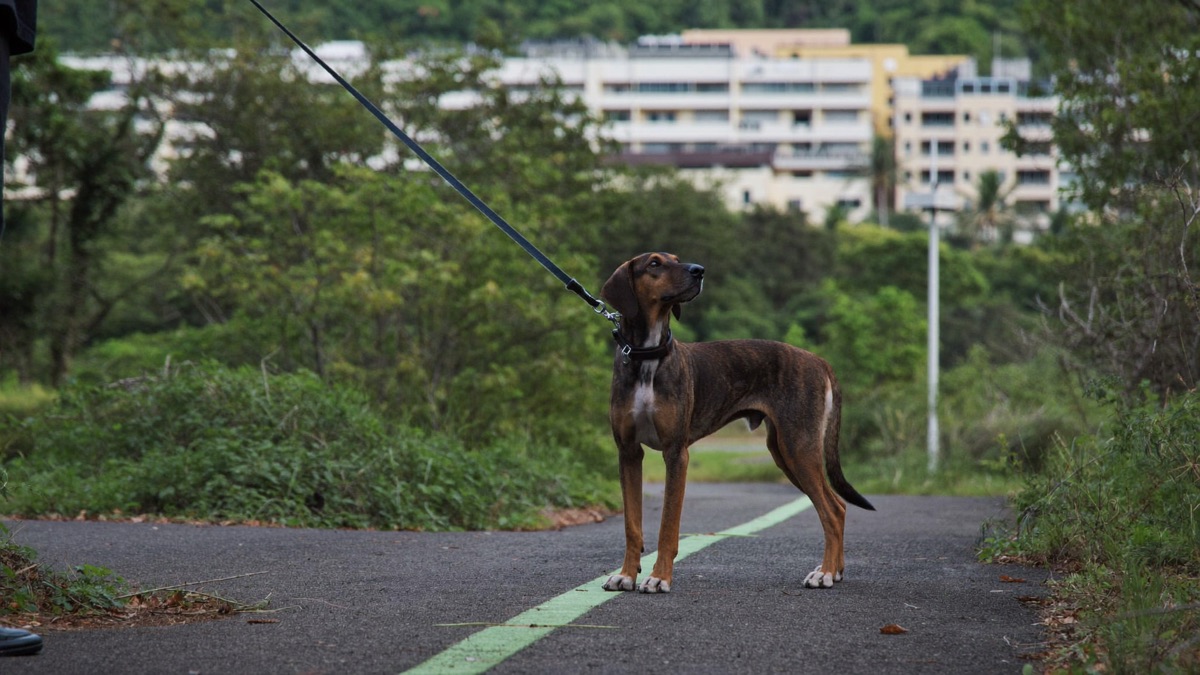
At 6–18 months, hormones surge and the brain remodels — and your trained puppy temporarily disappears. Recall evaporates, chewing returns, boundaries get tested, and a second fear period can make a previously confident dog spooky for a few weeks. None of this is failed training or a "bad dog"; it's a normal developmental phase. But it's also the age band when shelters receive the most dogs, because the cute puppy is gone and the polished adult hasn't arrived.
The way through is management plus patience: keep the dog on a long line while recall is unreliable, keep training sessions short and well-paid, protect the routine, and don't take regression personally. This stage ends. Dogs surrendered at 10 months were usually weeks to months away from becoming easy.
When is a dog officially an adult?
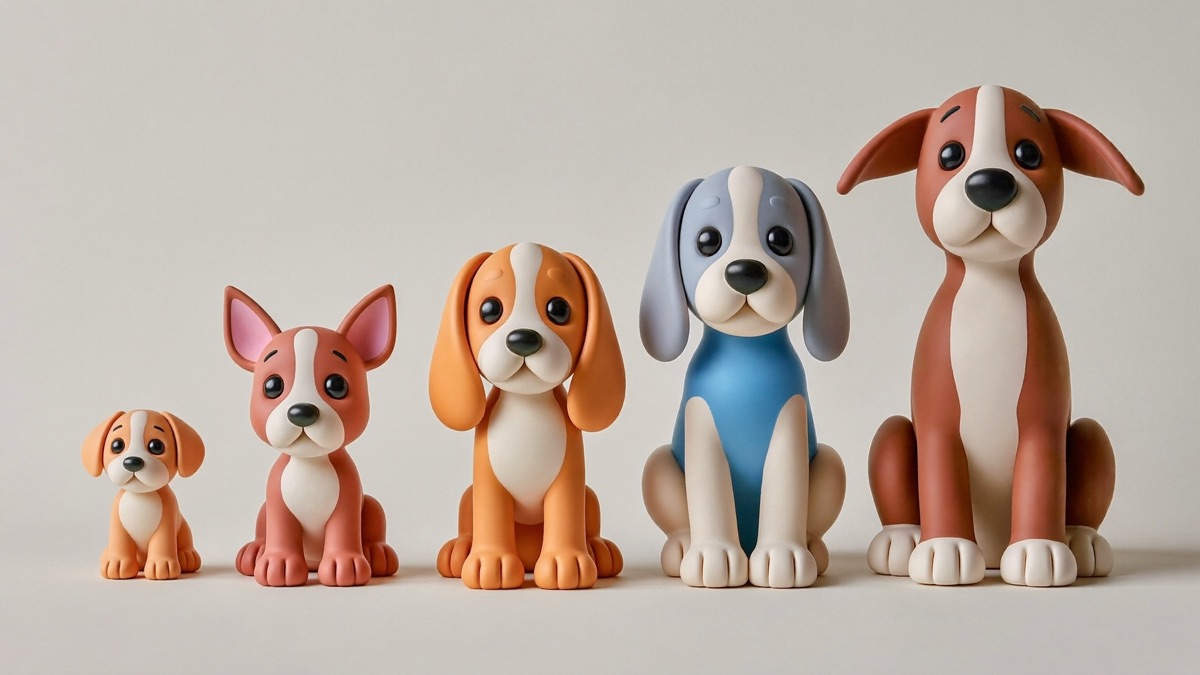
When the growth plates close — and that's a function of adult size, not a single birthday:
| Adult size | Examples | Physically adult at |
|---|---|---|
| Toy/small (under 10 kg) | Chihuahua, toy poodle, Shih Tzu | 10–12 months |
| Medium (10–25 kg) | Beagle, Border Collie, Corgi | ~12 months |
| Large (25–40 kg) | Labrador, Golden Retriever, GSD | 12–18 months |
| Giant (over 40 kg) | Great Dane, Mastiff types | 18–24 months |
Two practical consequences. First, food: switch from growth to adult formula when growth is essentially done — the same size-based timing our puppy food guide uses. Second, exercise: high-impact activity (long runs, repetitive jumping) waits until the skeleton is finished, which for a Labrador means closer to 18 months than 12.
Mental maturity arrives later than physical maturity in almost every dog — most owners report the "settled adult" showing up around 2 to 3 years. If your 14-month-old is physically full-sized but still behaves like a teenager, that's because, neurologically, she is one.