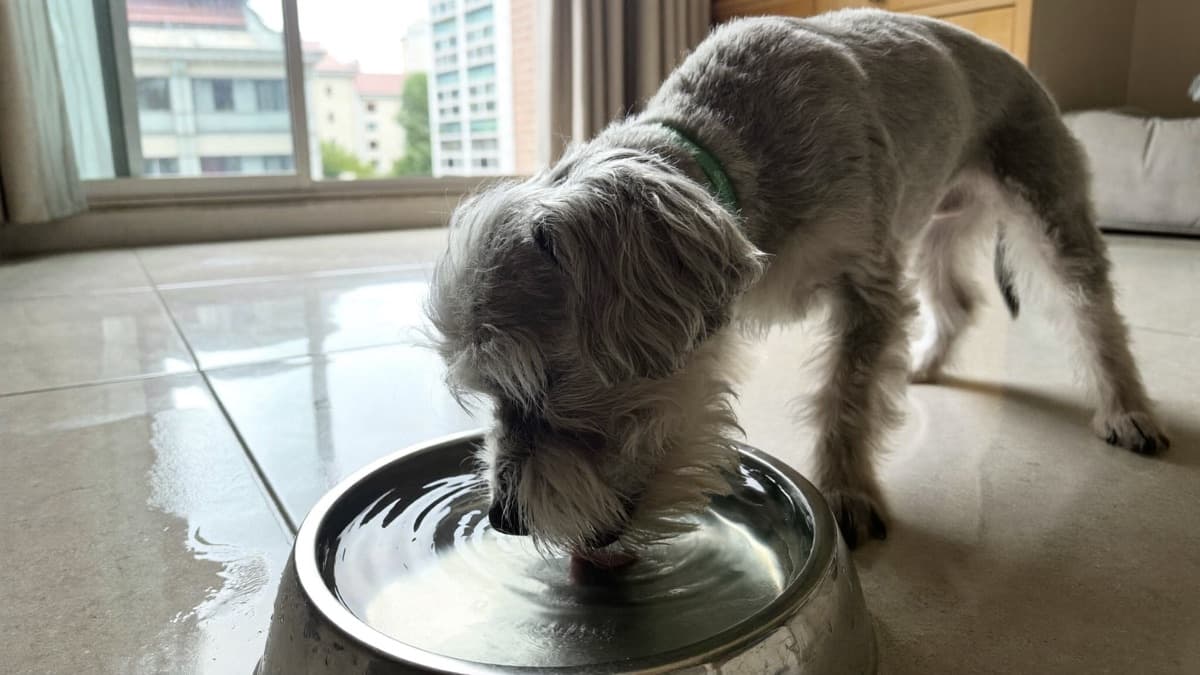
Normal intake sits around 50–60ml/kg daily in a temperate climate, and 20–50% above that is routine in Singapore and Malaysia heat — the baselines are in our guide to how much water a dog should drink. What matters in a senior is not the absolute number but a sustained, unexplained climb.
What are the three big causes of increased thirst in old dogs?
Chronic kidney disease. Ageing kidneys gradually lose the ability to concentrate urine, so the dog urinates dilute and drinks to keep up. Thirst often rises months before appetite dips or weight falls. Caught early on bloodwork, kidney disease is managed with diet and monitoring — and early management routinely adds years.
Diabetes mellitus. The giveaway trio is heavy thirst, ravenous appetite, and weight loss anyway. Untreated diabetes also causes cataracts in dogs with startling speed — another reason not to sit on it. If your senior is losing condition too, read our guide on old dogs losing weight.
Cushing's disease. An overproduction of cortisol, typically in middle-aged and older dogs: big thirst, big appetite, a pot-bellied outline, thinning coat, and panting at rest. It develops so gradually that most owners date the signs back a year once they know what they're looking at.
Two more worth knowing: pyometra, a womb infection in unsterilised older females — thirst plus lethargy weeks after a heat is an emergency, not a monitoring situation — and medications, especially steroids, which drive thirst as a side effect. Urinary infections also make seniors drink and urinate more; see the UTI signs to check.
How do I actually measure my dog's water intake?
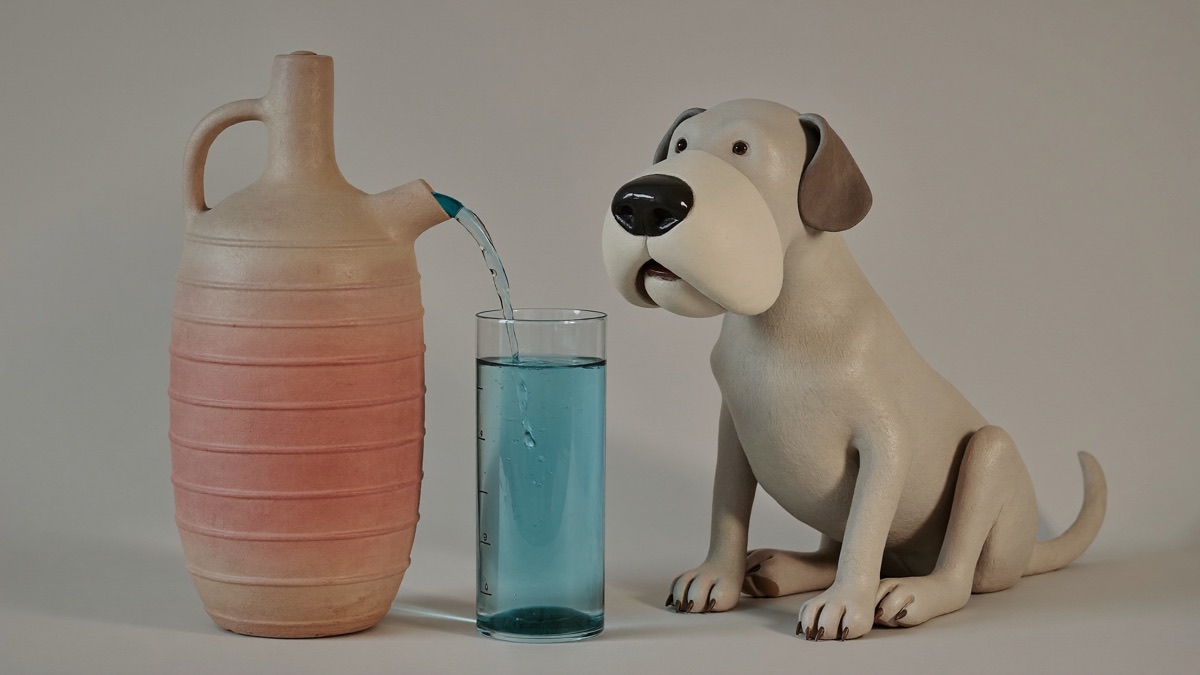
Guessing fails; the jug protocol works. For two or three consecutive days:
- Pick a start time — say 8am. Empty every water bowl.
- Refill each bowl using a measuring jug, and note the millilitres you put in.
- Every top-up that day goes in via the jug too, and gets written down.
- At 8am next day, use the jug to measure what's left, subtract, and total the day's intake.
- Divide by your dog's weight in kg. Repeat for 2–3 days and average.
Two accuracy rules: if other pets share the bowls, separate the dogs' water for the measurement days or your number is meaningless; and ignore any day with a beach trip, a long hot walk, or a switch to dry food — you're looking for the resting baseline. Above ~100ml/kg/day sustained, or anywhere near double your dog's old normal, book the consult and bring the numbers.
Doesn't the heat explain it here?
This is the trap in Singapore and Malaysia: "it's hot lah" explains away everything, indefinitely. Heat genuinely does raise intake — that's why tropical dogs drink 20–50% over textbook — but the climate here is constant. It was 32°C last month too. If your senior's intake has climbed while the weather, diet, and routine haven't changed, heat is not the explanation, and an air-conditioned apartment weakens it further.
The honest answer to "is it just the heat?" is: measure anyway. The jug protocol costs nothing and three days, and it converts a vague worry into a number a vet can act on.
What happens at the vet — and why go early?
One visit covers the whole list: physical exam plus a blood panel and urine test. Kidney values and urine concentration screen for kidney disease, glucose in blood and urine picks up diabetes, and the panel flags Cushing's for a confirmatory hormone test. As of 2026 expect S$40–90 (RM50–150) for the consult plus the cost of the lab panel — modest against what any of these diseases cost once advanced.
The payoff for going early is not abstract. Early-stage kidney disease managed with a renal diet often means years of good life; diabetes started on insulin before a crisis avoids emergency hospitalisation; Cushing's treatment restores comfort and cuts the risk of complications. Increased thirst is your senior dog volunteering a blood test result through the water bowl — take the hint while it's cheap.