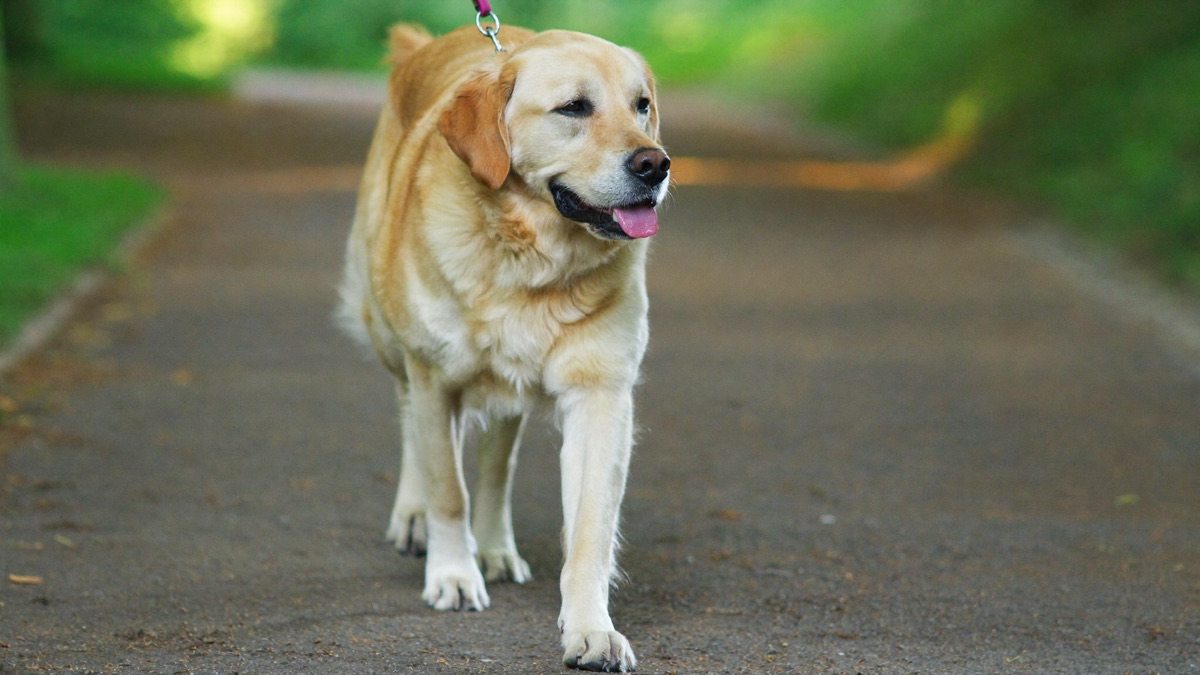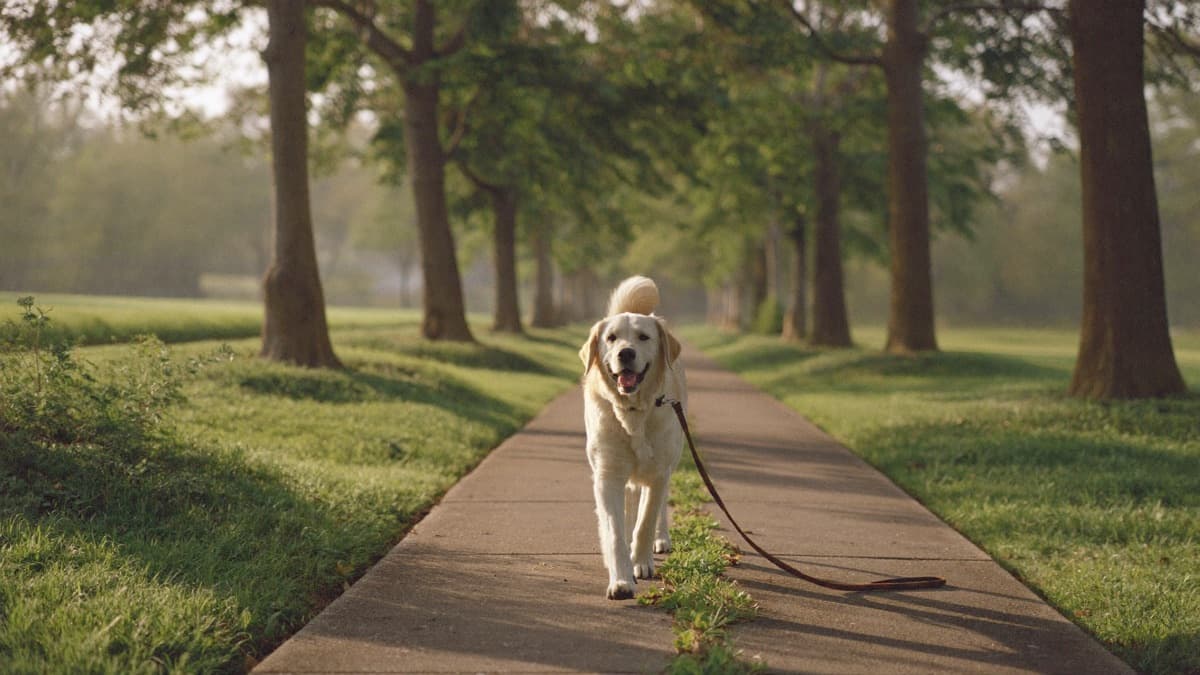
The goal shifts in the senior years: you're no longer burning off energy, you're maintaining muscle — because muscle is the scaffolding that holds arthritic joints together. Rest doesn't protect an old dog; it dismantles them.
What does "little and often" actually look like?
A workable senior week is boringly regular: the same two or three outings daily, sized so the dog finishes willing rather than finished. Fifteen to twenty-five minutes per outing suits many seniors, but the honest calibration is the next morning — stiffness or flatness the day after means yesterday was too big. Trim the distance, never the frequency; the daily pattern is what keeps joints lubricated and muscles switched on. If your senior is newly reluctant, slowing, or stiff after rest, run through the signs of arthritis in dogs first — pain management and exercise work as a pair, not as alternatives.
Upgrade one outing a day to a sniffari: a deliberately slow walk where the dog's nose sets the route and the pace. Sniffing is real cognitive work — genuinely tiring, zero joint cost — and for a senior it's the best-value enrichment there is. A 20-minute sniffari down a park connector does an old dog more good than 40 minutes of brisk heeling.
What exercises maintain muscle at home?
Two five-minute blocks on the living-room floor, a few times a week, target exactly the muscles seniors lose first — the hindquarters:
- Sit-to-stand reps. Ask for a sit, then a stand, using a treat lure — that's one rep; it's a dog squat. Start with 3–5 reps, once or twice daily, on a non-slip surface (a yoga mat over tile — most SG and MY floors are too slick for this). Build gradually to 8–10. Slow and clean beats fast and sloppy.
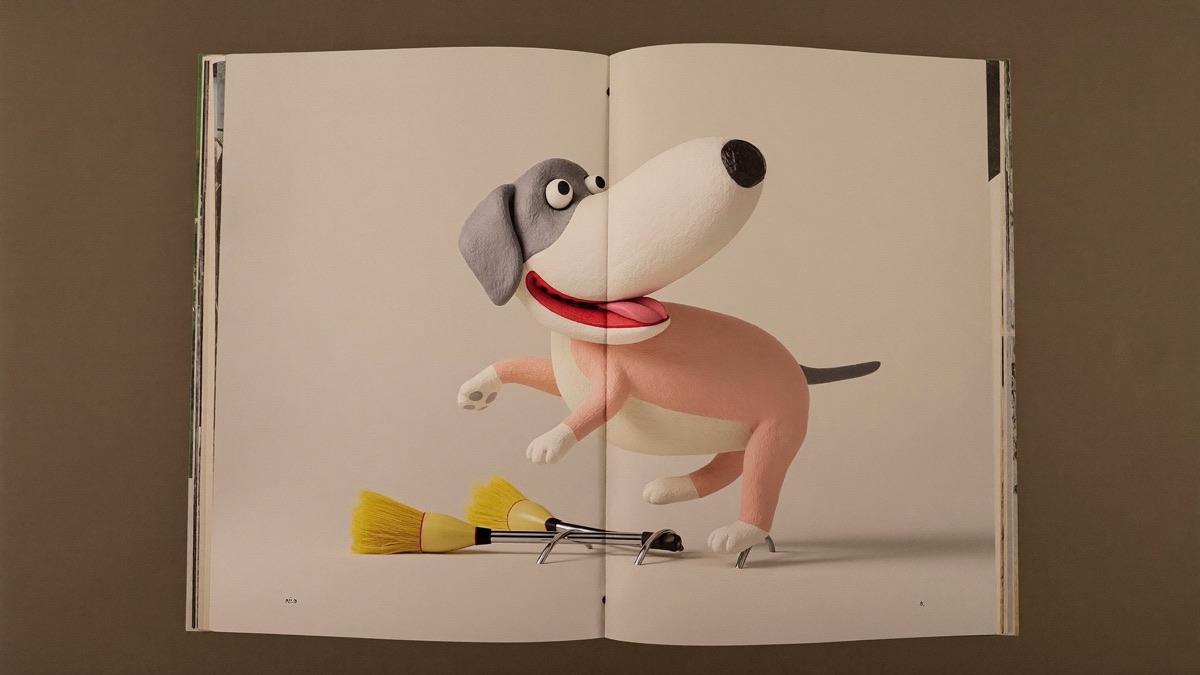
- Cavaletti with broom handles. Lay two or three broom handles flat on the floor about a body-length apart and walk the dog over them slowly on leash, both directions. Stepping deliberately over low poles rebuilds hind-leg awareness, stride, and balance. Flat on the ground is plenty for most seniors; only raise poles (a couple of centimetres on books) if your vet or physio agrees.
- Gentle weight shifts. With the dog standing square, lure the head slowly left, right, up — the body shifts weight from leg to leg and the stabiliser muscles do quiet work.
Stop any exercise the dog finds painful, and get a vet's sign-off first if arthritis, heart disease, or recent surgery is in the picture.
Is hydrotherapy worth it — and what does it cost?
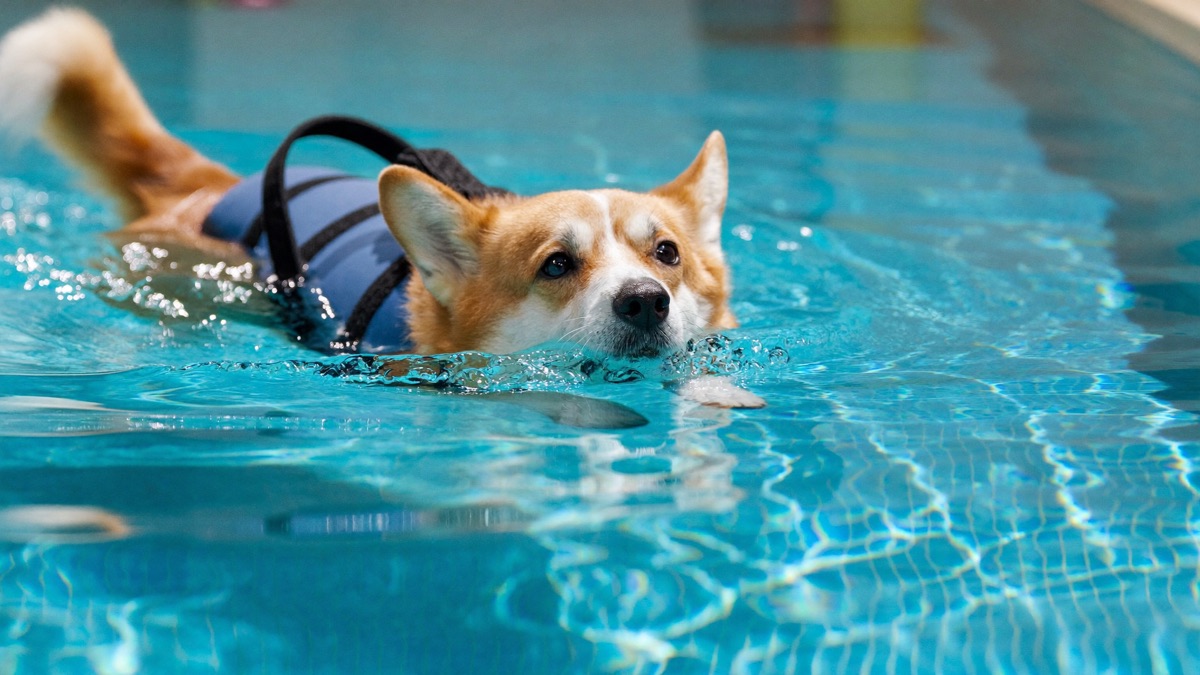
For seniors with arthritis, post-surgical recovery, or significant muscle loss, hydrotherapy is the standout option: water carries the body weight, so the dog works muscles hard with a fraction of the joint load. It comes in two forms — swimming in a supervised pool, and the underwater treadmill, where the dog walks against water resistance at a controlled depth. Both exist locally: Singapore has dedicated canine rehab clinics offering underwater treadmill and hydrotherapy sessions, and canine physiotherapy and rehabilitation centres operate in the Klang Valley in Malaysia. Rehab-grade hydrotherapy usually starts with a vet referral and an assessment.
As of 2026, Singapore sessions typically run about S$55–180 depending on the facility and whether it's supervised swim or clinical underwater treadmill work, with packages cheaper per session; Malaysian centres generally quote per case and package on enquiry. For a fit senior who just loves water, casual dog swimming in Singapore at dog pools is a cheaper middle ground — supervised, short, and never to exhaustion.
How does tropical heat change the rules for seniors?
Seniors dissipate heat worse than young dogs — age, weight, thick coats, and flat faces all stack the odds — so the timing discipline you half-followed before now becomes strict. Walk before 8am or after 7pm, full stop; midday is for sleeping under the fan. Do the five-second back-of-hand pavement test, carry water on anything over 20 minutes, favour shade, and end the outing at the first sign of heavy panting that doesn't settle — then read the warning signs in our heatstroke guide so you never have to learn them live.
Keep it small, keep it daily, keep it cool. A senior who moves a little every single day stays a dog who can move — and that, more than any supplement, is what buys the good years.