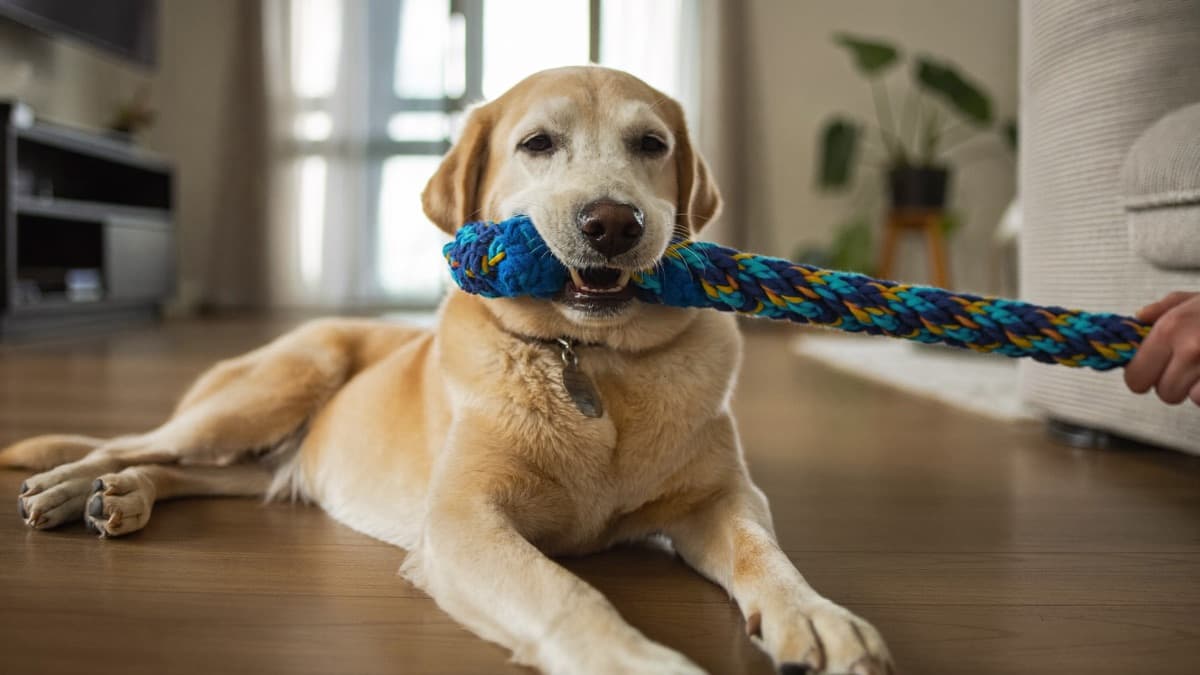
Why is my adult dog still mouthing?
Puppy biting has an expiry date; adult mouthing does not arrive out of nowhere. It persists for three overlapping reasons:
- Arousal. Excitement has to leak out somewhere, and for many dogs the mouth is the release valve. Greetings at the door, tug games that tip over the edge, zoomies at 7pm — the higher the arousal, the grabbier the mouth.
- Attention. Mouthing works. The moment teeth touch skin, the human looks down, speaks, pushes, waves their arms — a full jackpot of attention for a dog who was being ignored seconds earlier. Even "no!" is payment.
- Nobody ever taught the alternative. Bite inhibition is learned in puppyhood; a dog that skipped that education — common in dogs rehomed as adolescents — simply never learned that human skin ends games.
There is usually a fourth ingredient: history. If anyone ever played wrestling games with bare hands, waggled fingers in the dog's face, or let the puppy "cutely" gnaw on knuckles, the dog has years of receipts proving that hands are toys. You cannot blame a dog for cashing a cheque the household wrote.
What is the all-fun-stops protocol?
One rule, applied with total consistency: the instant teeth touch skin or clothing, everything good ends.
- Mark it calmly. A flat, unexcited "too bad" — no shouting, no squealing, no pushing. Dramatic reactions are fuel.
- Go completely boring. Stop moving your hands, stand up, turn away or step over a baby gate. Ten to twenty seconds of social exile is plenty.
- Return and redirect. Come back neutral and immediately offer the legal alternative — a tug toy, a chew, a scatter of kibble. The lesson has two halves: teeth on skin ends fun, teeth on this keeps it going.
- Repeat identically, every time, from everybody. One housemate who still lets the dog gnaw their arm during football matches will quietly undo the other four people's work.
Two traps to avoid. First, don't snatch your hand away fast — a rapidly retreating hand is a lure, and the grab-reflex it triggers can turn a soft mouth into a scratch. Slow, still, boring. Second, don't punish. Holding the muzzle shut, tapping the nose or shouting teaches the dog that hands near its face predict bad things, which is precisely how playful mouthing curdles into defensive snapping.
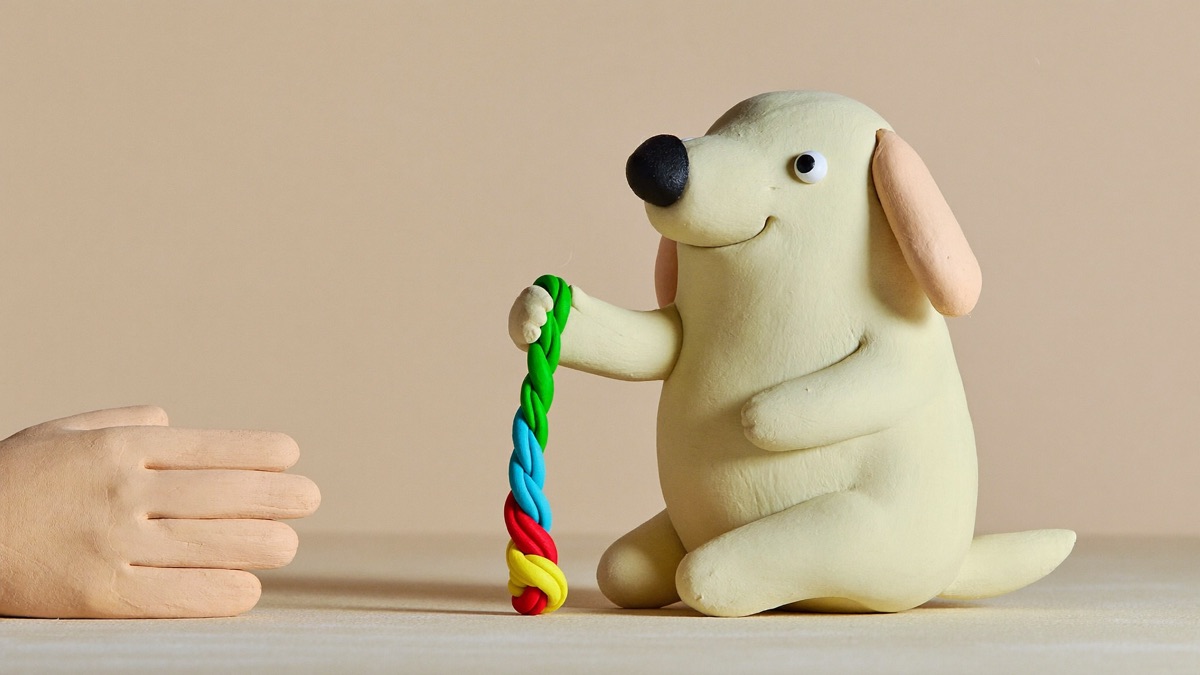
What are the legal outlets?
A mouthy dog has a genuine oral need — banning the mouth without feeding the need just relocates the problem to your furniture. Stock the flat with sanctioned targets:
| Need | Legal outlet |
|---|---|
| Grab-and-tug urge | Rope or fleece tug, played with rules (sit to start, drop-it to pause) |
| Chewing pressure | Long-lasting chews, stuffed rubber toys — frozen ones are extra welcome in our heat |
| Foraging energy | Snuffle mats, scatter-fed meals, find-it games |
| Greeting arousal | Teach a "grab your toy" ritual at the door — a mouth full of toy cannot hold your wrist |
Structured tug deserves special mention because it is the mouthing dog's dream job done legally: full-power gripping, on a toy, started and stopped on cue. Pair it with a solid drop-it from teaching basic commands and you have converted the problem into an off-switch drill.
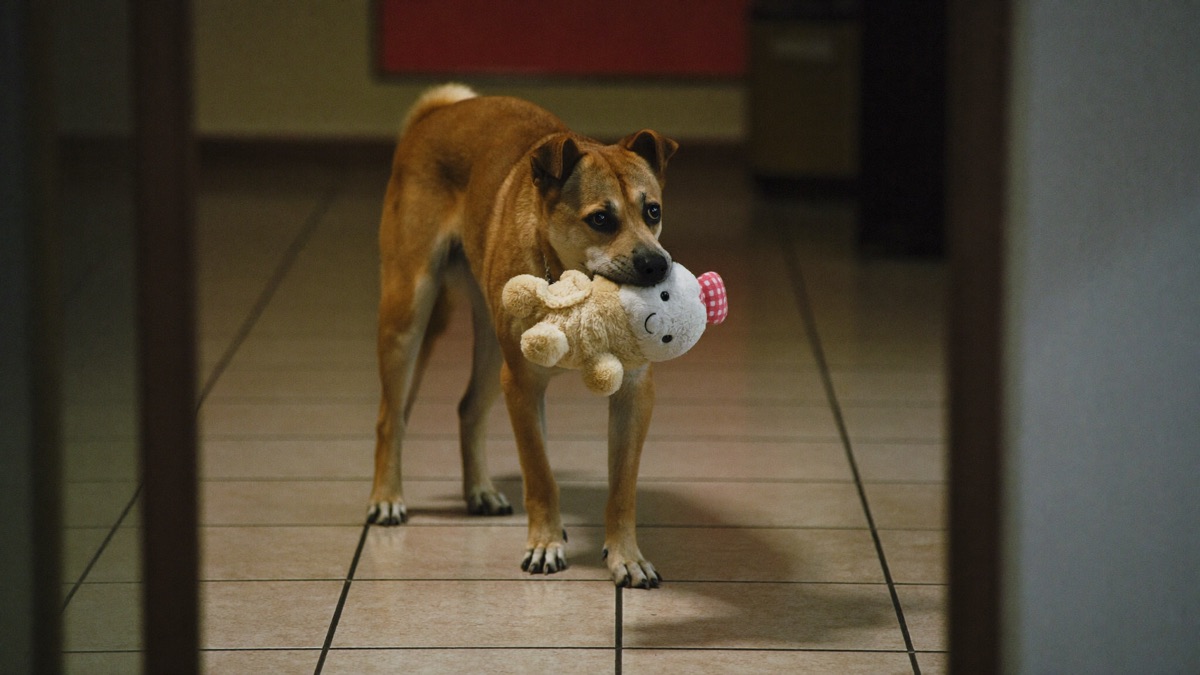
When is mouthing actually stress?
Sometimes mouthing is not play at all — it is a dog over its emotional threshold with nowhere to put the feeling. Watch for the tells: mouthing that starts or intensifies when you try to leave, during nail trims or grooming, when visitors arrive, or after a long stack of stressful events. Stress-mouthing tends to look harder, faster and less wiggly than play, often alongside lip-licking, yawning and whale eye — our dog body language guide covers the full vocabulary.
If that pattern fits, the all-fun-stops protocol is the wrong tool, because the dog isn't having fun in the first place. Reduce the trigger, add distance, and address the underlying anxiety. And if mouthing is leaving marks, escalating week on week, or paired with stiffness and growling, book a qualified force-free trainer or a veterinary behaviourist promptly — in Singapore, our guide to dog training classes covers how to choose one. Early help is cheap; entrenched habits are not.