What is lure-mark-reward?
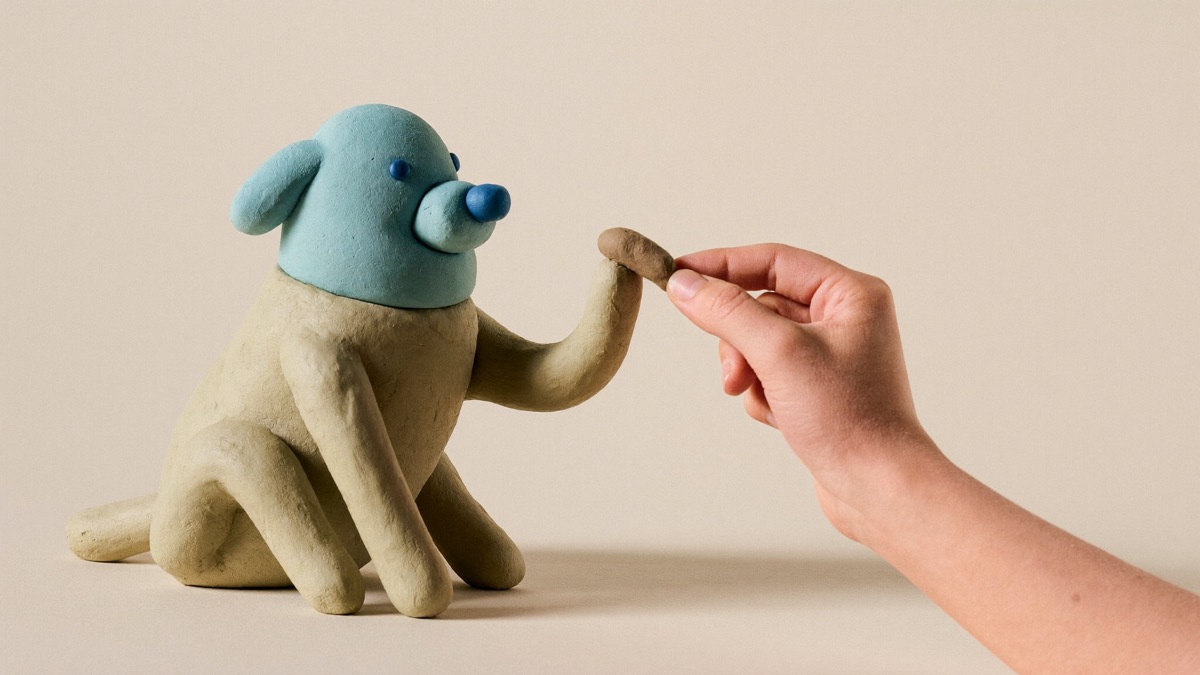
The lure is a treat held to the dog's nose like a magnet — where the nose goes, the body follows. The mark is a snapshot: one consistent sound that tells the dog that exact moment is what paid. The reward follows within a second or two. After a handful of repetitions you fade the lure (same hand motion, no food in it), and only once the dog is reliably following the empty hand do you add the word, said before the gesture. Dogs learn gestures before words, so naming the behaviour too early just adds noise. If you want sharper timing, a clicker is the precision version of the marker.
How do I teach sit and down?
| Step | Sit | Down |
|---|---|---|
| 1. Lure | Treat at nose, lift slowly up and back over the head | From a sit, treat at nose, draw straight down to the floor |
| 2. Position | As the head tips up, the rear folds down | Nose follows to floor; slide treat slightly forward and elbows drop |
| 3. Mark | The instant the bottom touches | The instant elbows and rear are both down |
| 4. Reward | Feed in position, then release ("okay!") | Feed on the floor between the paws, then release |
| 5. Fade | Empty-hand gesture → add the word "sit" | Empty-hand gesture → add the word "down" |
Two details matter. Feed in position so the position itself is what pays, and always end with a release word so the dog learns the cue lasts until you say otherwise. If down stalls — common with small or thin-coated dogs on hard floors — try luring under your bent knee, or work on a mat.
How do I teach stay?
Stay is not a word, it's a promise you build in three dimensions — trainers call them the three Ds:
- Duration. Cue sit, wait one second, mark and feed. Then two seconds, then five. Feed several times during the stay, not just at the end.
- Distance. Only once ten calm seconds are easy: take half a step back, return, pay. Then one step, two, five. Always return to the dog to reward — calling the dog out of a stay teaches them to break it.
- Distraction. Add movement, doorbells, food on a counter — each one at low intensity first.
Raise one D at a time. If the dog breaks, no scolding — you simply moved too fast; reset closer and easier. A broken stay is information, not disobedience.
How do I teach leave-it — the hawker-floor lifesaver?
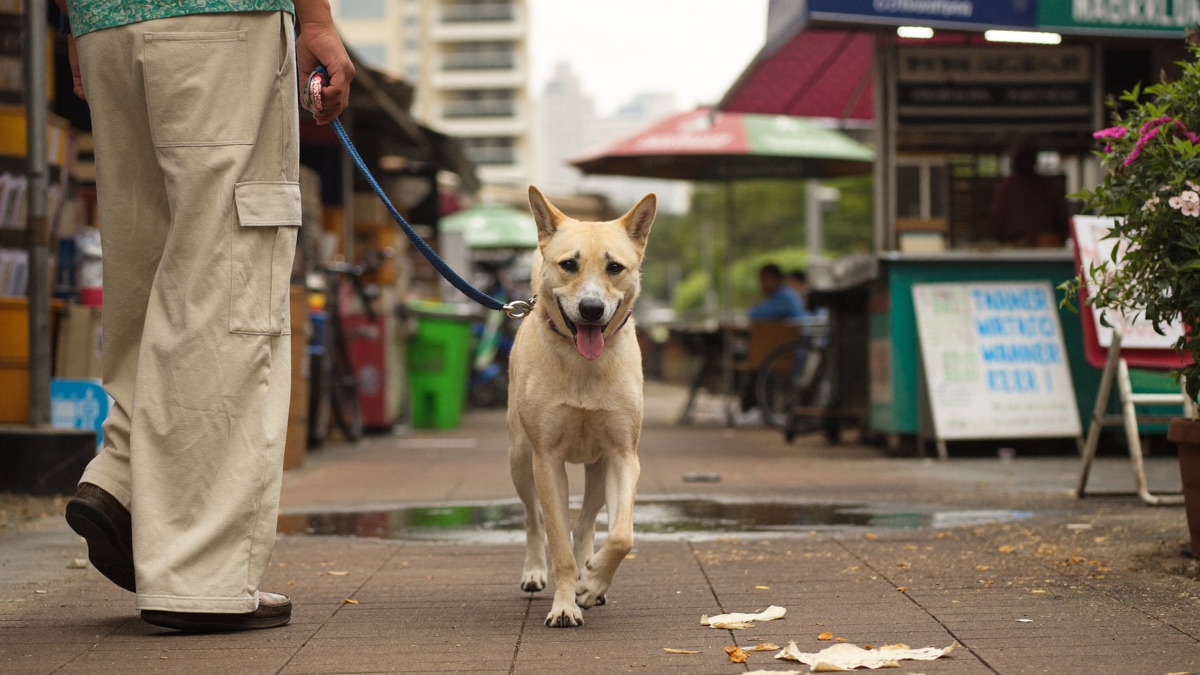
In Singapore and Malaysia, leave-it earns its keep on every walk past a hawker centre: chicken bones, satay sticks and worse are one nose-drop away, and some finds (cooked bones, grapes) are genuinely dangerous. The rule you're teaching: ignoring the thing pays better than the thing.
- Treat in a closed fist. The dog licks, paws, nuzzles — say nothing. The instant they pull back, mark and feed a different treat from the other hand.
- Repeat until the dog withdraws from the fist immediately, then add the cue "leave it" as you present it.
- Progress: treat on the floor under your shoe → uncovered but guarded → dropped from standing → planted "finds" on walks.
Never feed the leave-it item itself — the deal is that leaving this earns that, so surrendered items are always swapped, never lost.
Why the five-minute session rule?
Because training quality collapses long before your enthusiasm does. Dogs learn fastest in short, sharp bursts with a high win rate; a five-minute session that ends on a success beats a grinding half hour that ends in mutual frustration. Two or three five-minute sessions a day — before meals, when the dog is motivated — outperform a weekend marathon, and puppies especially have tiny attention budgets.
What are the most common mistakes?
Repeating the cue. "Sit… sit… SIT" teaches your dog the real cue is the third, loudest one. Say it once; if nothing happens, help with the hand gesture, then make the next rep easier.
Punishing slow responses. A dog scolded for a slow sit learns that sitting near you can go badly — the opposite of what you want. Slow responses mean the environment is too hard or the pay is too low; fix those instead.
Training only in one room. Dogs don't generalise well. Re-teach each cue, briefly and more easily, in the kitchen, corridor, void deck and park — the same ladder that makes recall training stick outdoors.