What does each dog sleeping position mean?
| Position | What it usually means |
|---|---|
| Side sleeper (flat out, legs extended) | Relaxed, secure, comfortably warm — deep sleep happens here |
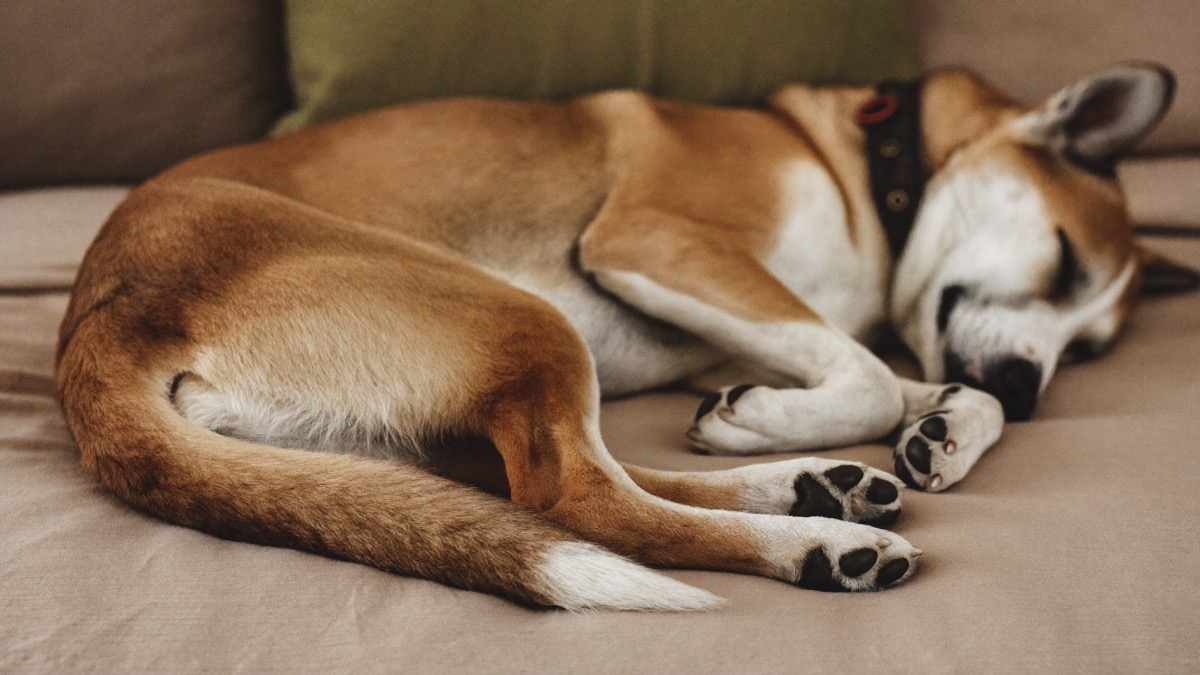
| Donut (curled nose-to-tail) | Conserving heat, feeling cool, or settling in a new place |
| Sploot / superman (belly down, legs out) | Cooling the belly on a cold floor; common in puppies and flexible breeds |
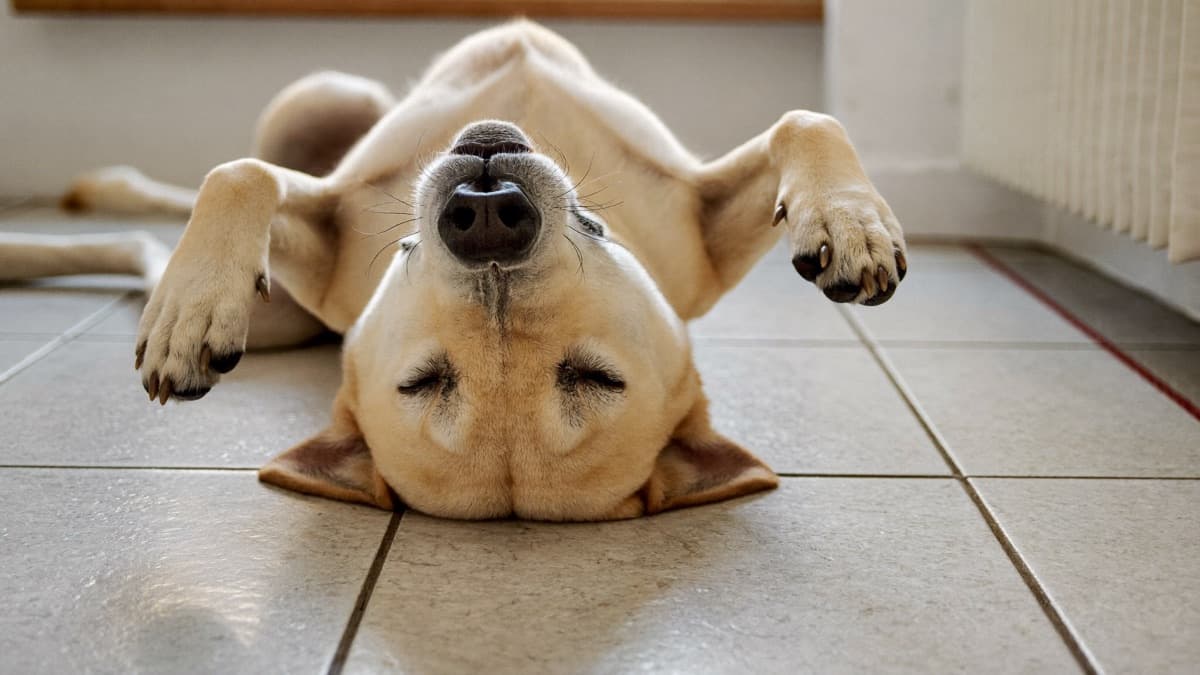
| Belly-up (back, paws in the air) | Hot dog dumping heat + total security |
| Lion pose (head on paws, upright) | Light dozing, still monitoring the room |
| Pressed against you or another pet | Warmth-seeking plus genuine social bonding |
The side sleeper is the gold standard of canine contentment. A dog flat on their side with legs out is exposing the belly and committing to real, deep sleep — you'll often see paw-paddling and muffled woofs here, because this is the position where REM sleep and dreams happen most visibly.
The donut is thermal engineering: curling tightly reduces exposed surface area and guards the organs. It's the default for dogs sleeping somewhere cold or unfamiliar — and in our region, frequently a sign the air-con is doing its job a little too well.
The sploot runs the opposite direction — maximum belly contact with a cold surface sheds heat fast. Puppies do it constantly, partly because they're flexible and partly because they run warm.
Lion pose is the "resting but on duty" setting: dozing with the head on the paws, ready to spring up if anything interesting happens. Dogs rarely reach deep sleep in it.
Why does my dog sleep belly-up on the tiles?
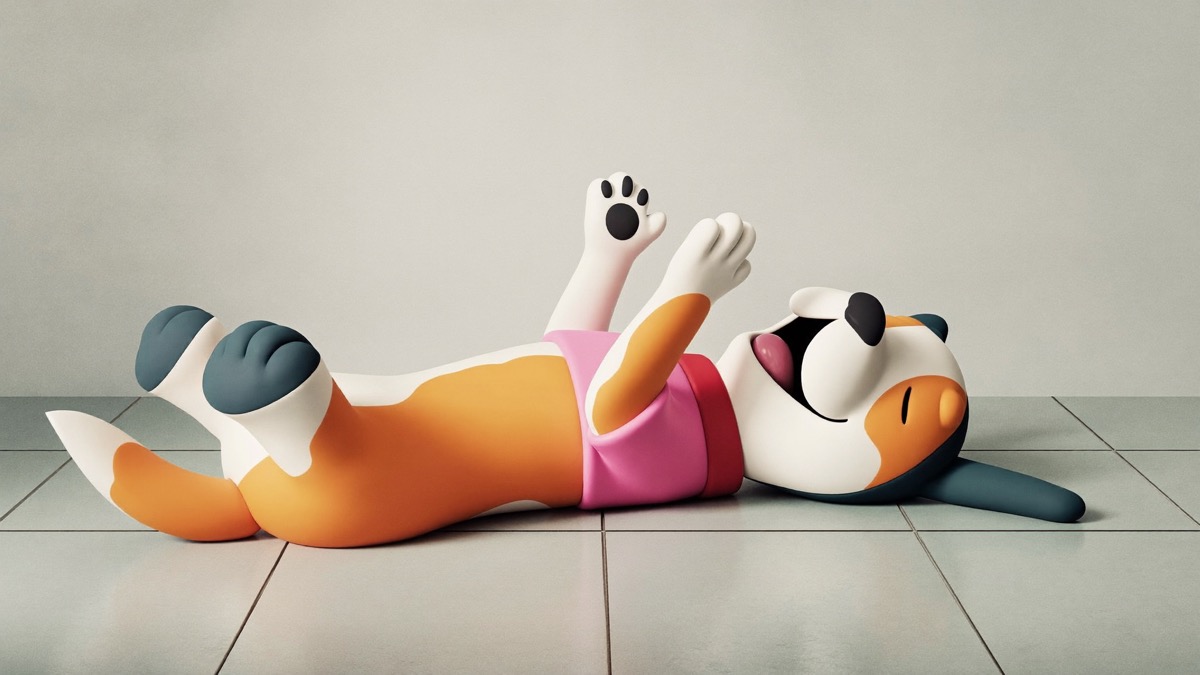
Because it's the most efficient cooling posture a dog has — and in Singapore and Malaysia, it's practically the national dog sleeping position. The belly and paw pads have the thinnest fur and are where dogs shed heat best; flipping over exposes both to the air at once, and doing it on bathroom or kitchen tiles adds conductive cooling from below. Air-conditioned living room, warm afternoon, dog upside down on the marble: everything is working as designed.
There's a second ingredient: vulnerability. A belly-up dog can't spring to their feet quickly, so dogs only sleep this way where they feel completely safe. Wild canids essentially never do it. So yes, this one genuinely is a compliment — just a compliment delivered mainly because your floor is cold.
Belly-up is also easy on the joints, which is why some arthritic seniors adopt it. It's safe in essentially all dogs; the pose itself is never the problem.
Do sleeping positions reveal my dog's personality?
Less than the listicles claim. There's no solid research linking, say, donut-sleeping to shyness or splooting to playfulness. What positions reliably tell you is state, not trait: this dog, right now, is hot or cold, deeply asleep or half on duty, fully at ease or slightly guarded. A confident dog will curl into a tight ball on a cold night, and a nervous dog will sprawl belly-up once the room hits 32°C — temperature outranks temperament.
The honest personality signal is the trend: a dog who routinely side-sleeps or goes belly-up around you is a dog who consistently feels safe around you. That's worth more than any single pose.
When should a sleeping position worry me?
Positions matter most when they change and stay changed. Watch for:
- Abandoning a favourite side. A dog who always slept on the left flank and now won't may be protecting a painful hip, shoulder, or rib. Persistent tight curling in a dog who used to sprawl can also be pain-guarding — arthritis is the usual suspect in seniors.
- Sleeping sitting up, or with head and neck stretched out. Dogs position themselves to keep airways open, so this can signal breathing or heart trouble — flat-faced breeds like Pugs, French Bulldogs, and Shih Tzus are the classic case. A brachycephalic dog who only manages sleep propped up, or who wakes gasping, needs a vet conversation.
- Restlessness instead of settling. Circling, repositioning, and never committing to sleep suggests discomfort — pain, itch, or needing the toilet.
- New positions plus other signs — appetite change, laboured breathing, lethargy while awake — always outweigh the position itself.
One odd nap means nothing; dogs rotate poses all night as the room's temperature shifts. A pattern that persists for days is your cue. And if it's the amount of sleep that's shifted rather than the shape of it, our guide to how many hours a day dogs sleep covers what's normal and what isn't.
Beyond that, enjoy the show. A dog upside-down on your tiles with all four paws pointing at the ceiling fan has solved tropical living more elegantly than most of us ever will.