What exactly is flooding?
Two ingredients define it: over threshold and no escape. The trigger is presented at an intensity far beyond what the dog can cope with, and the dog cannot increase distance — it's on a lead, held, cornered or crated. The theory borrowed from human psychology is that panic can't last forever, so the dog will eventually "realise" nothing bad happens. The problem is that the dog gets no say in the dose. Compare the humane alternative: desensitisation and counter-conditioning uses the same trigger at a coping distance, paired with good things, with intensity raised only at the dog's pace.
Why does flooding sometimes look like it works?
Because a dog that stops struggling looks "fixed" — and this is the most dangerous illusion in dog training. When escape is impossible and panic burns out, many dogs collapse into shutdown: still, quiet, compliant. That's not relaxation; it's learned helplessness — the state an animal enters when it learns that nothing it does changes anything, so it stops trying. Psychologists first documented it decades ago, and it's closer to despair than to calm.
You can tell shutdown from genuine calm if you know the tells:
| Genuinely calm dog | Shut-down dog |
|---|---|
| Takes treats, sometimes sniffs the ground | Refuses food entirely |
| Loose, wiggly body; soft open mouth | Frozen body, closed mouth, tucked tail |
| Explores, checks in with you | Stares at nothing, "goes somewhere else" |
| Recovers and bounces between events | Flat before, during and after |
The freeze is itself a rung on the escalation ladder from our fear aggression guide — and a flooded dog that comes out of freeze often comes out biting, because we removed every other option.
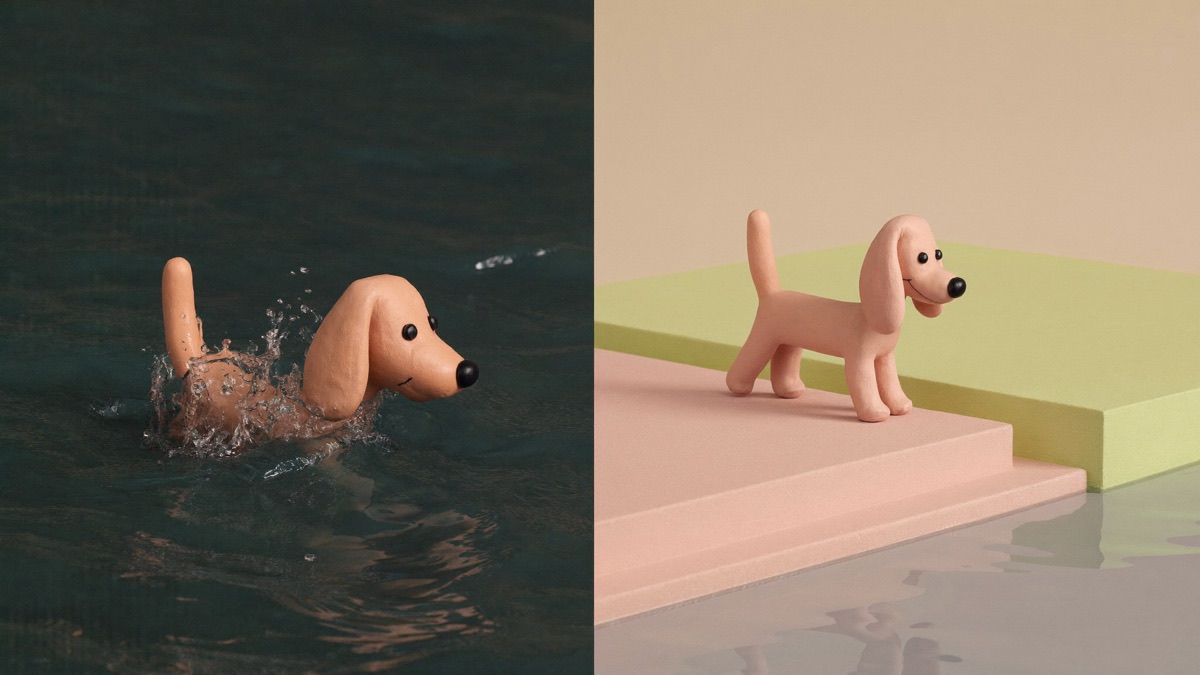
What damage does sink-or-swim actually do?
The realistic outcomes list, none of them good:
- Sensitisation. The commonest result — the fear gets bigger, because the dog's worst prediction about the trigger just came true, at maximum volume.
- Learned helplessness. The dog "behaves" but stops communicating and stops trying, everywhere, not just around the trigger.
- Trust damage. You became part of the trap. Dogs flooded by their owners often start resisting the car, the lift, the lead — everything that predicted the ambush.
- Redirected or escalated aggression. A cornered dog with no escape has one tool left; flooding is over-represented in bite histories.
- Trigger stacking. Even when a single session looks survivable, the stress hormones linger for days and lower the threshold for everything else — see our trigger stacking guide.
What should I do instead?
Work below threshold. Find the distance or intensity at which your dog notices the trigger but can still eat, think and move loosely, pair the trigger with something wonderful, and shrink the gap over sessions — the full method is in our desensitisation and counter-conditioning guide. It looks slower than flooding and is dramatically faster in practice, because you never spend weeks repairing a blow-up — and because a dog that keeps its sense of control learns in every session instead of merely surviving it. Meanwhile, manage exposure so the fear isn't rehearsed between sessions: quieter hours, wider arcs, a lift skipped.
How do I spot flooding advice in the wild?
It rarely introduces itself by name. Listen for the euphemisms: "he has to face his fears", "she'll settle once she realises it's fine", "just let them sort it out", "we immerse the dog until it accepts the environment". Red flags in a professional: guarantees of fast fixes for fear, refusal to let you observe sessions, dogs described as "calm" who won't take food, and board-and-train programmes that won't explain their methods in plain words — our Singapore training classes guide covers how to vet providers and why the ACDT list is the safest starting shortlist. And if someone tells you your growling dog just needs more exposure, remember the first rule of this series: the growl is a gift — the fix is changing how the dog feels, never just outlasting what it says.