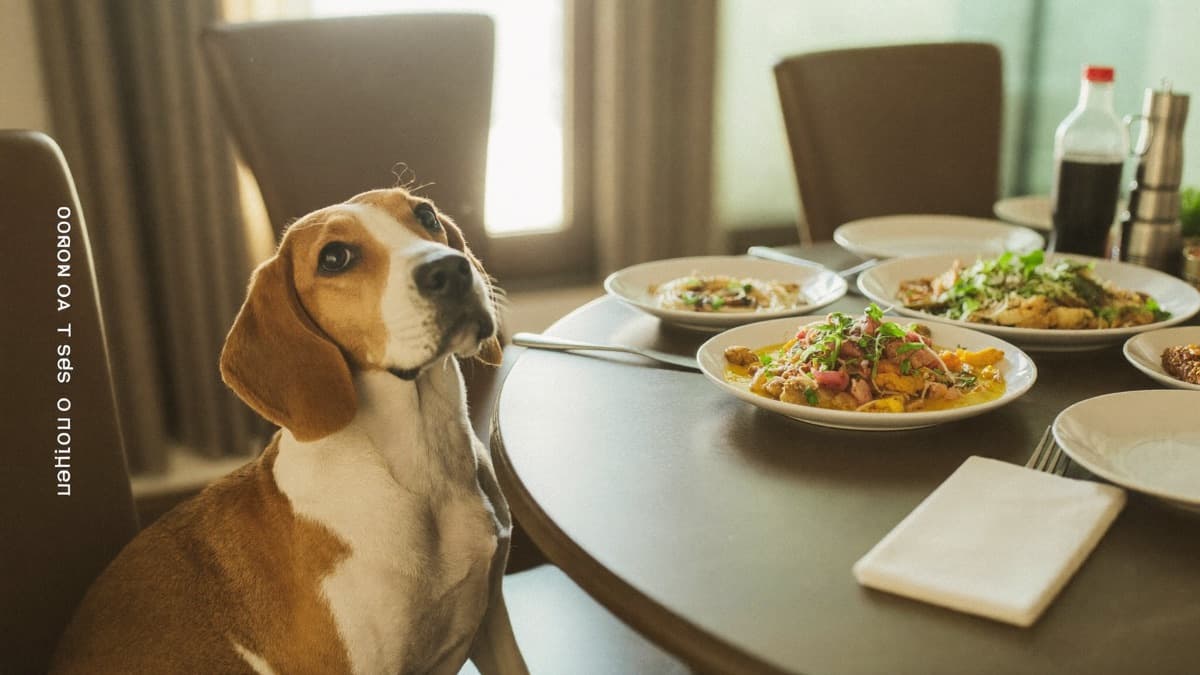
Why does my dog beg at the table?
Because it works. Every piece of char siew that "accidentally" fell, every crust handed down to make the whining stop, every soft-hearted grandparent slipping satay under the table — each one is a payment, and dogs are meticulous accountants. Begging is not a personality flaw or dominance; it is a behaviour with a reinforcement history, performed at the exact location where it has paid out before.
Here's the part most families get wrong: 99% consistency is not 99% as effective — it's roughly 0% effective. A behaviour rewarded occasionally and unpredictably is harder to extinguish than one rewarded every time. This is variable reinforcement, the same mechanism that keeps people at jackpot machines. If the dog wins once a fortnight, it learns that persistence eventually pays, and it will beg through a hundred dry meals for that one payout. The only number that ends begging is 100% — never, from anyone, ever.
What is the one-meal rule?
Simple: your dog's food arrives in one place — its bowl, its mat, or your hand during training — and never from the table, from a plate, or during human meals. Human mealtimes become a period when nothing edible ever travels downward.
That doesn't mean your dog can never taste chicken or eat the same rice you cooked. It means the route changes. Save the safe leftovers, put them in the bowl at the dog's next meal, and the food loses all connection to your dining table. The dog isn't being deprived of anything except the begging loop.
How do I use place training during meals?
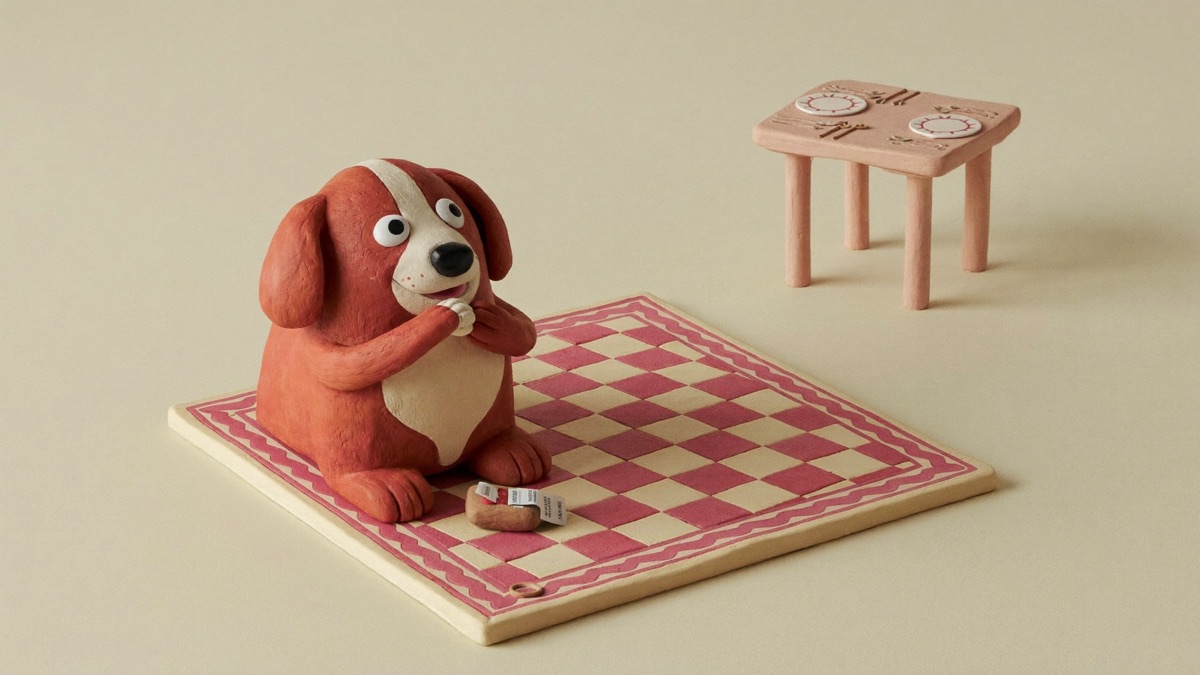
Extinction alone (ignoring the begging) works but is slow and noisy. It's far faster to pair it with an incompatible behaviour: a dog lying on its mat cannot simultaneously drool at your elbow.
- Teach a solid "place" and stay away from mealtimes first — our guide to teaching basic commands covers the stay foundation.
- Position the mat 2–3 metres from the table, within sight but out of the splash zone.
- Send the dog to the mat before food hits the table, and give it a long-lasting chew or a stuffed food toy there. The dog gets something genuinely good — just not from the table.
- Early on, quietly drop a treat on the mat every minute or two of calm settling. Calm on the mat pays; hovering at the table pays nothing.
- If the dog leaves the mat, no scolding — just calmly return it and reset. Meals end, mat chew gets picked up, life goes on.
Within a few weeks most dogs hear plates clinking and head to the mat on their own, because that's where dinner-time value now lives.
What about eating out at hawker centres and cafés?
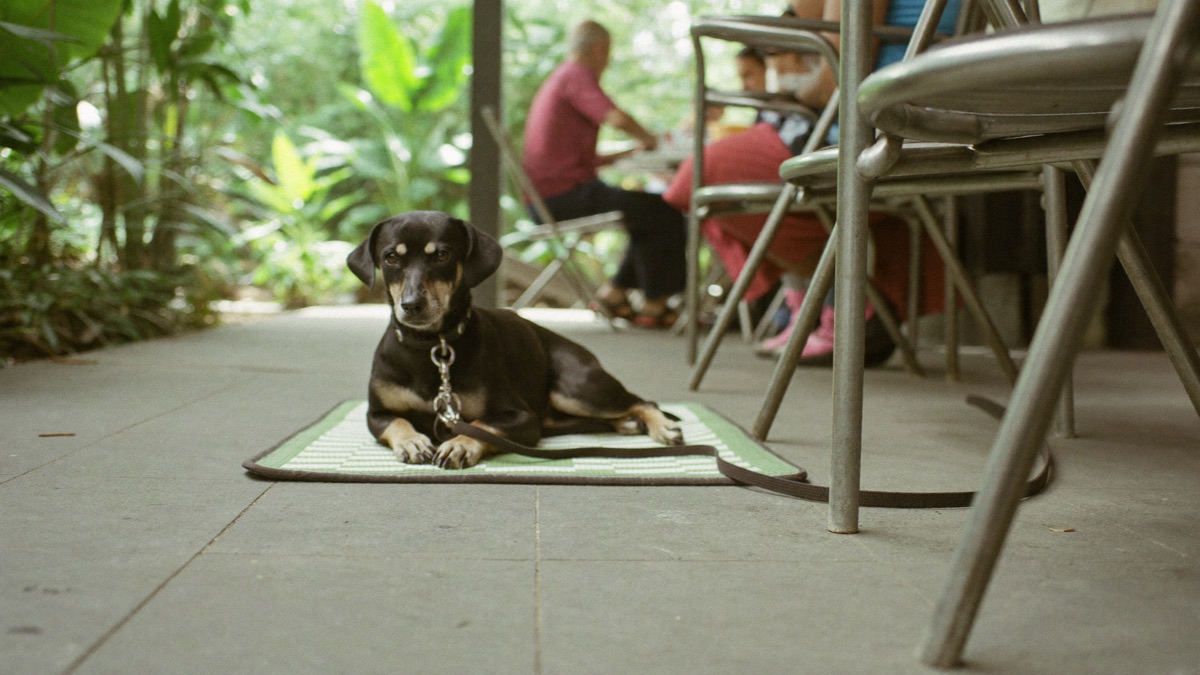
The same rules travel. At the outdoor seating where dogs are allowed — see our guide to dog-friendly Singapore for where that is — bring the mat or a foldable version of it, clip the leash to your chair leg region under your foot, and give the dog its chew before your food arrives. Feed your dog at home first; a full dog is a calmer dog. Never feed from the hawker table, and politely decline when neighbouring diners offer — one stranger's chicken wing can undo a month of your work, and cooked bones are dangerous anyway.
Why does the whole household need to agree?
Because your dog doesn't average the family's behaviour — it exploits the weakest link. If you hold the line but the kids trade crusts for peace, or a helper feeds the dog while cooking, or visiting relatives think rules are for other dogs, the variable-reinforcement jackpot stays switched on. Have one explicit house rule everyone can repeat: food goes in the bowl, never from the table. Give softer-hearted family members a legal outlet — they can put a treat in the bowl or the mat chew later — so kindness has somewhere to go that doesn't rebuild the begging.
Why does my dog's begging face look so sad?
Because it was, quite literally, bred into them. Dogs evolved a facial muscle around the eyes — one wolves essentially lack — that lets them raise the inner eyebrows and make their eyes look larger and more infant-like. Humans reliably melt at this expression, so over thousands of years the dogs that could produce it were fed, favoured and bred. The sad eyes are real anatomy, not real starvation. Your dog has eaten. You can love the face and still not pay it.